India to host 2028 Thomas Uber Cup as BWF overhauls format
Synopsis
India will stage a new-look Thomas and Uber Cup in 2028, with 24 teams a side, best-of-three ties and points for every match win. The BWF is also shifting World Championships to an Olympic-style group stage from 2027. It is India’s second hosting of the team finals, after New Delhi in 2014.
Key Takeaways
India will host the BWF Thomas and Uber Cup Finals in 2028 , the country’s second staging after New Delhi in 2014 .
The 2028 finals will feature 24 men’s and 24 women’s teams in four groups of six, with the top 12 reaching the knockouts.
A best-of-three format and points for individual match wins, plus two bonus points for winning a tie, will apply in 2028.
The World Championships will adopt an Olympic-style group stage from 2027 : 48 singles players and 32 doubles pairs.
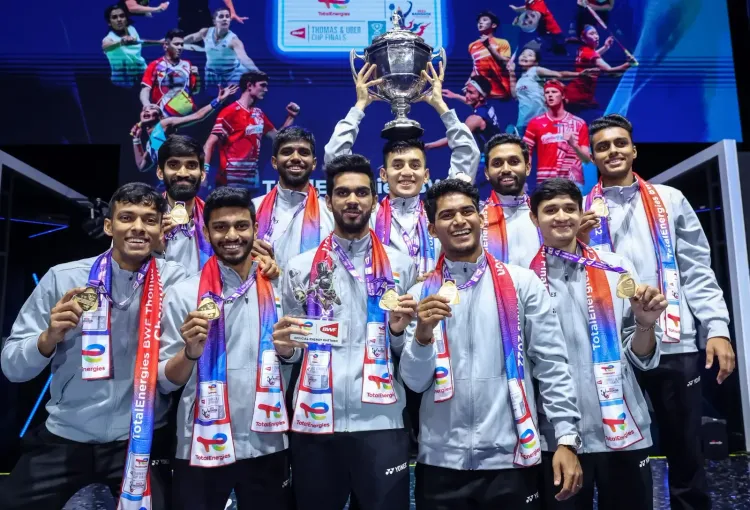
India won the Thomas Cup in 2022 and took bronze this year in Horsens, Denmark ; the women have two Uber Cup bronzes.
Other hosts: Mississauga (2027 Worlds), Beijing (2027 Sudirman Cup), Korea (2029 Sudirman Cup), Paris (2030 Thomas and Uber Cup).
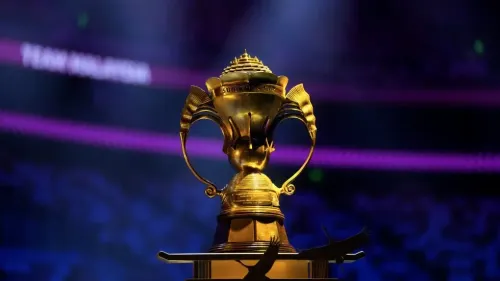
India will host the BWF Thomas and Uber Cup Finals in 2028, the Badminton World Federation announced on 25 November, pairing the award with a sweeping format overhaul of its flagship championships, including an Olympic-style structure for the World Championships from 2027. The decision places India among the principal hosts on the international badminton calendar over the next four years and will be the country’s second staging of the team finals after New Delhi in 2014.
India’s second Thomas and Uber Cup
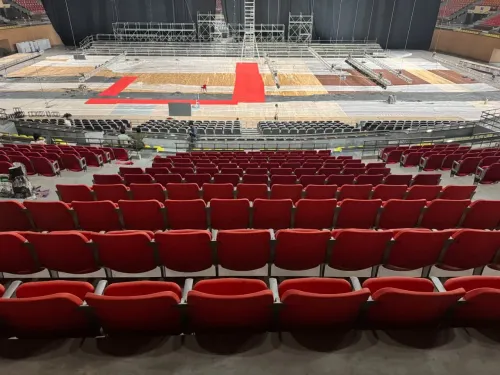
New Delhi previously hosted the Thomas and Uber Cup Finals in 2014. The capital also staged the BWF World Championships earlier this year and the junior World Championships last year, underlining a run of marquee home events.
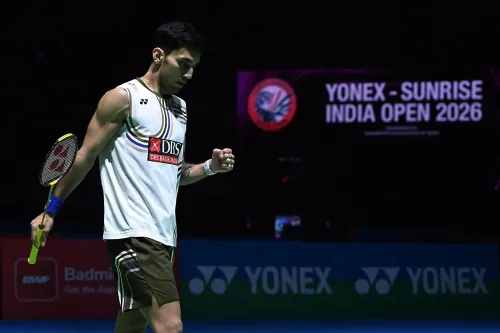
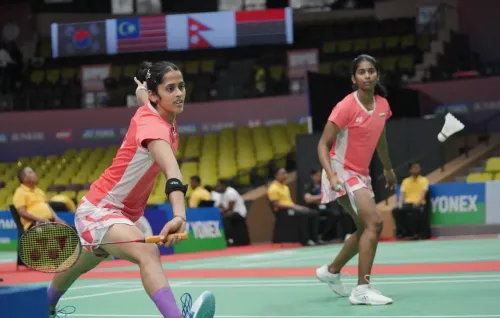
On court, India lifted the Thomas Cup once, in 2022, and finished with a bronze medal at this year’s edition in Horsens, Denmark. The women’s team has two Uber Cup bronze medals, the first on home soil in 2014 and the second two years later.
This comes amid a denser Indian hosting cycle. A 2028 team finals, following a World Championships on home soil this year, gives players a clear multi-year window to adapt to a competition that will look markedly different from the 2014 edition.
How the 2028 Thomas and Uber Cup will work
The Thomas and Uber Cup Finals will expand to 24 men’s teams and 24 women’s teams, divided into four groups of six. Each side will play four league-stage ties, with the top 12 teams advancing to the knockout rounds.
A revised best-of-three match format will be introduced for the 2028 finals. Under a new points-based league system, teams will earn points for individual match victories irrespective of the overall tie result, while winning a tie will bring an additional two bonus points.
Notably, every individual rubber will now move the group table, not only the tie scoreline. Combined with a larger 24-team field, that is intended to keep more nations in contention deeper into the league stage.
World Championships go Olympic-style from 2027
The BWF World Championships will be restructured from 2027 to align with the Olympic Games, featuring a group stage followed by knockout rounds across all five disciplines.
Singles events will feature 48 players divided into 16 groups of three, while doubles will have 32 pairs divided into eight groups of four. The top two players or pairs from each group will advance to the Round of 16, ensuring every participant gets at least two matches.
The Sudirman Cup Finals will also feature 24 teams divided into three groups of eight, with each team playing three league-stage ties under the traditional best-of-five-match format.
The changes come alongside the introduction of the 3x15 scoring system and a revamped BWF World Tour, which the world governing body described as a significant evolution in the sport’s competition structure.
Hosts lined up through 2030
Alongside India in 2028, the BWF confirmed Mississauga in Canada as host of the 2027 World Championships, Beijing for the 2027 Sudirman Cup Finals, Korea for the 2029 Sudirman Cup Finals, and Paris for the 2030 Thomas and Uber Cup Finals.
The 2028 host city inside India has not been named. New Delhi remains the only Indian city to have previously staged the Thomas and Uber Cup Finals, in 2014.
What the BWF president said
BWF President Khunying Patama Leeswadtrakul said the changes were aimed at expanding the sport’s global reach, increasing participation and strengthening its appeal among audiences worldwide.
“These changes to our Major Championships are about creating stronger competition, opening the door to greater participation, and ensuring more Members and players can share in badminton’s biggest moments,” she said. “Together with the introduction of the 3×15 scoring system, they form part of a broader vision to elevate our sport, deepen fan engagement, and strengthen badminton’s position as a truly global game,” she added.
Qualification pathways and a detailed calendar for the expanded 24-team Thomas and Uber Cup have not yet been issued. The next cycle will test whether a larger field, match-level league points and Olympic-style World Championships can deliver the deeper competition the BWF is seeking before India takes the stage in 2028.
Point of View
Not just a star first singles player — a test India has not always passed since the 2022 Thomas Cup high. The Olympic-style Worlds from 2027 also ends the one-and-done first-round exit that has long made the championships feel thinner than the Games. If 3x15 scoring lands with fans, this is badminton’s biggest structural reset in a generation; if it confuses casual viewers, the BWF will have expanded the field without expanding the audience.
NationPress
25 Nov 2026
Frequently Asked Questions
When will India host the Thomas and Uber Cup Finals?
India will host the BWF Thomas and Uber Cup Finals in 2028. It will be the country’s second time staging the event after New Delhi in 2014.
What format changes has the BWF announced for the 2028 Thomas and Uber Cup?
The 2028 finals will have 24 men’s and 24 women’s teams in four groups of six, with each team playing four league-stage ties and the top 12 reaching the knockouts. A best-of-three format will apply, with points for individual match wins and two bonus points for winning a tie.
How will the BWF World Championships change from 2027?
From 2027 the World Championships will use an Olympic-style group stage followed by knockouts in all five disciplines. Singles will have 48 players in 16 groups of three and doubles 32 pairs in eight groups of four, with the top two from each group reaching the Round of 16.
Has India hosted the Thomas and Uber Cup before?
Yes. New Delhi hosted the Thomas and Uber Cup Finals in 2014. India won the Thomas Cup in 2022, took bronze at this year’s event in Horsens, Denmark, and the women have two Uber Cup bronze medals, including one on home soil in 2014.
Which other cities will host major BWF events through 2030?
Mississauga in Canada will host the 2027 World Championships, Beijing the 2027 Sudirman Cup Finals, Korea the 2029 Sudirman Cup Finals, and Paris the 2030 Thomas and Uber Cup Finals. India’s 2028 host city has not yet been named.