Gujarat hikes fencing subsidy to ₹300/m; 1 lakh apply
Synopsis
Gujarat has raised its farm fencing subsidy from ₹200 to ₹300 a metre, cut the landholding floor to one hectare, and drawn about one lakh applications via i-Khedut — with ₹250 crore earmarked for 2026-27 to keep stray cattle and wildlife off standing crops.
Key Takeaways
The Gujarat government hiked barbed-wire fencing assistance from ₹200 to ₹300 per running metre, or 50 per cent of actual cost.
The minimum landholding was cut from two hectares to one hectare to cover smaller farmers.
Around one lakh applications were received in the current year via the i-Khedut portal.
A ₹250 crore provision has been made for 2026-27 , with district-wise targets.
In Gandhinagar , 675 farmers applied for 2026-27 ; 151 were approved, with about ₹25 lakh paid for roughly 91 hectares .
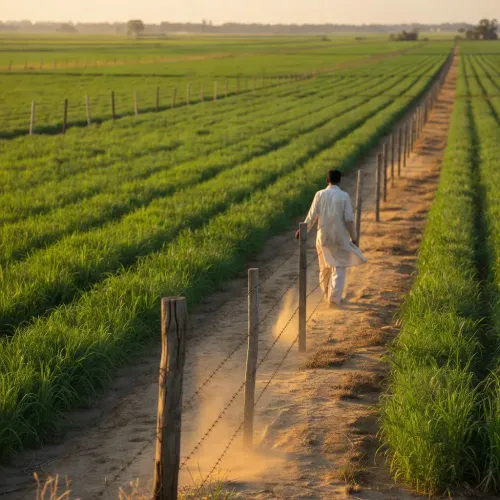
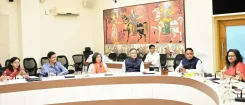
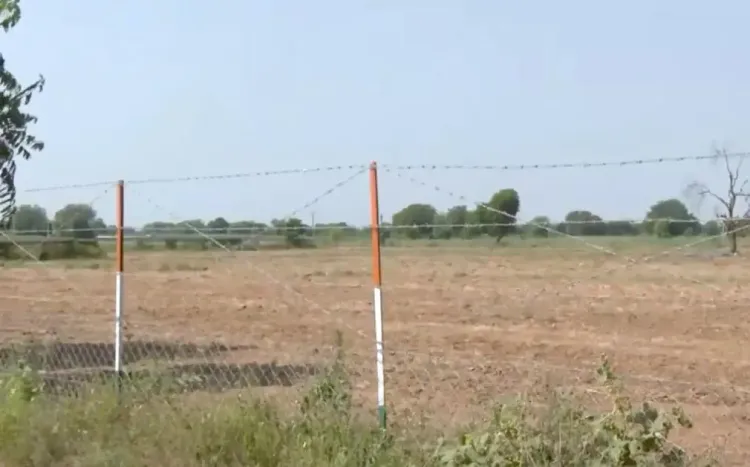
The Gujarat government on 25 November hiked financial assistance for barbed-wire fencing around agricultural land from ₹200 to ₹300 per running metre and lowered the minimum landholding from two hectares to one hectare, as around one lakh farmers applied under the state's wire fencing scheme. The revised support, announced from Gandhinagar, is ₹300 per running metre or 50 per cent of the actual cost, and is meant to protect standing crops from stray cattle and wild animals, including nilgai and wild boars.
Why the subsidy was raised
The decision comes amid rising costs of iron materials and labour, which have increased the financial burden on farmers seeking to fence their fields. By cutting the eligibility floor to one hectare, the state has sought to bring smaller cultivators into the scheme — a group that previously fell outside the two-hectare threshold.
Applications are being filed through the state government's i-Khedut portal. Officials said farmers across Gujarat have used the portal during the current year, with around one lakh applications received under the scheme.
What farmers in Gandhinagar reported
Cultivators in Gandhinagar district said fencing had helped protect crops from animals that frequently enter agricultural fields. Jaideepsinh Chavda, a differently-abled farmer from Lakroda village, said the government assistance had proved beneficial.
“The assistance we received from the government for installing fencing has benefited us greatly. It has proved very helpful. Now, we do not have to worry about our crops. We have received considerable protection from wild animals, nilgai and other animals that used to damage our crops,” he said.
Pravinbhai Patel, a farmer from Kudoda village, said the fencing had protected his crops from wild boars and nilgai. “Installing the fencing has benefited me greatly by protecting my crops from wild boars and nilgai. I am very grateful to the government for this,” he said.
Budget, targets and district disbursement
For 2026-27, the state government has made a budgetary provision of ₹250 crore and allocated district-wise targets to implement the scheme. Officials said the allocation could be increased further if required to extend benefits to more farmers across the state.
S K Patel, District Agriculture Officer, Gandhinagar, said: “675 farmers from the district had applied when the portal was opened for 2026-27, of whom 151 applications had been approved. Payments amounting to around Rs 25 lakh had been made to farmers for approximately 91 hectares of land.”
Nitin Shukla, Additional Director of Agriculture, Gandhinagar, confirmed that around one lakh applications had been received across the state during the current year. “The government had earmarked Rs 250 crore for the scheme in 2026-27, with targets assigned to individual districts,” he added.
Impact on farmers and what comes next
This comes amid persistent crop-loss complaints linked to stray cattle and wildlife in several parts of Gujarat. Notably, the dual change — a higher per-metre rate plus a lower landholding floor — is designed both to offset input inflation and to widen coverage among smallholders who often farm fragmented plots.
Districts have been given targets for 2026-27, and payments in Gandhinagar have already begun for approved cases covering about 91 hectares. If demand continues at the current pace of nearly one lakh applications in a single year, officials indicated that the ₹250 crore envelope could be expanded so that more farmers are not left waiting. Implementation will continue through the i-Khedut portal, which remains the single window for applications, approvals and disbursement.
Point of View
While the one-hectare floor finally acknowledges that most crop-loss risk sits with smaller plots, not two-hectare holdings. One lakh applications in a single year is a demand signal, not yet a delivery record — Gandhinagar's 151 approvals against 675 applications show how quickly a portal can outrun processing. The real test is whether the ₹250 crore 2026-27 envelope, and any top-up, converts applications into fenced hectares before the next crop cycle. Without faster district-level clearances, a popular scheme will stall at the approval bottleneck.
NationPress
25 Nov 2026
Frequently Asked Questions
What is Gujarat's wire fencing scheme subsidy now?
The Gujarat government has raised assistance for barbed-wire fencing from ₹200 to ₹300 per running metre, or 50 per cent of the actual cost. The hike is meant to offset higher iron and labour costs and protect crops from stray cattle and wild animals.
Who can apply for the Gujarat farm fencing subsidy?
Farmers with a minimum landholding of one hectare can apply, down from the earlier two-hectare requirement. Applications are filed through the state's i-Khedut portal.
How many farmers have applied for the Gujarat fencing scheme?
Around one lakh applications were received across Gujarat during the current year, according to officials. In Gandhinagar district, 675 farmers applied for 2026-27, of whom 151 applications were approved.
What is the 2026-27 budget for Gujarat's fencing scheme?
The state has earmarked ₹250 crore for 2026-27 and assigned district-wise targets. Officials said the allocation could be increased further if required to cover more farmers.
Why was the fencing subsidy increased in Gujarat?
The subsidy was raised because costs of iron materials and labour had gone up, increasing the burden on farmers installing fences. The scheme aims to reduce crop damage from stray cattle, nilgai and wild boars.