Coach Joakim Reflects on India U20 Women's AFC Journey
Synopsis
India's U20 women's football team faced tough challenges at the AFC U20 Women's Asian Cup 2026 in Thailand. Despite setbacks, Coach Joakim's commitment to growth and a clear strategy laid the foundation for future success, marking a historic win that revitalizes hope for the future.
Key Takeaways
Focus on Development: Coach Joakim prioritizes long-term growth over short-term results.
Historic Victory: India secured its first win in the AFC U20 Women’s Asian Cup since 2004.
Learning Experience: The team faced strong opponents, leading to valuable lessons.
Future Potential: Many players show promise for the senior national team.
Commitment to Strategy: India opted to play through pressure instead of retreating.
Bangkok, April 9 (NationPress) The performance of India at the AFC U20 Women’s Asian Cup Thailand 2026 may not be entirely reflected in the outcomes, as defeats against more formidable teams underscored existing gaps. Nevertheless, beyond the mere scores, the tournament showcased a squad committed to growth and enhancement.
Facing a challenging Group C that included elite teams like Japan, a robust Australia, and a systematic Chinese Taipei, the Indian U20 women's national team recognized the hurdles and chose to confront them on their own terms.
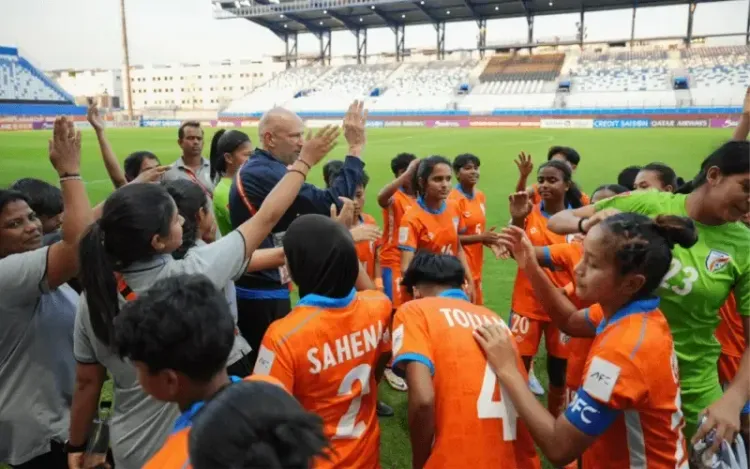
Head coach Joakim Alexandersson prioritized development and a distinctive playing style early on, preferring long-term advancement over short-term defensiveness. “I refuse to be the type of coach who simply pulls back with 10 players in a youth tournament to cling to results and play ultra-defensively for the entire match,” he stated to AIFF after India's campaign concluded.
“I believe that approach is not beneficial for our players. I would much rather focus on playing our game while simultaneously challenging our opponents. I am a proponent of player development, and at this age, we must implement what we practice during training. It would not be appropriate for me as a coach to switch to a more defensive strategy than we have been practicing,” he explained.
India's methodology was shaped by this philosophy throughout all three matches. The campaign kicked off with a 0-6 loss to Japan, followed by a 0-5 defeat to Australia. Despite these outcomes, India exhibited structure, organization, and controlled gameplay during specific phases, especially when competing with concentration and discipline.
“This tournament has been remarkable, providing us the opportunity to qualify and compete against Asia’s leading teams, giving us valuable insights into the strengths and weaknesses of all participants. That has been incredibly exhilarating,” remarked the Swedish coach, who has been with the team since December 2024.
“In terms of our team’s overall performance, I believe we accomplished many positive things. What pleases me most is that we appeared very organized throughout all three matches. However, individual errors have been too punishing, particularly in the first two matches.”
The significant score margins highlighted the learning curve. Defensive blunders and isolated mistakes were exploited by strong adversaries. In both opening matches, the Young Tigresses started well but ultimately struggled to maintain consistency in the latter stages.
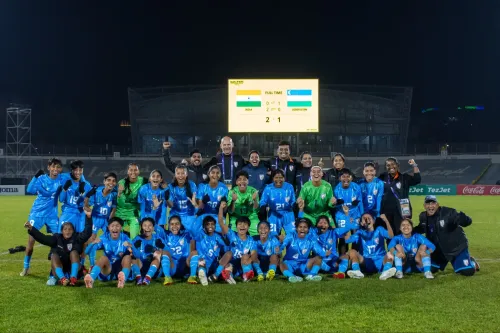
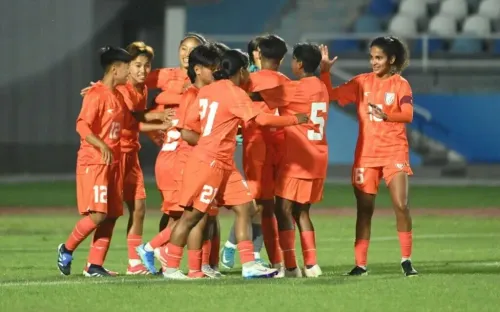
Nevertheless, they remained committed to their strategy, opting to play through pressure instead of retreating. This determination resulted in a definitive outcome in their final group match against Chinese Taipei, where they dominated and achieved a 3-1 victory. This performance displayed enhanced attacking intent and improved control during decisive moments, culminating in a well-earned triumph. This marked a significant milestone, as it was India’s first win in the AFC U20 Women’s Asian Cup since 2004 and notably the first women’s Asian Cup victory at any level since 2005.
“We played more aggressive attacking football and chose to press the opponents higher, which proved successful in this match, and I’m very pleased with that,” Alexandersson commented.
“However, there is still ample scope for improvement. While I think we performed well as a team overall, to compete effectively with the top teams in this tournament, we need to enhance in areas such as ball confidence, quicker decision-making, and increased intensity. Thus, we must also focus on the players' fitness,” he added.
India concluded the group stage in third place in Group C, earning three points from three matches but narrowly missing out on quarter-final qualification due to goal difference.
“Overall, I’m content,” Alexandersson stated. “We could have performed slightly better to avoid conceding so many goals in the first two matches, but it’s important to remember that this is a youth tournament.”
Consequently, this campaign is part of a broader developmental trajectory rather than a standalone result.
“I look forward to seeing these players in India’s senior women’s team in the future,” he noted. “Many of them possess the potential to excel for India.”
For the Young Tigresses, their experience in Thailand ultimately transcended mere results; it was about laying the groundwork for what lies ahead.
Point of View
Promising a bright future for women's football in India.
NationPress
20 Sept 2026
Frequently Asked Questions
What were the key challenges faced by India at the AFC U20 Women's Asian Cup?
India faced formidable opponents like Japan and Australia, which highlighted gaps in their performance. Despite the losses, the team showcased determination and a commitment to growth.
What did Coach Joakim emphasize during the tournament?
Coach Joakim stressed the importance of player development and maintaining an attacking style of play, rather than adopting a defensive approach.
What was the significance of India's victory over Chinese Taipei?
The 3-1 victory over Chinese Taipei marked India's first win in the AFC U20 Women’s Asian Cup since 2004 and their first women's Asian Cup victory at any level since 2005.
How did the team perform overall in the tournament?
India finished third in Group C with three points, narrowly missing out on quarter-finals due to goal difference, but displayed organization and determination throughout.
What are the future prospects for these players?
Coach Joakim expressed optimism about seeing many of these players in India’s senior women’s team in the future, highlighting their potential.