India need more pacers, power hitters after Women's T20 WC exit: Ian Bishop
Synopsis
Ian Bishop's verdict on India's 2026 Women's T20 World Cup exit is blunt: injuries were unfortunate, but the structural gaps — no potent seamers, no reliable power hitters, 12 dropped catches — are self-inflicted. Until India runs a deliberate hunt for seamers and the WPL matures enough to produce format-specific match-winners, Australia's six-title dominance will remain out of reach.
Key Takeaways
India were eliminated at the league stage of the 2026 ICC Women's T20 World Cup , losing to South Africa and Australia .
Former West Indies pacer Ian Bishop called for a 'deliberate hunt' for potent seamers ahead of the next T20 World Cup.
Sree Charani was the tournament's leading wicket-taker with 14 scalps ; Shafali Verma had a Power-play strike-rate of 171 , per CricViz .
India dropped 12 catches across the tournament, including four against Bangladesh.
Injuries to Amanjot Kaur , Kashvee Gautam , and Shreyanka Patil forced India to field a different bowling combination in all five matches.
Bishop defended the WPL but said it needs more time and deliberate structuring to produce format-ready Indian players.
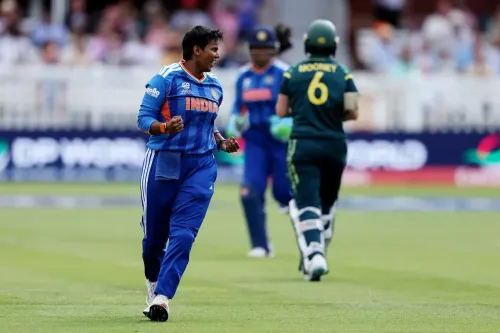
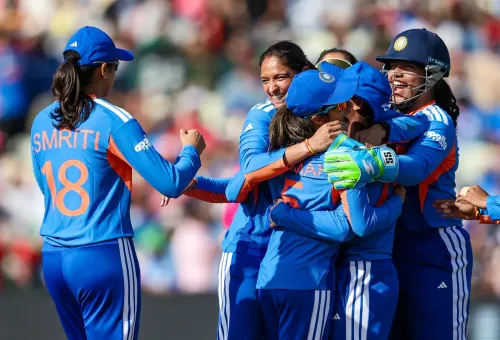
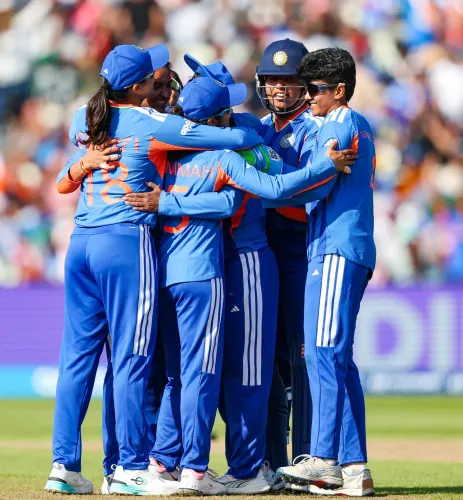
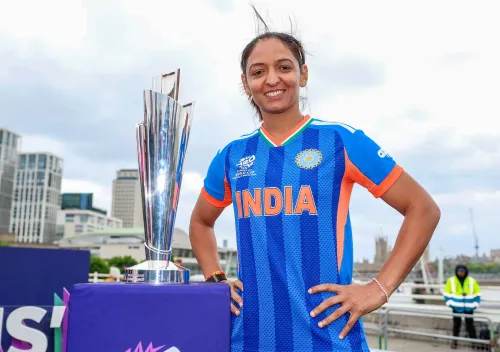
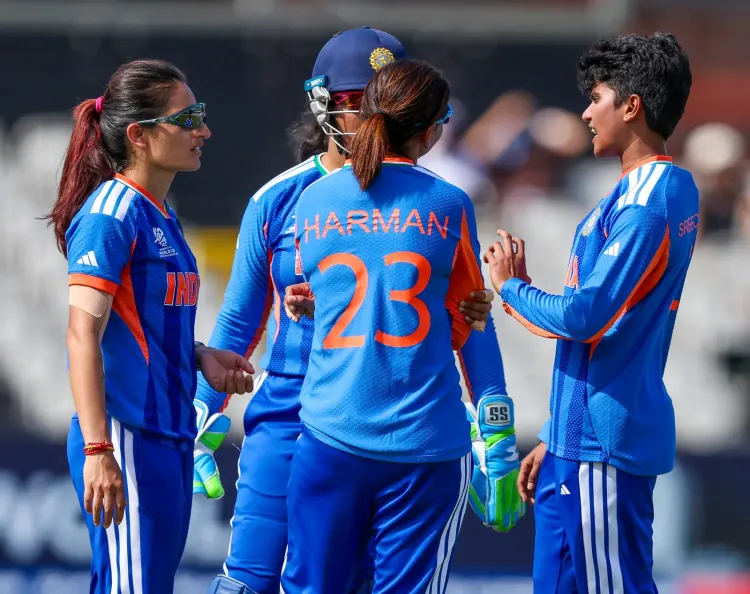
Former West Indies fast bowler Ian Bishop has called on India to launch a deliberate hunt for potent seamers and develop greater batting firepower if they are to close the gap on six-time champions Australia, who eliminated Harmanpreet Kaur's side from the 2026 ICC Women's T20 World Cup at Lord's on Sunday, 29 June.
India's campaign ended at the league stage — a recurring theme — after defeats to South Africa and Australia. The Harmanpreet-led side struggled with a settled playing eleven, coordination across departments, and a mounting injury list that disrupted both batting order and bowling combinations throughout the tournament.
Bishop's Diagnosis: Pace and Power
Speaking as an ICC Women's T20 World Cup expert at JioStar's Media Day on Monday, 30 June, Bishop was direct about what India must address. 'From a bowling perspective, there needs to be more penetration. They were unfortunate with injuries, Shreyanka Patil going out, and they need some pace additions, I believe,' he said.
He drew a clear line between India's current bowling profile and Australia's match-winning formula. 'With a little bit more balance in the bowling attack, with a little bit more pace, cutting edge in addition to the spinners is one thing — and in T20 cricket now, where Australia have been very good in winning six titles, is the power in their batting. India does have a little bit of that, but they need more,' Bishop noted.
He also questioned the batting order management in the Lord's defeat, suggesting that Richa Ghosh could have been promoted earlier when Jemimah Rodrigues was finding it difficult to accelerate. 'I wonder if Richa Ghosh could have come in a little bit earlier, when Jemimah Rodrigues was struggling to get the ball away. So those are little points to look back on,' he added.
The Numbers Behind the Exit
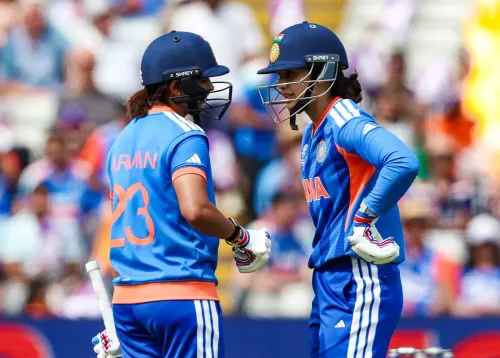
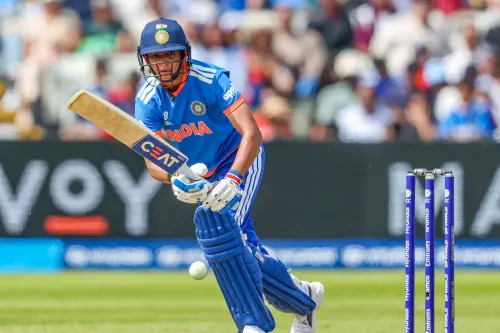
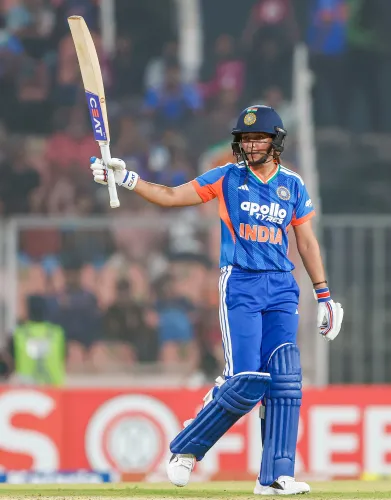
According to data from CricViz, India did have individual bright spots. Shafali Verma posted a Power-play strike-rate of 171 and showed growth as an all-rounder, while Sree Charani finished as the tournament's leading wicket-taker with 14 scalps. However, the middle order — comprising Jemimah Rodrigues, Yastika Bhatia, Harmanpreet Kaur, Richa Ghosh, and Deepti Sharma — could not find consistent rhythm, and India were forced to field a different bowling combination in all five matches.
Injuries to Amanjot Kaur, Kashvee Gautam, and Shreyanka Patil compounded the problem. In the field, India dropped 12 catches across the tournament, including four against Bangladesh and two reprieves gifted to veteran Marizanne Kapp.
Was 170 Enough Against Australia?
On whether a target of 170 was a par score at Lord's, Bishop was unequivocal: India needed to aim higher. 'If 170 was par, it was a better total. I think that you had to aim for that sort of total... You want to be above those given the power of Australia's batting. I would agree with you, India needed to be above that 170,' he said.
He pointed to Jemimah Rodrigues eventually retiring out and Richa Ghosh not getting enough deliveries to make an impact as key tactical regrets. 'That's the sort of power that you wanted to utilise a little bit more of in hindsight,' Bishop observed.
On the seam bowling front, he was equally firm: 'Even for the injuries that India have had with their bowling pre-tournament and with Shreyanka Patil being injured in the tournament, India still need to find a couple of seamers before the next T20 WC comes... There has to be a deliberate hunt to get those effective seamers to go with their spinners.'
WPL's Promise and Its Limits
Questioned on why the Women's Premier League (WPL), now in its fourth year, has not yet produced the format-specific players India need, Bishop urged patience. 'It's still a very young tournament. You're starting to see some spin-offs of that, where young women in India are starting to see more and more cricket as a career option,' he said, adding that the WPL must be structured to groom Indian players specifically for high-pressure roles.
Drawing a parallel with the evolution of the Indian Premier League (IPL), Bishop noted that India initially relied heavily on overseas finishers and all-rounders before domestic talent matured. He argued the same trajectory is needed for women's cricket, with the WPL deliberately developing fast bowlers, wrist spinners, and power hitters. 'Your fast bowling group needs to be developed in the WPL more and more. Your wrist-spin bowling needs to be found. Your power-hitting dynamics still need to grow. So that will come in time,' he concluded.
The 2026 ICC Women's T20 World Cup semi-finals are scheduled for 30 June (Australia vs West Indies) and 2 July (England vs South Africa).
Point of View
Five different bowling combinations in five matches, and a middle order that never settled on batting positions. These are not injury-driven anomalies; they are systemic failures in squad planning. The WPL is four years old, yet India still cannot identify their best eleven in a global tournament. The seam bowling vacuum is the most urgent problem: India's reliance on spinners in T20 cricket is increasingly a strategic liability against batting lineups built on pace and power, as Australia have demonstrated across six titles. Until the BCCI runs a structured fast-bowling pipeline — not just a talent hunt — the gap will persist regardless of how many WPL seasons pass.
NationPress
29 Jun 2026
Frequently Asked Questions
Why did India exit the 2026 Women's T20 World Cup at the league stage?
India were eliminated after defeats to South Africa and Australia, finishing outside the semi-final places. Key factors included a misfiring middle order, constant changes in batting positions and bowling combinations, 12 dropped catches, and injuries to Amanjot Kaur, Kashvee Gautam, and Shreyanka Patil.
What did Ian Bishop say India must do to compete with Australia?
Bishop said India need to launch a 'deliberate hunt' for potent seamers and develop greater power-hitting depth. He argued that Australia's six T20 World Cup titles are built on a balance of pace, spin, and batting firepower — a combination India currently lacks.
Who were India's standout performers at the 2026 Women's T20 World Cup?
According to CricViz data, Sree Charani was the tournament's leading wicket-taker with 14 scalps, while Shafali Verma recorded a Power-play strike-rate of 171 and showed growth as an all-rounder. The middle order, however, struggled for consistency throughout.
Has the Women's Premier League (WPL) helped India's women's cricket?
Bishop believes the WPL is showing early benefits but remains too young to have delivered its full impact. He said young women across India are increasingly seeing cricket as a career option, but argued the tournament must be structured more deliberately to develop fast bowlers, wrist spinners, and power hitters for international cricket.
Was India's total of 170 enough against Australia at Lord's?
Bishop said 170 was roughly par but that India needed to post above that figure given Australia's batting power. He pointed to Jemimah Rodrigues retiring out and Richa Ghosh not getting enough deliveries as key tactical regrets that kept India below a truly competitive total.