PNS Hangor in Bay of Bengal: India on alert as Pakistan sub eyes return
Synopsis
A Chinese-built Pakistani submarine with three-week submerged endurance may be heading back to the Bay of Bengal — and a new Chinese-developed naval base in Bangladesh, engineered to dock that very class of vessel, sits just 1,000 km from India's Andaman command. India's eastern maritime flank has rarely looked this contested.
Key Takeaways
PNS Hangor , Pakistan's Chinese-built AIP diesel-electric submarine , may return to the Bay of Bengal after a port call in Colombo , according to a senior Pakistan Navy officer.
The submarine's Air-Independent Propulsion system allows it to stay submerged for up to three weeks — a significant edge over most Indian Navy diesel-electric vessels.
BNS Pekua , a Chinese-developed naval base near Cox's Bazar, Bangladesh , can berth up to 6 submarines and 8 surface vessels — far exceeding Bangladesh's own fleet of 2 submarines .
The base is approximately 1,000 km from the Andaman and Nicobar Islands and equidistant from Visakhapatnam , India's Eastern Naval Command headquarters.
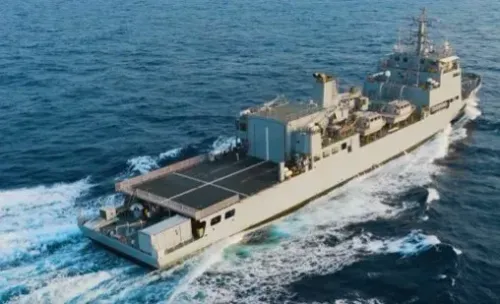
India deploys 4 Kamorta-class ASW corvettes, 16 shallow-water crafts , and P-8I patrol aircraft to monitor the Bay of Bengal, but analysts warn these assets could be stretched.
Bangladesh–Pakistan ties were renewed under Mohammad Yunus 's interim government and have continued after the new government took office in February 2025 .
India's naval establishment is on heightened alert after a senior Pakistan Navy officer indicated that PNS Hangor — an advanced Chinese-built diesel-electric attack submarine — could return to the Bay of Bengal, a development that intersects with growing concerns over the BNS Pekua naval base in Bangladesh. The warning, emerging after PNS Hangor's port call at Colombo, Sri Lanka, has sharpened India's focus on submarine activity in its eastern maritime neighbourhood.
What Makes PNS Hangor a Threat
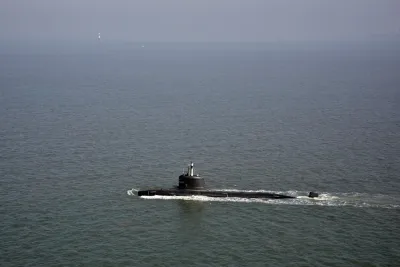
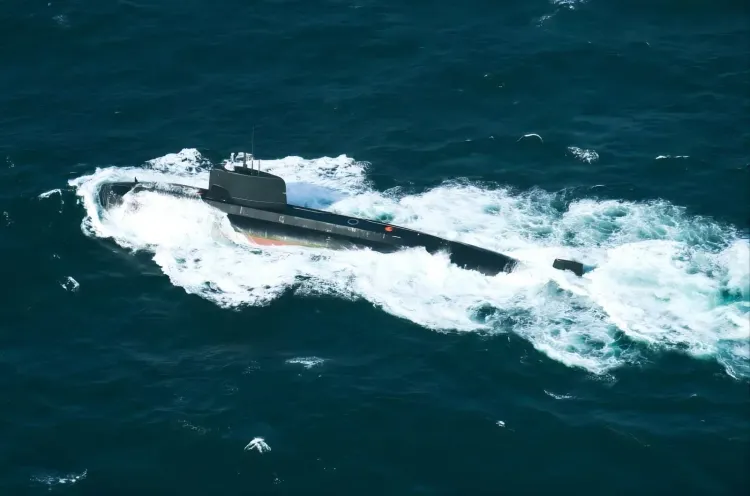
PNS Hangor is the lead vessel in a class of eight submarines being jointly built in China and Pakistan. It is an export variant of China's Type 039A/039B submarine platform and is equipped with an Air-Independent Propulsion (AIP) system — a capability that sets it apart from most of the Indian Navy's diesel-electric fleet. The AIP system allows the submarine to remain submerged for up to three weeks without surfacing to recharge batteries, dramatically reducing its acoustic signature and making detection significantly harder.
The submarine was formally inducted into the Pakistan Navy at Karachi before sailing to Colombo. It was on the return leg from that port call that a senior Pakistan Navy officer signalled the platform's potential return to the Bay of Bengal, according to reports.
BNS Pekua: The Strategic Wildcard Near Cox's Bazar
BNS Pekua is an advanced naval base developed by China for Bangladesh, situated near Cox's Bazar. The facility is designed to accommodate up to eight surface vessels and six submarines. Given that Bangladesh currently operates only two submarines, the excess berthing capacity is widely seen as intended for use by Chinese vessels and those of friendly nations.
The base also includes dry dock facilities engineered to specifications compatible with the Chinese Type 039A/039B submarine class — the same family to which PNS Hangor belongs. This detail has not been lost on Indian defence analysts.
'BNS Pekua may turn into a logistics hub for both Chinese and Pakistani submarines. These submarines could spend extended periods of time at the location,' a retired commodore-rank officer said. He noted that the base sits approximately 1,000 km from the Andaman and Nicobar Islands and is roughly equidistant from Visakhapatnam — the headquarters of India's submarine fleet and the Eastern Naval Command.
The Strategic Squeeze on India
A retired vice admiral of the Indian Navy described the strategic logic bluntly: 'BNS Pekua will certainly be a matter of concern for India, given the fact that New Delhi can do nothing if Chinese and Pakistani warships — both surface and sub-surface — berth there. India will simply have to deploy more assets for surveillance, leaving other areas uncovered. That is the real strategy.'
This comes amid reports of Chinese submarine and surface warship movements close to India's territorial waters around the Andaman and Nicobar archipelago, where India maintains a strategically critical tri-services command. The movement of adversarial naval assets near this chokepoint — which controls access between the Indian Ocean and the Pacific — is a longstanding pressure point for Indian planners.
Notably, Bangladesh renewed ties with Pakistan after Mohammad Yunus headed the interim government in Dhaka, and those ties have continued under the government that took office in February 2025.
India's Current Anti-Submarine Capabilities
The Indian Navy currently operates four Kamorta-class anti-submarine warfare corvettes and has begun inducting 16 anti-submarine shallow water crafts capable of hunting enemy submarines close to the coastline. It also deploys P-8I long-range maritime patrol aircraft to monitor submarine activity across the Bay of Bengal.
Despite this layered capability, analysts caution that persistent adversarial submarine presence — potentially sustained from a nearby logistics hub like BNS Pekua — would stretch India's surveillance assets and force difficult trade-offs in coverage. With PNS Hangor's possible return and BNS Pekua becoming operational, the geometry of India's eastern maritime threat calculus is shifting.
Point of View
So the only lever is surveillance — which is precisely what the retired vice admiral says the strategy is designed to exhaust. With the Andaman tri-services command already tracking Chinese movements near its waters, the addition of a Pakistani AIP submarine with extended endurance and a nearby logistics hub changes the calculus from episodic intrusion to potential persistent presence. That is a qualitatively different threat, and India's current ASW order of battle — four corvettes, 16 shallow-water crafts, and a P-8I fleet — was not sized for it.
NationPress
29 Jun 2026
Frequently Asked Questions
What is PNS Hangor and why is India concerned about it?
PNS Hangor is a Chinese-built diesel-electric attack submarine inducted into the Pakistan Navy, equipped with Air-Independent Propulsion (AIP) that allows it to remain submerged for up to three weeks. India is concerned because a senior Pakistan Navy officer indicated it may return to the Bay of Bengal, bringing an advanced stealth submarine into India's immediate eastern maritime neighbourhood.
What is BNS Pekua and who built it?
BNS Pekua is an advanced naval base built by China for Bangladesh near Cox's Bazar. It can accommodate up to eight surface vessels and six submarines, and includes dry dock facilities designed for the Chinese Type 039A/039B submarine class — the same family as PNS Hangor.
Why does BNS Pekua worry Indian defence planners?
Bangladesh operates only two submarines, leaving significant excess capacity at BNS Pekua that could be used by Chinese and Pakistani vessels. Retired Indian Navy officers have described it as a potential logistics hub that could sustain extended submarine patrols just 1,000 km from the Andaman and Nicobar Islands and Visakhapatnam.
What anti-submarine capabilities does India currently have in the Bay of Bengal?
India deploys four Kamorta-class anti-submarine warfare corvettes, 16 newly inducted shallow-water anti-submarine crafts, and P-8I long-range maritime patrol aircraft for Bay of Bengal surveillance. However, analysts warn that sustained adversarial submarine presence from a nearby base could stretch these assets thin.
How have Bangladesh–Pakistan relations changed recently?
Bangladesh renewed ties with Pakistan when Mohammad Yunus headed the interim government in Dhaka, and those diplomatic ties have continued under the new government that took office in February 2025. This rapprochement is viewed as a contributing factor to the strategic access concerns around BNS Pekua.