Indonesia Women debut at Asia Cup 2025: 12 years from zero to Dubai
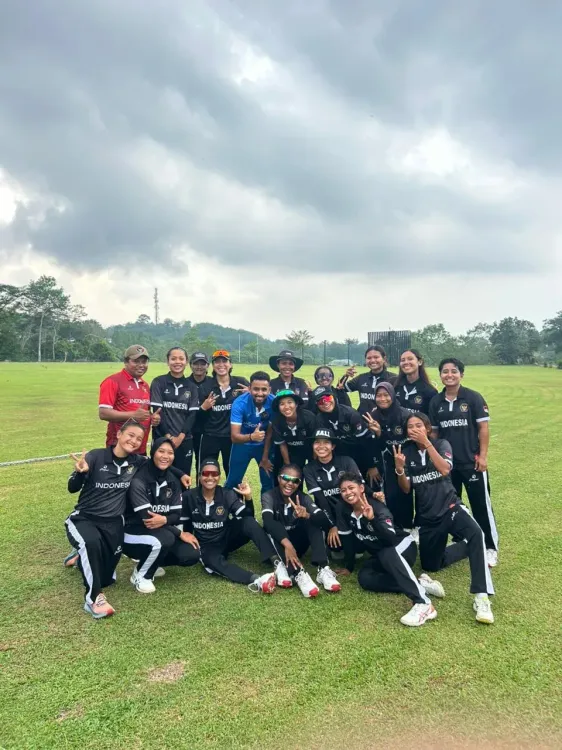
Synopsis
Indonesia's women cricketers walk into Dubai International Stadium on Monday with no turf pitch back home, a squad drawn from 21 islands, and a dressing room that prays together across five faiths. Twelve years after starting from scratch, a nation of 17,000 islands has built a ranked, qualifying, competing cricket team — and the Asia Cup is just the beginning.
Key Takeaways
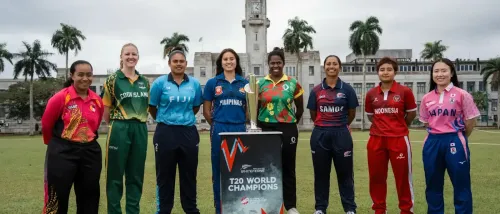
Indonesia make their Women's Asia Cup debut on Monday at Dubai International Stadium , facing Bangladesh , Sri Lanka and hosts UAE .
Captain Ni Putu Ayu Nanda Sakarini discovered cricket in high school in 2013 , having previously played badminton, and quit teaching to pursue the sport full-time.
Indonesia qualified via five successive wins at the ACC Women's Premier Cup in Malaysia in June 2025 , including a 113-run win over Oman.
The country has approximately 100,000 women playing cricket across 21 islands , but still has no turf pitch — all provinces use AstroTurf .
Two international-standard turf grounds are contracted and expected to be ready by November–December 2025 .
The squad is 100% local and includes players of Hindu, Muslim, Christian, Catholic and Buddhist faiths, with players currently ranked 21st in the world.
Indonesia's senior women's cricket team will make their Women's Asia Cup debut on Monday at Dubai International Stadium, facing Bangladesh in a match that marks the culmination of a 12-year journey from a country that had no Women's T20I status, no turf ground, and virtually no formal cricket structure as recently as 2013. The side will also face defending champions Sri Lanka and hosts UAE in the group stage.
A Nation Builds from Zero
Twelve years ago, cricket in Indonesia — the world's fourth most populous country, spread across more than 17,000 islands — existed almost entirely within expatriate clubs. There were no turf pitches, no national women's championship, and no pathway to international competition. A national women's championship was established in 2014, followed by a development tour to Jaipur in 2015, and cricket was incorporated into Indonesia's National Sports Games in 2016. The federation, Persatuan Cricket Indonesia, used Kasti — a traditional Indonesian bat-and-ball game — to introduce cricket in schools, and wrote its coaching curriculum in Bahasa Indonesia from the outset. The International Cricket Council (ICC) has also supported this push, extending commentary and documentation in Bahasa Indonesia, spoken by roughly 90 percent of the country's residents. The ICC's Cricket Criiio initiative introduced the sport in elementary schools using plastic bats and balls.
The Captain Who Chose Cricket Over Badminton
Leading Indonesia out will be Ni Putu Ayu Nanda Sakarini, a wicketkeeper-batter who first picked up a cricket bat at high school in 2013. Nanda grew up playing badminton — Indonesia's most celebrated Olympic sport, with eight gold, six silver and eight bronze medals — but found the path to the national badminton team too crowded. “Because of that, I loved the sport. But badminton has so many players, and it was difficult to be involved in the national team. So, I thought cricket was good for me, and now it’s my career,” she said. She made her Indonesia T20I debut in 2019 and has since given up a teaching career in physical education to commit to cricket full-time. “It was difficult for me to maintain the time for cricket and teaching. So, I quit the teaching job,” she said. “It’s really an exciting and incredible feeling and a big honour for me to lead Indonesia on such a big stage. I feel very proud to be part of this journey.”
The Coach, the Qualifying Run, and What Came Next
Head coach Nitish Salekar, who played cricket in India for 16 years and represented Maharashtra before serving with Thailand's women's set-up, arrived to find a talent pool already deeper than what he had encountered in Bangkok. “When I came, the depth of women cricketers was more in Indonesia. We probably had 30-35 girls playing in the national camp at one point,” he said. Indonesia secured their Asia Cup berth with five successive wins — over Singapore, Kuwait, Malaysia, Oman and Hong Kong — at the ACC Women's Premier Cup in Malaysia in June 2025. A 113-run victory over Oman confirmed the historic qualification. A preparatory camp in Dharamshala, Himachal Pradesh in November 2025 and a partnership with Western Australia — which saw Ni Made Putri Suwandewi, known as Tori, join Perth Scorchers as an associate rookie in the 2024 WBBL — underlined how seriously the federation is investing in elite exposure. Indonesia joined the Asian Cricket Council in 2024 through its AGM in Bali, with membership approved by then chairman Jay Shah, now head of the ICC.
100,000 Women Playing, Still No Turf Pitch
According to Persatuan Cricket Indonesia chairman Abhiram Singh Yadav, the country now has approximately 200,000 cricketers, of whom roughly 100,000 are women. Cricket has spread to 21 islands across the archipelago. Yet the entire country still plays on AstroTurf — all 21 provinces use synthetic surfaces. The federation has contracted two international-standard turf grounds, which Yadav expects to be ready by November or December 2025. “It will be a massive game-changer, especially considering the fact that this team has come so far practising on synthetic wickets till now,” said Salekar. The squad draws players from as far as Papua, East Nusa Tenggara and Jakarta, beyond the Bali base most call home. The women's team is 100 percent local — unlike the men's side, which includes expatriate players.
Diversity, Faith, and a Dressing Room Like No Other
Indonesia's dressing room reflects the country's extraordinary religious and cultural plurality. The squad includes players who wear the hijab and those who do not, alongside Christian, Catholic, Buddhist and Hindu players — the last faith being dominant in Bali, where most of the squad is based. “Our difference in religion does not really matter because we share the same goals — to represent Indonesia,” said Nanda. “Before every match, all the players stand and pray together by taking turns, despite whatever their religion is,” added Yadav. The federation's target is a top-12 world ranking within five years and top-10 thereafter. Indonesia are currently ranked 21st in the world. With cricket returning to the Olympics, Nanda is already looking further ahead — one step at a time. “We’ll start with the Asia Cup, and hopefully, sometime in the future, we’ll play in the Olympics as well,” she said.
Point of View
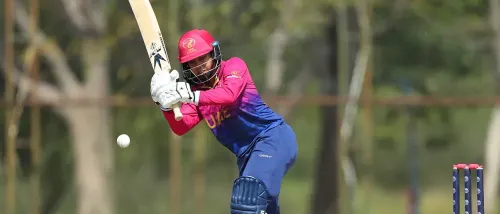
Not a feel-good one. A federation that started by borrowing a traditional bat-and-ball game to explain cricket in schools — and wrote its entire coaching curriculum in Bahasa Indonesia before it had a single turf pitch — has outpaced more established associate nations by treating grassroots infrastructure as the product, not the pathway. The real test now is whether the momentum survives its first exposure to elite competition: squads that have played on turf since childhood, with full-time professional support systems. Indonesia's AstroTurf-trained batters stepping onto the Dubai outfield will reveal exactly how wide that gap remains — and whether the two turf grounds due by year-end can begin to close it before the next qualification cycle.
NationPress
15 Oct 2026
Frequently Asked Questions
When and where is Indonesia playing their first Women's Asia Cup match?
Indonesia play their first-ever Women's Asia Cup match on Monday at Dubai International Stadium, against Bangladesh. They will also face defending champions Sri Lanka and hosts UAE in the group stage.
How did Indonesia qualify for the Women's Asia Cup 2025?
Indonesia qualified by winning five consecutive matches — against Singapore, Kuwait, Malaysia, Oman and Hong Kong — at the ACC Women's Premier Cup in Malaysia in June 2025. A 113-run victory over Oman sealed their historic first Asia Cup berth.
Who is the captain of the Indonesia women's cricket team?
Ni Putu Ayu Nanda Sakarini, a wicketkeeper-batter from Bali, captains the side. She took up cricket in high school in 2013 after finding badminton too competitive, made her T20I debut in 2019, and quit her teaching job to commit to cricket full-time.
How developed is women's cricket in Indonesia?
Indonesia now has an estimated 100,000 women playing cricket across 21 islands, up from virtually nothing a decade ago. The country is ranked 21st in the world but still has no turf pitch — all 21 provinces use AstroTurf. Two international-standard turf grounds are expected to be ready by November or December 2025.
What is Indonesia's long-term target in women's cricket?
The federation's stated goal is to reach the top 12 in the world within five years and the top 10 thereafter. Head coach Nitish Salekar estimates Indonesia could be competitive at senior Women's T20 World Cups within three to five years, while captain Nanda has also cited the Olympics — where cricket returns in the future — as an eventual ambition.