MYAS forms 14-member committee to build sustainable sports league ecosystem
Synopsis
India's sports ministry has pulled together a 14-member panel — spanning IPL, Jio Hotstar, Sony, JSW, Adani Sportsline, and the IOA — to design a blueprint for a financially sustainable national sports league ecosystem. With an eight-week deadline and a mandate covering Viability Gap Funding, grassroots integration, and governance reform, the move signals that the government is serious about moving beyond the IPL model and building commercially viable leagues across Olympic, women's, and indigenous sports.
Key Takeaways
The Ministry of Youth Affairs & Sports has constituted a 14-member committee on 18 November 2026 to build a sustainable sports league ecosystem in India.
The panel is convened by Kunal , Joint Secretary (Governance), Department of Sports, and includes senior representatives from BCCI/IPL , IOA , Jio Hotstar , Sony Pictures , JSW Sports , Adani Sportsline , and DD Sports .
The committee must submit its final recommendations to the Ministry within eight weeks .
Priority focus areas include Olympic sports , women's sports , youth sports , indigenous sports , and emerging sports .
Potential interventions under review include Viability Gap Funding (VGF) , direct financial assistance, and concessional access to government sports infrastructure.
The panel will also propose a governance framework covering financial transparency, athlete welfare, integrity, and a phased implementation roadmap based on global best practices.
The Ministry of Youth Affairs & Sports (MYAS) has constituted a 14-member high-level committee to formulate a comprehensive framework for developing a 'wider, professionally managed, and financially sustainable' sports league ecosystem in India. The panel, announced on 18 November 2026, has been given eight weeks to submit its final recommendations to the Ministry.
Committee Composition
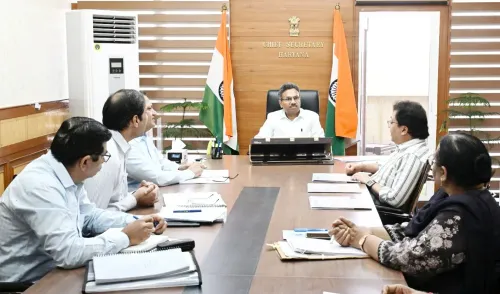
Kunal, Joint Secretary (Governance) in the Department of Sports, has been named as the convener. The panel brings together a cross-section of government officials, sports administrators, broadcasters, and industry leaders. Members include Vineel Krishna (Joint Secretary, Khelo India), Raghuram Iyer (CEO, Indian Olympic Association), Hemang Amin (COO, IPL, BCCI), B Srinivasan (RIL), P.K.S.V. Sagar (GMR Sports), Sanjay Adesara (Adani Sportsline), Divyanshu Singh (JSW Sports), Ishan Chatterjee (Jio Hotstar), Rajesh Kaul (Sony Pictures), Anupam Swaroop (DD Sports), Parag Darade (Zee Entertainment), Abhijit Bhattacharya (BVL), and Nandan Kamath.
Key Mandate and Scope
The committee is empowered to consult National Sports Federations, existing league officials, investors, and sports technology firms, and may hold its deliberations in physical, online, or hybrid formats. Its core mandate includes assessing the present sports league ecosystem to identify major constraints, pinpointing priority sports — particularly Olympic sports, women's sports, youth sports, indigenous sports, and emerging sports — and recommending tailored operational models suited to each discipline's sporting and commercial potential.
Bridging Commercial Viability Gaps
The Ministry acknowledged that while several Indian sports leagues have achieved varying levels of success, many disciplines with strong sporting and social potential continue to face commercial viability hurdles in their early stages. To address this, the committee will examine structured government facilitation mechanisms alongside active private-sector participation. These may include Viability Gap Funding (VGF), direct and indirect financial assistance, and concessional access to government sports infrastructure. The panel will also evaluate strategies to attract corporate capital, franchise ownership, sponsorships, broadcasting and digital rights, and Corporate Social Responsibility (CSR) financing.
Grassroots Integration and Governance Framework
Beyond the commercial dimension, the committee has been tasked with proposing strategies to integrate leagues with schools, colleges, universities, and local clubs to foster grassroots participation among youth and women. It will also establish an institutional governance framework covering financial transparency, athlete welfare, and integrity standards, underpinned by a phased implementation roadmap informed by global best practices. Notably, a robust league structure is envisaged to provide regular, high-quality competitive pathways for talent identification and athlete development, while simultaneously generating employment across sports management, broadcasting, technology, events, and allied services.
What Comes Next
The committee's recommendations, due within eight weeks, are expected to lay the groundwork for a policy architecture that could reshape how sports leagues are structured, funded, and governed in India. The outcome will be closely watched by broadcasters, investors, and sports federations alike, given the significant public and private capital already deployed in Indian sports properties.
Point of View
Streaming giants, conglomerate sports arms, and a public broadcaster — reflects how fractured and unequal India's sports league landscape actually is: the IPL operates on a different commercial planet from kabaddi or football. The real test will be whether the panel recommends structural support for smaller leagues without simply subsidising poor governance. The inclusion of Viability Gap Funding as a tool is a pragmatic signal, but VGF has historically worked best in infrastructure, not entertainment-adjacent businesses where audience demand is the core variable. Eight weeks is a tight timeline for a mandate this broad, and the risk is a report that lists best practices without the institutional teeth to enforce them.
NationPress
18 Nov 2026
Frequently Asked Questions
Why has the Ministry of Youth Affairs & Sports formed this committee?
The ministry formed the committee to create a comprehensive policy framework for a financially sustainable sports league ecosystem in India. While some leagues have succeeded commercially, many sports with strong social potential struggle to become viable in their early stages, and the committee is meant to address those structural gaps.
Who is on the 14-member sports league committee?
The committee is convened by Kunal, Joint Secretary (Governance) in the Department of Sports, and includes Vineel Krishna (Khelo India), Raghuram Iyer (IOA CEO), Hemang Amin (COO, IPL/BCCI), and representatives from RIL, GMR Sports, Adani Sportsline, JSW Sports, Jio Hotstar, Sony Pictures, DD Sports, Zee Entertainment, BVL, and legal expert Nandan Kamath.
What will the committee recommend?
The committee is mandated to recommend tailored operational models for priority sports, mechanisms for government and private-sector collaboration, Viability Gap Funding, governance frameworks covering athlete welfare and financial transparency, and strategies to integrate leagues with schools, colleges, and local clubs.
When will the committee submit its recommendations?
The committee is required to submit its final recommendations to the Ministry of Youth Affairs & Sports within eight weeks of its constitution. It may hold its deliberations in physical, online, or hybrid modes.
Which sports categories are prioritised under this initiative?
The committee has been specifically directed to identify priority sports including Olympic sports, women's sports, youth sports, indigenous sports, and emerging sports, and to recommend operational models tailored to each category's sporting and commercial potential.