Pujara backs Ishan Kishan at No. 3, hails Naman Dhir's bowling IQ
Synopsis
Cheteshwar Pujara is reframing the debate around Ishan Kishan — not as an underperformer chasing big scores, but as a powerplay specialist doing exactly what India's attack-heavy top order requires. His equally sharp praise for Naman Dhir's bowling IQ signals that two of India's less-heralded names may be quietly cementing their T20I cases.
Key Takeaways
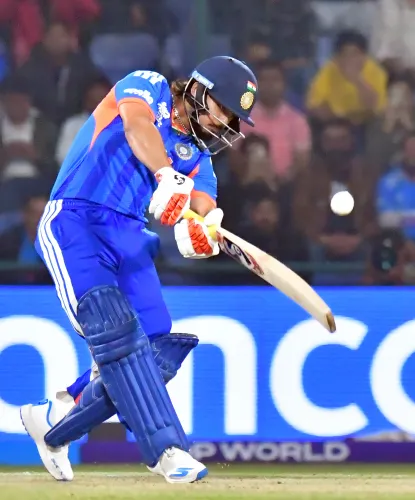
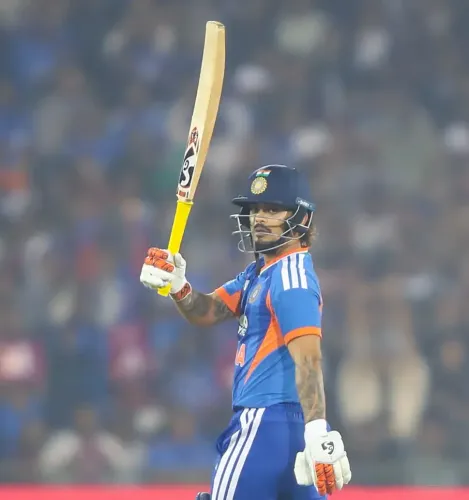
Cheteshwar Pujara backed Ishan Kishan 's No.
3 role in India's ongoing T20I series , saying he is delivering what the team needs in the powerplay.
Pujara argued that large individual scores are not the right benchmark for Kishan given India's all-attacking top order.
Kishan has been contributing quickfire 30-40 run cameos alongside maximising the powerplay, according to Pujara.
Naman Dhir was praised for his bowling control, stump-to-stump lines, and ability to stick to — and adjust — his plans mid-spell.
Pujara highlighted that Dhir bowls at speeds considered slow even for a T20 spinner, calling it a sign of deliberate pace variation and self-awareness.
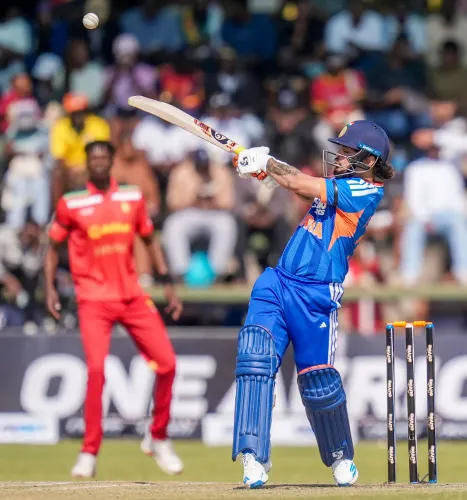
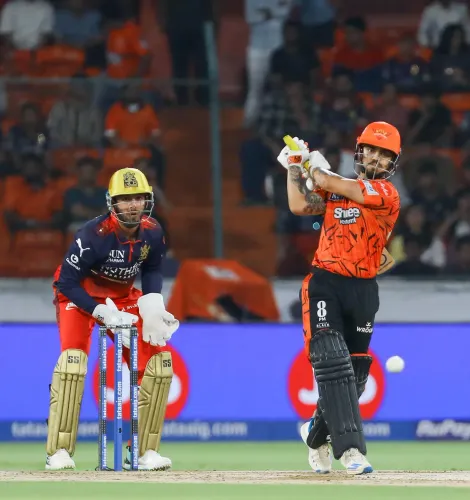
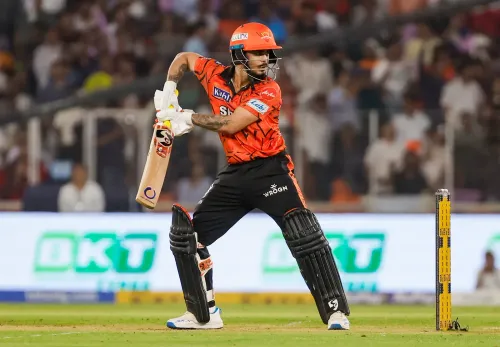
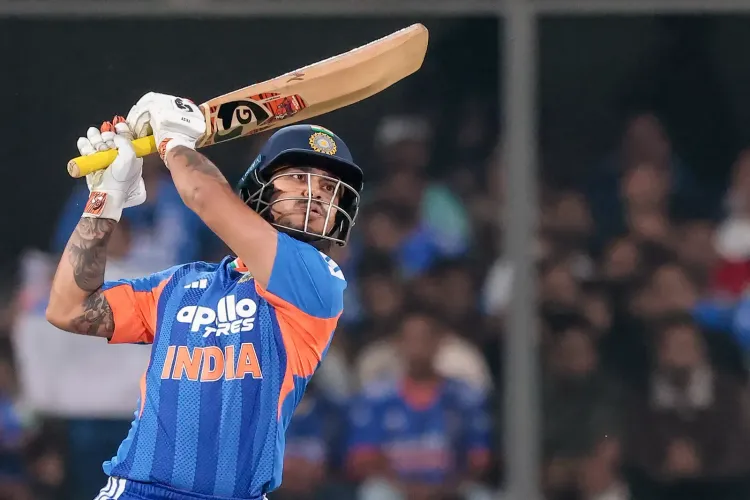
Former India batter Cheteshwar Pujara has thrown his weight behind Ishan Kishan's role at No. 3 in India's ongoing T20I series, arguing that the wicketkeeper-batter's value should be measured by his contribution to the team's scoring tempo rather than by the size of his individual innings. Pujara has also identified Naman Dhir as a bowler with rare tactical intelligence for the shortest format.
Why Kishan's Role is Misunderstood
Pujara's defence of Kishan centres on the structural demands of India's current top order, which is built almost entirely around explosive, attacking batters. In that context, he argues, expecting any single batter to consistently post large scores misreads the team's template.
'Coming in at number 3, Ishan Kishan is giving the Indian team what they need. I don't think you will see a big score every time because everyone in the top order is an explosive player. Their role is only to give the team a good start and to utilise the powerplay to the maximum. So, whenever Ishan Kishan comes out to bat, he has maximised the powerplay, and after that, if you want him to accelerate, he has scored those quickfire 30-40 runs as well,' Pujara told JioStar.
He added: 'I think that's good enough. Maybe, for his personal milestones, you might want him to score big runs, but he is doing the job for the team at the moment.'
Dhir's Bowling Intelligence Draws Praise
Pujara reserved particular praise for allrounder Naman Dhir, pointing not just to results but to the thought process underpinning his deliveries. He cited Dhir's use of stump-to-stump lines, pace variations, and mid-spell tactical adjustments as signs of genuine bowling awareness.
'Naman has shown that he has great control and has the ability to pick up wickets. He is aware of what the batsman is doing and how he can get his wicket. Mostly, he keeps the ball on the stumps and wants to cramp the batsman, like he did with Kamil Pooran in the last game, where he was hit for three sixes. The execution was not that good on the first two deliveries, but he stuck to his plan, adjusted his line a bit, and got the wicket,' Pujara said.
Pujara also highlighted that Dhir operates at speeds that would be considered slow even for a T20 spinner — something he sees as a deliberate weapon rather than a limitation. 'It's great game awareness. And if you look at his speed, these speeds are quite slow for a spinner in the T20 format, so that shows that he is varying his pace constantly, deceiving the batsman with variations in line and length, and he understands his own strength as a bowler,' he added.
The Broader Picture for India's T20 Setup
Pujara's assessments reflect a wider debate about how to evaluate players within heavily attack-focused batting line-ups. With India prioritising powerplay domination, individual scorecards can flatter or mislead depending on the phase of play a batter occupies.
Notably, Dhir's emergence as a bowling option adds an extra dimension to India's allrounder stocks — a resource the team has historically struggled to balance at the T20 level. As the series progresses, both players will be expected to deliver on the specific briefs Pujara has outlined.
Point of View
But it also raises a question seldom asked: if no batter in an all-explosive top order is expected to anchor, who absorbs pressure when wickets fall early? Kishan's powerplay role is tactically coherent, yet India's dependence on collective aggression leaves them exposed to the kind of top-order collapse that has undone them in knockout cricket. Dhir's bowling intelligence is a genuine asset, but slow T20 spinners live and die on surfaces — his effectiveness on flatter decks in India will be a sterner test of the tactical virtues Pujara identifies.
NationPress
14 Oct 2026
Frequently Asked Questions
Why has Cheteshwar Pujara backed Ishan Kishan at No. 3 in T20Is?
Pujara argues that Kishan's role is to maximise the powerplay within an all-attacking top order, not necessarily to post large individual scores. He said Kishan has fulfilled that brief by accelerating in the powerplay and contributing quickfire 30-40 run cameos when required.
What did Pujara say about Naman Dhir's bowling?
Pujara praised Dhir for his control, ability to bowl stump-to-stump, and tactical adaptability — citing how Dhir adjusted his line after being hit for three sixes by Kamil Pooran to eventually take the wicket. He also noted that Dhir's slower speeds signal deliberate pace variation rather than a weakness.
Who is Naman Dhir and why is he significant for India?
Naman Dhir is an allrounder who has emerged as a useful bowling option for India in the ongoing T20I series. His ability to vary pace and maintain a disciplined stump line adds another dimension to India's allrounder resources, which have historically been a challenge to balance at T20 level.
What is India's current T20I top-order strategy?
India's T20I top order is built around explosive, attacking batters whose primary brief is to dominate the powerplay rather than anchor the innings. Pujara's comments suggest the team prioritises collective scoring momentum over individual milestone contributions from any single batter.
Where did Pujara make these comments?
Cheteshwar Pujara made these remarks in an interview with JioStar during India's ongoing T20I series.