Somali refugee coach Janay Adhan defies norms to transform Dadaab youth
Synopsis
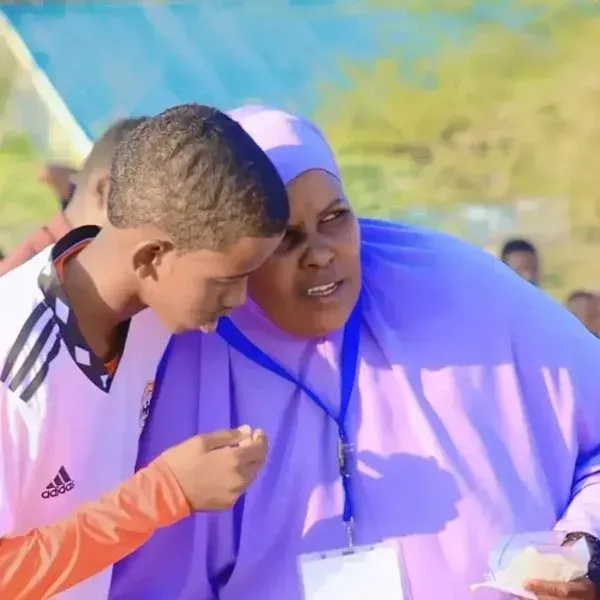
A 41-year-old Somali refugee and mother of 12 is coaching youth football inside Kenya's Dadaab complex — facing down community opposition, buying kit with her own money, and counselling players away from drugs and deadly migration routes. Three tournament titles later, Janay Adhan's pitch may be the most consequential space in the camp.
Key Takeaways
Janay Issack Adhan , 41 , a Somali refugee and mother of 12 , coaches youth football at Dagahaley Refugee Camp in Garissa County , Kenya.
She began coaching five years ago to steer young refugees away from drugs, criminal gangs, and dangerous migration to Europe.
Community members have pressured her family to stop her coaching, citing traditional views on women's roles in sport.
Under her guidance, Walalah FC has won at least three tournament titles ; she has used her own money to buy footballs and uniforms.
International funding cuts have reduced food rations and strained water access at the camp, deepening the hardships she works against.
Adhan has called on donors to invest in football pitches and youth empowerment programmes across the Dadaab refugee complex .
Janay Issack Adhan, a 41-year-old mother of 12 and Somali refugee, has become an unlikely beacon of change at Dagahaley Refugee Camp in Garissa County, northeastern Kenya — coaching young Somali refugees through football and steering them away from drugs, crime, and perilous migration routes. Her story, emerging from the sprawling Dadaab refugee complex, challenges deep-rooted cultural resistance to women in sport.
A Coach Born Out of Crisis
Adhan took up coaching five years ago after witnessing the toll that idleness and despair were taking on camp youth. 'I became a football coach five years ago when I realised that many young people in the refugee camp had no one to guide them. Many had fallen into drug and substance abuse, joined criminal gangs, or died while attempting to reach Europe,' she said.
Having arrived in Kenya in 1991, shortly after the Dadaab complex was established, Adhan has lived through decades of refugee hardship. That firsthand experience, she says, is precisely what drives her to act.
Cultural Pushback and Quiet Defiance
Adhan's decision to coach football has not come without cost. Some community members, citing traditional views on women's roles, have approached her elderly mother and husband, urging them to persuade her to stop. Critics have argued that football is not an appropriate sport for women.
Adhan has remained unmoved. 'I have no time to listen to negative criticism. My goal is to ensure young people have something meaningful to engage in until they can make informed decisions about their future,' she said. After each tournament, she holds counselling sessions with her players, encouraging them to focus on building stable futures.
Funding Cuts Deepen Camp Hardships
The backdrop to Adhan's work is one of mounting humanitarian strain. She says life for refugees has grown harder in recent years as international funding cuts have reduced food rations and strained access to water and other essential services. 'The number of young people has increased significantly, yet many remain unemployed, while funding cuts have forced humanitarian agencies to reduce food rations and other essential services, including access to water,' Adhan said.
She noted that these pressures have pushed some young people toward dangerous irregular migration routes to Europe, with some losing their lives in the attempt. Neither the Kenyan government nor humanitarian agencies have been fully able to address these gaps, she said.
Results on the Pitch — and Beyond
Liban Abdikadir, captain of Walalah FC, said the team has won at least three tournament titles under Adhan's guidance — a remarkable record given the resource constraints of camp life. 'Unlike many other teams in the refugee camp, Janay has led our team to Garissa to play a friendly match,' Abdikadir said.
Fellow player Mohamed Ahmed credited Adhan with regularly counselling team members against substance abuse, and noted that she has used her own money to purchase footballs and uniforms when no other support was available. Local youth continue to form teams despite a chronic shortage of basic equipment.
A Call for Investment in Youth Sport
Adhan has appealed to donors and organisations to fund youth empowerment programmes and invest in football pitches and sports infrastructure across the Dadaab complex. She trains her team every Friday and Saturday, fitting sessions around her responsibilities as a mother of 12. Her players say her consistency has earned their complete trust — and, for many, has been a lifeline.
Point of View
Humanitarian funding retreat, and the social cost of youth unemployment in closed camps. The detail that she buys kit with her own money is not a heartwarming aside — it is an indictment of the gap between donor pledges and ground-level delivery. Dadaab has existed for over three decades; the fact that a volunteer coach with no institutional backing is the primary buffer between young men and irregular migration routes should prompt harder questions about what structured investment in camp sport and livelihood programmes would actually cost — and why it hasn't happened.
NationPress
20 Oct 2026
Frequently Asked Questions
Who is Janay Issack Adhan?
Janay Issack Adhan is a 41-year-old Somali refugee and mother of 12 who lives at Dagahaley Refugee Camp in Kenya's Dadaab complex. She has been coaching youth football there for five years, using the sport to steer young refugees away from drugs, crime, and dangerous migration.
Where is the Dadaab refugee complex located?
The Dadaab refugee complex is located in Garissa County in northeastern Kenya. It is one of the largest refugee settlements in the world and comprises several camps, including Dagahaley, where Adhan lives and coaches.
What cultural challenges has Adhan faced as a female coach?
Some community members have objected to her role on the grounds that football is not an appropriate sport for women, and have approached her elderly mother and husband to pressure her into stopping. Adhan has continued coaching despite this resistance.
What results has Adhan achieved with Walalah FC?
Under Adhan's coaching, Walalah FC has won at least three tournament titles. She trains the team every Friday and Saturday and has also taken them to Garissa for friendly matches — an opportunity not available to many other camp teams.
Why are conditions at Dadaab getting harder for refugees?
According to Adhan, international funding cuts have forced humanitarian agencies to reduce food rations and limit access to water and other essential services, while the youth population in the camp has grown. These pressures have driven some young people toward dangerous irregular migration routes to Europe.