How Did Rohit's Bold Strategy Transform India's White-Ball Cricket?
Click to start listening
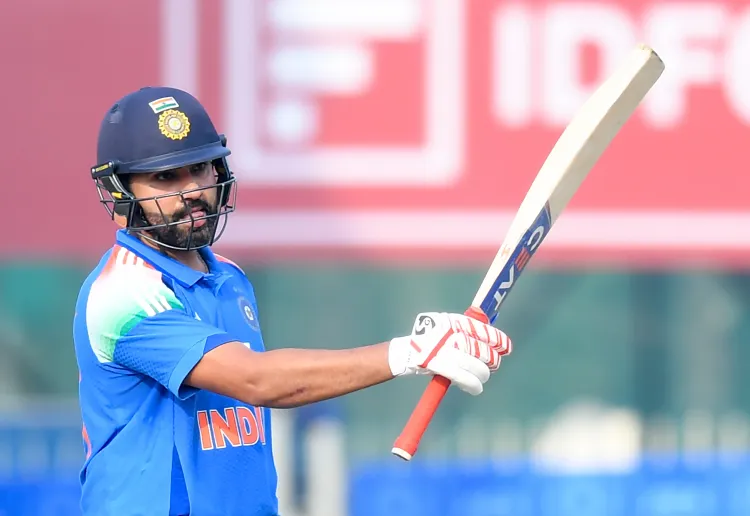
Synopsis
Explore how Rohit Sharma's aggressive batting strategy has revolutionized India's approach to white-ball cricket, as evaluated by former cricketer Abhishek Nayar. The upcoming ODI series against South Africa marks a critical juncture for Sharma, who is expected to showcase his skills in familiar conditions.
Key Takeaways
- Rohit Sharma's aggressive approach has transformed India's white-ball cricket.
- Virat Kohli has adapted his batting style significantly, improving his performance.
- The current ODI series against South Africa is crucial for both players.
- Conditions in Visakhapatnam may favor aggressive batting.
- Strategic adjustments are key to success in modern cricket.
Mumbai, Dec 6 (NationPress) Former Indian cricketer Abhishek Nayar showered accolades on Rohit Sharma, attributing his bold strategy as the catalyst for the evolution in India's ODI gameplay.
The ongoing three-match ODI series featuring South Africa's tour of India 2025 is currently tied at 1-1, with the hosts aiming for a series-defining triumph in the upcoming third ODI scheduled for Saturday in Visakhapatnam.
Nayar evaluated Rohit Sharma's development as an ODI batter, stating, "Rohit Sharma has transitioned effectively in ODIs. From beginning lower down the batting order in his early career to establishing himself as a reliable opener, he has truly evolved. His aggressive style, emphasizing six-hitting over mere run accumulation, has fundamentally changed how India approaches white-ball cricket. His leadership exemplifies a commitment to elevating team standards without fixating on personal milestones such as centuries," Nayar remarked to JioStar.
In the current three-match ODI series against South Africa, Rohit Sharma's performance has shown inconsistency, having accumulated 71 runs at an average of 35.50 and a strike rate of 120.34 over two innings. In the first ODI held in Ranchi, the Hitman scored 57 runs off 51 balls to kick off the series.
He struck three sixes and five fours before being dismissed leg before wicket by left-arm bowler Marco Jansen. In the second ODI at Raipur, he was out for 14 runs off eight balls, having hit three fours before being caught behind by the left-arm pacer.
Discussing the reason behind Rohit Sharma's lack of aggressive shot-making, Nayar explained, "Rohit Sharma hasn't ventured out of his crease frequently to play big shots primarily due to the swinging conditions observed in this series. When he feels the ball is not swinging significantly, he confidently takes on the bowlers. He has been cautious with his footwork because of unpredictable bounce on the pitch. However, in the familiar conditions of Vizag, we can expect to see his aggressive stepping-out game resurface."
Meanwhile, Virat Kohli showcased his timeless skill, producing stellar performances in the first two ODIs against the Proteas, registering scores of 135 and 102.
On Virat Kohli's shot selection at crucial moments, Nayar commented, "One of the remarkable aspects of Virat Kohli's play in this series against South Africa is his execution at pivotal times. His greatness lies in the straightness of his bat path during impacts. We hadn't seen this previously, as the bat would often open up. Now, every time he strikes the ball, his head is aligned perfectly. He consistently brings the bat down in line with the ball, even when angling away. This consistency is a significant reason for his success."
On the tactical shifts in Virat Kohli's batting approach, Nayar noted, "Virat Kohli has made substantial adjustments to his batting style since the Australia tour, particularly in his tactics. Observing his last two ODI innings against South Africa, he has adopted varied guard positions, switching between leg stump, middle stump, and off stump. These adaptations allow him to respond to different lengths effectively. He has utilized his footwork, alternating between deep in the crease and stepping outside of it. His strategic thinking resembles that of an AI, constantly analyzing and adjusting. Additionally, the conditions have complemented the style of cricket Virat aims to play."
Point of View
It is imperative to highlight how Rohit Sharma's leadership and aggressive playstyle have not only impacted his personal performance but also redefined the whole team's approach to white-ball cricket. Abhishek Nayar's insights provide a valuable perspective on this pivotal transformation, which is crucial for the future of Indian cricket.
NationPress
06/12/2025
Frequently Asked Questions
What impact has Rohit Sharma had on ODI cricket?
Rohit Sharma has dramatically influenced ODI cricket by adopting an aggressive batting style that prioritizes six-hitting and quick scoring, ultimately changing India's strategic approach to the game.
How has Virat Kohli adapted his batting style recently?
Virat Kohli has made significant tactical adjustments to his batting, employing varied guard positions and adapting to different lengths, showcasing his ability to analyze conditions and respond effectively.
What are Rohit Sharma's recent performances in the ODI series?
In the ongoing ODI series against South Africa, Rohit Sharma has scored a total of 71 runs with an average of 35.50 across two innings, showcasing some inconsistency.