SAI, Safdarjung Sports Injury Centre sign MoU for athlete care and sports science
Synopsis
Two government bodies that rarely shared a table — SAI under the sports ministry and Safdarjung's injury centre under health — have formally joined forces. The MoU bridges a longstanding institutional gap in India's athlete support system, with direct implications for Olympic and Paralympic preparation under Khelo India and TOPS.
Key Takeaways
SAI and Safdarjung Sports Injury Centre (SIC) signed an MoU on 8 July in New Delhi to collaborate on sports science, medicine, and athlete rehabilitation.
The agreement was signed in the presence of Hari Ranjan Rao (Secretary, MYAS) and Punya Salila Srivastava (Secretary, MoHFW).
The MoU bridges two separate ministries — Ministry of Youth Affairs and Sports and Ministry of Health and Family Welfare — for the first time under a formal institutional framework.
The collaboration complements Khelo India and the Target Olympic Podium Scheme (TOPS) , and aligns with Viksit Bharat@2047 sporting goals.
Focus areas include evidence-based injury prevention, multidisciplinary research, standardised clinical protocols, and performance optimisation.
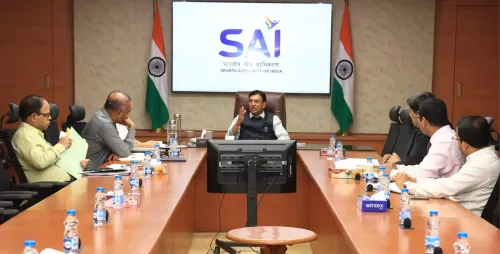
The Sports Authority of India (SAI) and the Safdarjung Sports Injury Centre (SIC) signed a Memorandum of Understanding (MoU) on 8 July in New Delhi, formalising a joint framework to advance sports science, sports medicine, athlete rehabilitation, research, innovation, education, and capacity building in India. The agreement marks a significant step in institutional collaboration between two of the country's leading bodies in athlete support.
What the MoU Covers
SAI operates under the Ministry of Youth Affairs and Sports (MYAS), while SIC functions under the Ministry of Health and Family Welfare (MoHFW). The MoU creates an integrated framework that pools the expertise, infrastructure, and scientific capabilities of both institutions. Key areas of collaboration include evidence-based sports science and medical practices, multidisciplinary research, injury prevention, rehabilitation, and performance optimisation through scientific interventions.
Who Signed and What Was Said
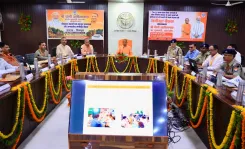
The agreement was signed in the presence of Hari Ranjan Rao, Secretary (Sports), Ministry of Youth Affairs and Sports, and Punya Salila Srivastava, Secretary, Ministry of Health and Family Welfare. On behalf of SAI, Brig. (Dr.) Bibhu Kalyan Nayak, Executive Director, Sports Science Division, signed the document, while Dr. Deepak Joshi, Director, Safdarjung Sports Injury Centre, signed on behalf of SIC.
Rao said, 'The future of high-performance sport depends upon the seamless integration of sports science and sports medicine,' adding that the MoU establishes a strong institutional framework for collaborative research, athlete monitoring, and rehabilitation. Salila described sports medicine and sports science as 'indispensable components of athlete health and performance,' and said the partnership reflects both ministries' shared commitment to injury prevention, clinical care, and scientific research.
Brig. Nayak noted the partnership would 'facilitate multidisciplinary research, standardised clinical and sports science protocols, knowledge exchange and advanced athlete support services,' while Prof. Joshi said it would 'strengthen research, education, rehabilitation, and evidence-based sports medicine for the benefit of athletes across the country.'
Alignment with National Sporting Goals
The collaboration is designed to complement flagship government programmes including Khelo India and the Target Olympic Podium Scheme (TOPS). It also supports India's long-term aspirations under Viksit Bharat@2047 to establish the country as a leading global sporting nation. Officials said the partnership is expected to directly strengthen India's high-performance system and improve preparedness for future international competitions, including the Olympic and Paralympic Games.
Why This Partnership Matters
This comes amid growing recognition that elite athletic performance is inseparable from scientific and medical support. India's medal ambitions at global events have repeatedly highlighted gaps in structured, institutionalised athlete care — gaps this MoU is intended to address. By bridging two previously siloed ministries, the agreement signals a more coordinated approach to building a world-class sporting ecosystem. The partnership is expected to translate into improved athlete performance outcomes and better long-term health management for sportspersons across the country.
Point of View
Or remains a statement of intent, will depend on follow-through at the operational level, not just at the secretaries' table.
NationPress
9 Jul 2026
Frequently Asked Questions
What is the MoU signed between SAI and Safdarjung Sports Injury Centre?
It is a formal agreement signed on 8 July in New Delhi to establish a joint institutional framework for sports science, sports medicine, athlete rehabilitation, research, and capacity building. The MoU combines the expertise of SAI under the Ministry of Youth Affairs and Sports and SIC under the Ministry of Health and Family Welfare.
Why does this MoU matter for Indian athletes?
The partnership bridges a longstanding gap between sports administration and medical care in India. By integrating evidence-based sports science with clinical medicine, it aims to improve injury prevention, rehabilitation, and performance optimisation for athletes preparing for international competitions including the Olympics and Paralympics.
Which government schemes does this MoU support?
The collaboration is aligned with Khelo India, the Target Olympic Podium Scheme (TOPS), and India's Viksit Bharat@2047 vision of becoming a leading global sporting nation. It is designed to strengthen the scientific backbone of these existing flagship programmes.
Who signed the MoU on behalf of SAI and SIC?
Brig. (Dr.) Bibhu Kalyan Nayak, Executive Director of SAI's Sports Science Division, signed on behalf of SAI. Dr. Deepak Joshi, Director of Safdarjung Sports Injury Centre, signed on behalf of SIC. The signing took place in the presence of secretaries from both the sports and health ministries.
What specific areas will SAI and SIC collaborate on under this agreement?
The MoU covers sports science, sports medicine, athlete injury prevention and rehabilitation, multidisciplinary research, performance optimisation, education, and capacity building. Officials said collaboration will also include standardised clinical protocols and knowledge exchange between the two institutions.