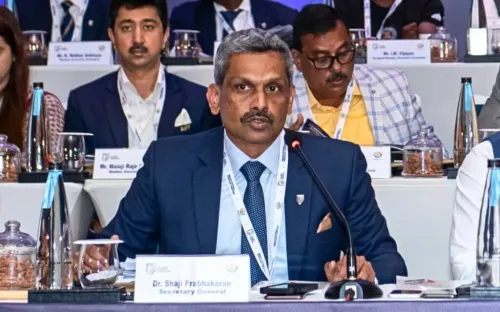
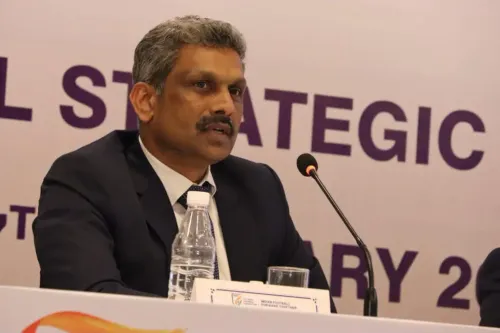
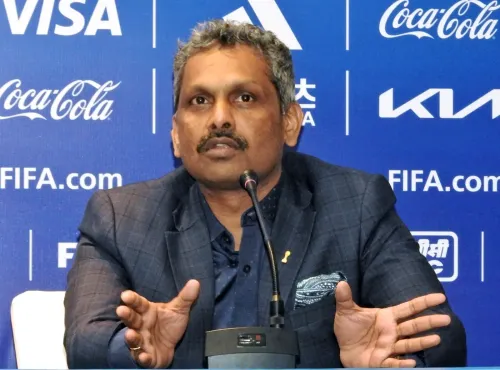
India's FIFA World Cup fever must fuel year-round football growth: Shaji Prabhakaran
Synopsis
Former AIFF general secretary Shaji Prabhakaran's pre-World Cup column cuts through the quadrennial hype with an uncomfortable diagnosis: India loves football every four years, then forgets it exists. With Cape Verde and Curaçao qualifying for the 48-team 2026 edition, he argues India's real problem is not population or talent — it is the absence of systems, governance, and sustained will.
Key Takeaways
Former AIFF general secretary Shaji Prabhakaran has called for India to build a year-round football culture, not just FIFA World Cup enthusiasm every four years.
He wrote in a blog column ahead of the FIFA World Cup 2026 , which begins on 11 June .
Prabhakaran cited Cape Verde and Curaçao qualifying for the expanded 48-team 2026 edition as proof that governance and planning matter more than population size.
He urged India to make qualifying for FIFA U-17 World Cups — for both men's and women's teams — a measurable national objective.
Key priorities identified: grassroots development, coaching pathways, stable competitions, sports science, and transparent administrative governance.
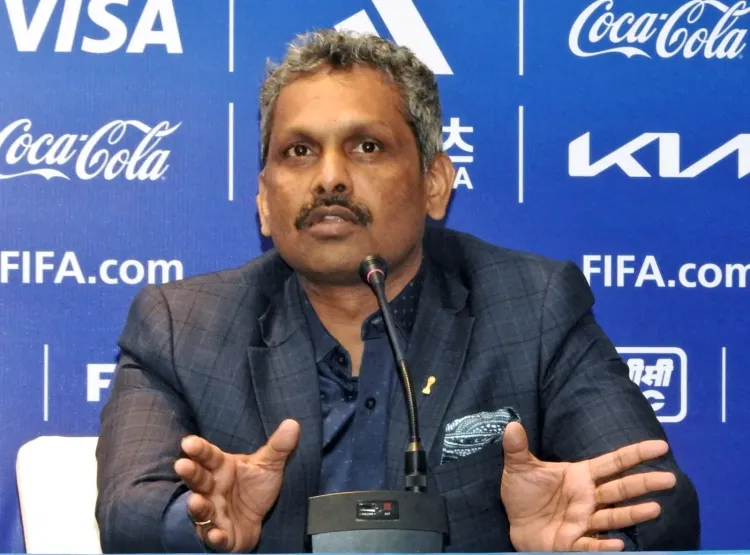
Former All India Football Federation (AIFF) general secretary Shaji Prabhakaran has called on India to convert its cyclical FIFA World Cup excitement into a sustained, 365-day commitment to football development, warning that the country's quadrennial enthusiasm masks a deeper structural neglect of the sport.
The Core Argument
Writing in a column on his blog ahead of the FIFA World Cup 2026, which kicks off on 11 June, Prabhakaran argued that India's relationship with football is fundamentally episodic. 'Football must become part of everyday life in India rather than a four-year carnival. When football is celebrated 365 days a year, it becomes part of the country's cultural bloodstream. That is the level of adoption India should seek,' he wrote.
The 54-year-old former official observed that during every World Cup cycle, television channels, newspapers, and social media overflow with football discourse — yet that same energy is conspicuously absent when the Indian national team plays competitive fixtures or when domestic clubs face survival challenges.
The Uncomfortable Truth Behind the Spectacle
Prabhakaran did not spare the casual fan. 'The same individuals who fervently question why India is not part of the World Cup often remain silent when the Indian national team plays important matches, when clubs face survival challenges, and when the sport requires consistent, grassroots support,' he noted.
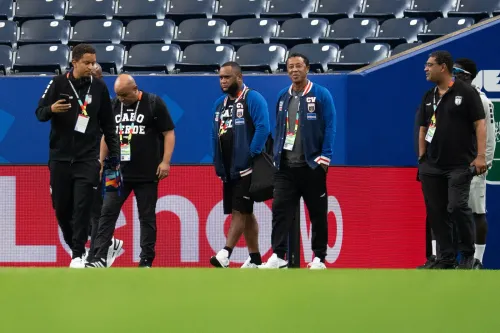
He pointed to the qualification of smaller nations — Cape Verde and Curaçao among them — for the expanded 48-team FIFA World Cup 2026 as pointed evidence that football success is a product of planning and governance, not population size. 'India cannot continue using size as a comfort while ignoring the systems that transform passion into performance,' he wrote.
What India Must Prioritise
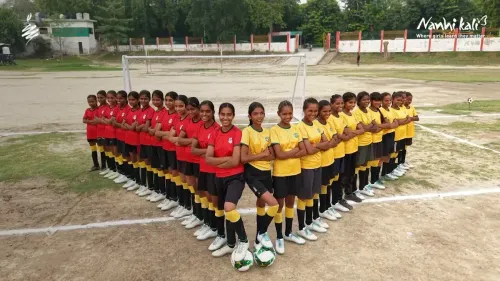
According to Prabhakaran, the pillars India needs to build include grassroots development, structured coaching pathways, stable domestic competitions, sports science integration, and transparent administrative governance. He identified consistent qualification for major youth tournaments as a measurable national objective.
'The men's and women's Under-17 national teams should be developed with the specific ambition of reaching future FIFA U-17 World Cups,' he wrote, framing youth competition as a concrete benchmark rather than an aspirational talking point.
A Call to Channel the Spark
Prabhakaran concluded his column with a pointed metaphor, urging that the World Cup be treated as ignition rather than celebration. 'The World Cup can be the spark, but sparks do not sustain themselves. They must be safeguarded, nourished, and transformed into a lasting flame. Let this tournament be more than just a celebration of other nations,' he wrote.
This comes amid India's continued absence from the FIFA World Cup, a tournament the country has never qualified for. With the 2026 edition expanding to 48 teams — raising the probability for emerging football nations — the debate over India's structural readiness has acquired fresh urgency. Whether the AIFF and stakeholders translate this renewed discourse into institutional action remains to be seen.
Point of View
But its timing gives it force — the 48-team expansion makes India's continued absence harder to excuse on competitive grounds alone. The deeper problem he identifies is institutional: the AIFF has cycled through crises, FIFA suspensions, and leadership turmoil in recent years, and no column, however well-argued, substitutes for administrative continuity. India's football ecosystem has produced genuine talent at the youth level, yet the pipeline from grassroots to senior team remains broken. Until governance is treated as seriously as fandom, the World Cup will remain a spectacle India watches rather than one it participates in.
NationPress
24 Sept 2026
Frequently Asked Questions
What did Shaji Prabhakaran say about India and the FIFA World Cup 2026?
Shaji Prabhakaran, former AIFF general secretary, argued in a blog column that India must stop treating the FIFA World Cup as a four-year festival and instead build a 365-day football culture. He called for grassroots development, coaching pathways, and transparent governance as the real path to global competitiveness.
Why does Prabhakaran cite Cape Verde and Curaçao in his column?
He cited these smaller nations qualifying for the 48-team FIFA World Cup 2026 to make the point that football success is determined by planning, governance, and structured development — not population size. He argued India cannot use its size as an excuse while neglecting the systems that convert passion into performance.
What specific steps does Prabhakaran recommend for Indian football?
He recommends prioritising grassroots development, structured coaching pathways, stable domestic competitions, sports science, and transparent governance. He also urges that qualifying for major youth tournaments — particularly the FIFA U-17 World Cup for both men's and women's teams — be made a concrete national objective.
When does the FIFA World Cup 2026 begin?
The FIFA World Cup 2026 begins on 11 June, according to Prabhakaran's column. The tournament features an expanded 48-team format, the largest in the event's history.
Has India ever qualified for the FIFA World Cup?
India has never qualified for the FIFA World Cup as a competitive entrant. Prabhakaran's column uses the country's continued absence — particularly in the context of the expanded 48-team 2026 edition — to argue for urgent structural reform in Indian football.