India not qualifying for FIFA World Cup due to lack of collective effort: Shaji Prabhakaran
Synopsis
India has the fans, the population, and even a willing government — but according to former AIFF general secretary Shaji Prabhakaran, it lacks the one thing that actually matters: collective, honest, and sustained effort. His prescription is blunt: transparent planning, 10–12 elite age-group teams, 2,000 elite players per cohort, and a decade of focus. No rocket science — just accountability.
Key Takeaways
Former AIFF general secretary Shaji Prabhakaran says India's failure to qualify for the FIFA World Cup is due to a lack of collective and consistent effort, not talent or population.
Prabhakaran called for reform across governance , grassroots development , and elite youth competition .
He proposed developing 10 to 12 elite teams per age group from the Under-17 level, with around 2,000 elite players per cohort, sustained over 10 years .
He stressed the need for full financial transparency — fans should be able to track where money comes from and where it goes.
Prabhakaran said FIFA World Cup qualification in 10–15 years is achievable if football authorities build credibility and secure sustained government backing.
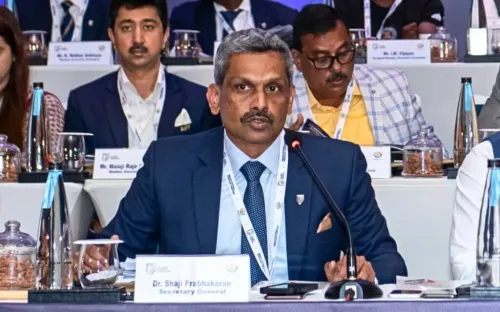
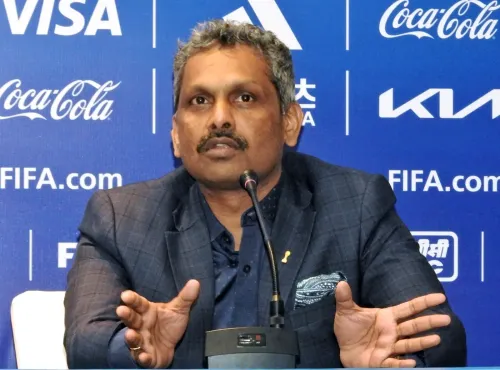
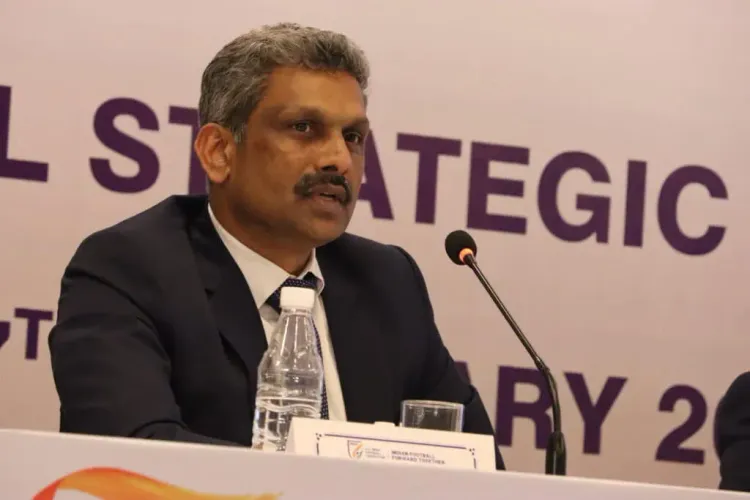
Former general secretary of the All India Football Federation (AIFF), Shaji Prabhakaran, has said that India's continued absence from the FIFA World Cup is not a consequence of insufficient talent or population, but a failure of the country's football ecosystem to work collectively and consistently toward a shared goal. Speaking on 19 July, Prabhakaran called for structural reform across governance, grassroots development, and elite competition to reverse the nation's footballing fortunes.
The Core Problem: Collective Will, Not Capability
'It's a very sad situation in terms of the world asking the question like why 1.4 billion people are not qualifying for the World Cup, but the reality is that we are not working hard to be there, simple as it is, yeah. We have everything to be there, but then it requires consistent hard work, honest hard work, bringing people together and working as one,' Prabhakaran said.
He was emphatic that the obstacles are not insurmountable — the problem, he argued, lies in execution and alignment rather than in any fundamental deficiency of Indian football.
What Needs to Change Across Indian Football
Prabhakaran did not single out any one department for blame. Instead, he identified systemic gaps across multiple layers of the game. 'In every aspect, we need to improve, whether it is the governance aspect, whether it is the grassroots aspect, whether it is about our competitive situation at the youth level or at the senior elite level. We have to improve but it is all about sincerely working towards a goal,' he said.
He stressed that India already possesses two critical assets — a passionate fan base and a government willing to invest in sport. What is missing, he contended, is the ability of football's administrators to unite behind a common vision and demonstrate accountability. 'Now it is up to the football people who are in command of the situation, command of the organisation to take the right decision at the right time and bring people together,' he added.
Transparency and a Long-Term Blueprint
Prabhakaran made a pointed case for financial transparency as a prerequisite for credibility. 'Any fan should be able to see what an organisation is doing to bring about that change — where the money is coming from and where it is going. That transparency is very much required,' he said.
He outlined a structured pathway: developing 10 to 12 elite teams in every age group, beginning from the Under-17 level, with approximately 2,000 elite players per age group, sustained over the next 10 years. He also advocated hiring qualified foreign technical professionals to complement domestic management talent.
World Cup Qualification 'Very Much Possible' in 10–15 Years
Despite the current challenges, Prabhakaran remained optimistic. 'Definitely, we can qualify for the World Cup. That's the hope we continue to believe in. One of my biggest goals in life, before we say goodbye to this universe, is to see India play at the FIFA World Cup,' he said.
He dismissed suggestions that the challenge requires extraordinary solutions. 'It's not rocket science. If we want to see our team playing in the World Cup in maybe 10 years' time, or 15 years' time, it's very much possible,' he stated, adding that a complete and transparent project plan — accessible to any fan — is the foundation required.
Government Backing: Potential Unlocked Only Through Accountability
Prabhakaran argued that sustained government support could be transformative, but only if football authorities build credibility first. 'We need to convince the government that this is a sport worth investing in, and that we will be able to deliver results and make India proud,' he said. He expressed confidence that with adequate government resources and a credible plan, failure would be avoidable. 'If you can convince the government and secure its support on a much bigger scale, there's no way we are going to fail. I'm convinced of that because we have everything,' he concluded.
Point of View
Not cyclical. India has used the talent-and-population alibi for decades while the real deficit — governance credibility, transparent resource allocation, and a sustained youth pipeline — went unaddressed. The irony is that he identifies government willingness as an existing asset, which means the bottleneck sits squarely with football's own administrators. Until the AIFF can demonstrate the kind of accountability Prabhakaran describes — where every rupee is traceable and every age-group target is measurable — government investment will remain hesitant and the World Cup will remain a slogan rather than a schedule.
NationPress
18 Oct 2026
Frequently Asked Questions
Why is India not qualifying for the FIFA World Cup?
According to former AIFF general secretary Shaji Prabhakaran, India is not qualifying for the FIFA World Cup primarily because the country's football ecosystem has not worked collectively or consistently enough toward that goal. He argues the issue is not a lack of talent or population, but a failure of governance, planning, and sustained execution.
Who is Shaji Prabhakaran and what is his role in Indian football?
Shaji Prabhakaran is a former general secretary of the All India Football Federation (AIFF), the apex body governing football in India. He has been closely involved in Indian football administration and has advocated for structural reform in the sport.
What does Shaji Prabhakaran propose to help India qualify for the FIFA World Cup?
Prabhakaran proposes a long-term structured roadmap that includes developing 10 to 12 elite teams per age group starting from the Under-17 level, maintaining around 2,000 elite players per cohort, hiring qualified foreign technical staff, and maintaining full financial transparency so fans and stakeholders can track investments and outcomes.
Is FIFA World Cup qualification realistic for India?
Prabhakaran believes qualification is achievable within 10 to 15 years if India commits to a structured plan. He described it as 'not rocket science,' saying the challenge is about sustained execution and accountability rather than any fundamental gap in talent or resources.
What role can the Indian government play in developing football?
Prabhakaran noted that the Indian government is already keen to support football's growth. However, he stressed that football administrators must first build credibility through transparent planning and measurable results before they can unlock significant government investment in the sport.