Mandaviya proposes BRICS repository for traditional sports at Ahmedabad Games
Synopsis
India is pitching to become the custodian of the world's indigenous sporting heritage — at least within the BRICS bloc. Sports Minister Mandaviya's three-point proposal at Ahmedabad's 2026 Demonstration Games, backed by a ₹31,000-crore-plus Khelo India commitment, signals a deliberate push to turn cultural soft power into a diplomatic tool ahead of India's growing global sporting ambitions.
Key Takeaways
Sports Minister Mansukh Mandaviya proposed a voluntary BRICS Repository of Traditional and Indigenous Sports at the Veer Savarkar Sports Complex, Ahmedabad , on 12 October 2026 .
The proposal covers three areas: a documentation repository, cross-country expert exchanges, and periodic demonstrations at future BRICS sporting events.
India has committed nearly 3.76 billion US dollars under the Khelo India initiative to build a sustainable sporting ecosystem.
The BRICS Traditional and Indigenous Demonstration Games 2026 featured delegations from 10 BRICS nations , with India showcasing Mallakhamb , Yogasana and Kalaripayattu .
The Fit India Movement's 'Sundays on Cycle' campaign has seen more than 5 million participants across 3 lakh locations in 94 editions to date.
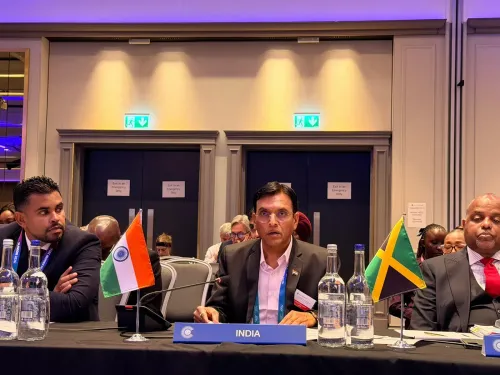
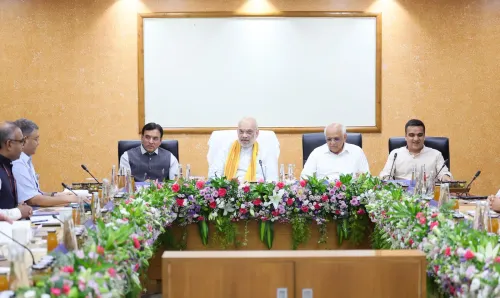
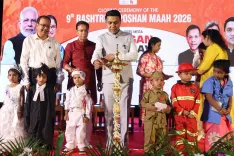
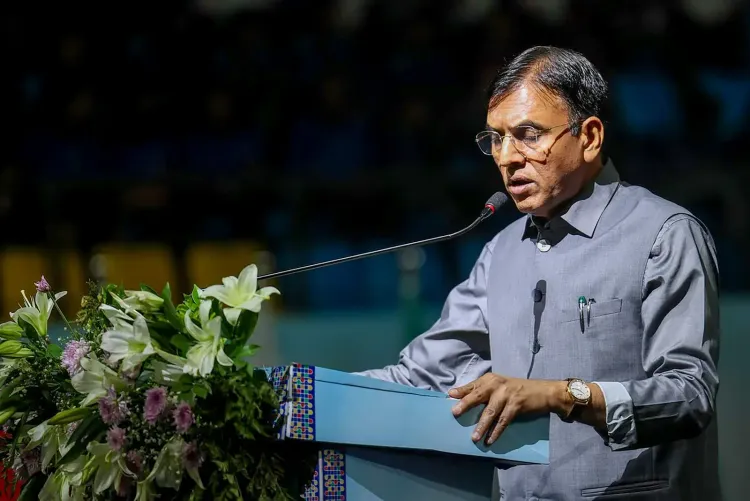
Union Sports Minister Mansukh Mandaviya on Monday, 12 October 2026, proposed the creation of a voluntary BRICS Repository of Traditional and Indigenous Sports at the BRICS Traditional and Indigenous Demonstration Games 2026 in Ahmedabad. Addressing delegates at the Veer Savarkar Sports Complex in Naranpura, Mandaviya called for structured cooperation among BRICS member nations to document, exchange and periodically demonstrate their indigenous sporting heritage.
Three Pillars of Cooperation
Mandaviya outlined three practical areas of proposed cooperation between BRICS nations. The first is the creation of a voluntary repository documenting traditional sports — including their history, cultural significance, rules, equipment and field-of-play requirements. The second is encouraging exchanges among practitioners, coaches, researchers, educational institutions and cultural experts across member countries. The third is periodic demonstration of traditional and indigenous sports at future BRICS sporting events.
'BRICS Traditional and Indigenous Games provide a platform to showcase not only how a sport is played, but also the history, values and cultural context that make each tradition unique,' Mandaviya said at the inaugural address.
India's Sporting Ecosystem and Khelo India Push
The minister outlined India's broader investment in sport, citing a commitment of nearly 3.76 billion US dollars under the Khelo India initiative. He described a '360-degree approach' encompassing grassroots participation, talent identification, coaching, sports science, infrastructure development, athlete welfare and international exposure. 'India is placing sport at the centre of nation-building,' Mandaviya said, adding that the country is 'transforming its sporting ecosystem by creating opportunities from the playground to the podium.'
He also highlighted the Fit India Movement and its 'Sundays on Cycle' campaign, which has recorded more than 5 million participants cycling across more than 3 lakh locations every Sunday. 94 editions of the campaign have been conducted across India so far.
Sports on Display from 10 BRICS Nations
The day-long event drew athletes, practitioners, officials and delegations from 10 BRICS nations. Gujarat Deputy Chief Minister Harsh Sanghavi was also present at the inauguration. India presented Mallakhamb, Yogasana and Kalaripayattu, while China showcased Wushu, Lion Dance and Health Qigong. Brazil featured Capoeira, an indigenous blowpipe demonstration and a log race, alongside Brazilian Para-Jiu-jitsu.
Other nations brought equally distinct traditions: Gorodki from Belarus and Russia; Lucha de Cholitas and several traditional games from Bolivia; Zoorkhaneh, Haft Sang and Ghanieh from Iran; Qazaq Kuresi, Asyk Atu and Togyzkumalak from Kazakhstan; Kgati and Iintonga from South Africa; and Al Tabbah from the United Arab Emirates.
Cultural Significance and What Comes Next
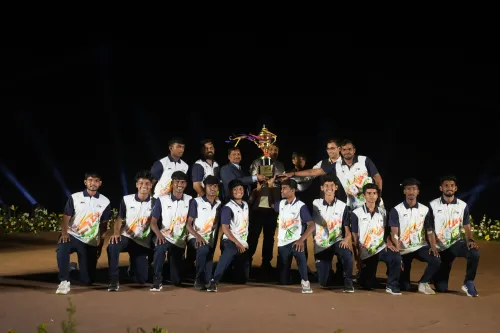
Beyond competition, the event served as a knowledge exchange, with Mandaviya stressing that traditional games carry the 'history, values and cultural identities' of the communities that practise them. Cultural performances and audience-engagement activities accompanied the sporting demonstrations, and participating teams were felicitated at the conclusion of the programme.
The BRICS repository proposal, if taken forward, could become a formal agenda item at the next BRICS sports ministerial meeting, potentially setting a framework for preservation and cross-cultural exchange that outlasts any single event.
Point of View
Just as it seeks greater influence within the expanded BRICS bloc. The Khelo India budget figure of 3.76 billion dollars is striking context: it dwarfs most BRICS members' sports spending and signals that India sees sporting infrastructure as a foreign-policy instrument. What remains to be seen is whether a 'voluntary' repository gains traction, given that voluntary multilateral commitments within BRICS have historically been inconsistent. The real test will be whether this proposal makes it onto the agenda of the next formal BRICS sports ministerial — or whether it remains an inaugural-day gesture.
NationPress
12 Oct 2026
Frequently Asked Questions
What is the BRICS Repository of Traditional and Indigenous Sports proposed by Mandaviya?
It is a proposed voluntary database of traditional and indigenous sports from BRICS member nations, covering each sport's history, cultural significance, rules, equipment and field-of-play requirements. Sports Minister Mansukh Mandaviya announced the proposal at the BRICS Traditional and Indigenous Demonstration Games 2026 in Ahmedabad on 12 October 2026.
Where were the BRICS Traditional and Indigenous Demonstration Games 2026 held?
The games were held at the Veer Savarkar Sports Complex in Naranpura, Ahmedabad, Gujarat. The day-long event brought together athletes, practitioners, officials and delegations from 10 BRICS nations.
What sports did India showcase at the BRICS Demonstration Games?
India presented Mallakhamb, Yogasana and Kalaripayattu at the event. Other nations also showcased their traditional sports, including Wushu and Lion Dance from China, Capoeira from Brazil, and Zoorkhaneh from Iran.
How much has India invested in sport under the Khelo India initiative?
India has committed nearly 3.76 billion US dollars under the Khelo India initiative to build a sustainable sporting ecosystem. The investment covers grassroots participation, talent identification, coaching, sports science, infrastructure and athlete welfare.
What is the Fit India Movement's 'Sundays on Cycle' campaign?
'Sundays on Cycle' is a community fitness campaign under India's Fit India Movement that encourages cycling every Sunday. It has completed 94 editions, drawing more than 5 million participants across more than 3 lakh locations across India.