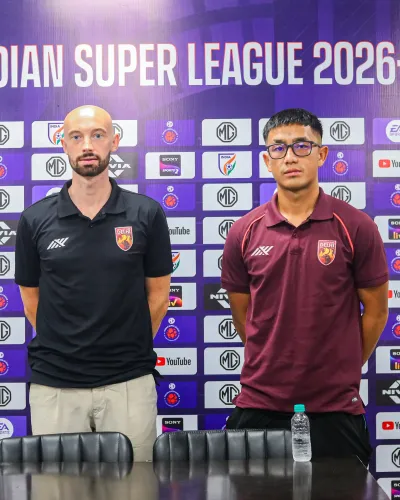
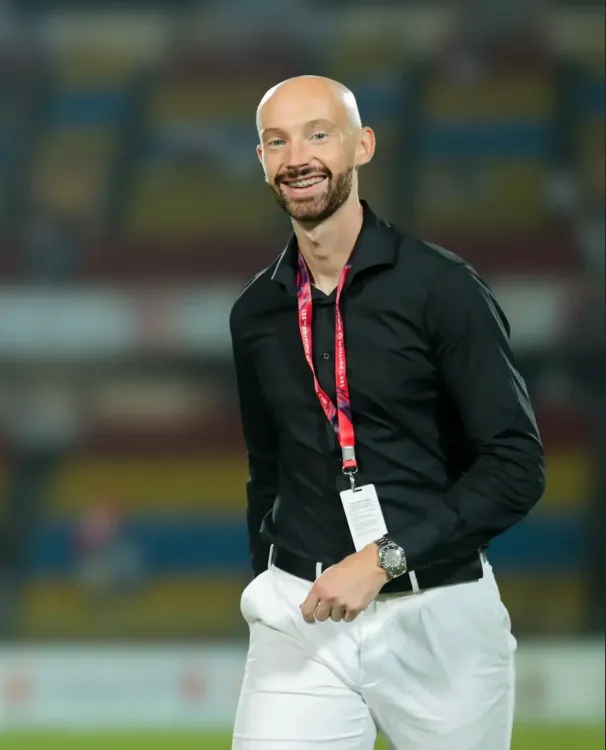
SC Delhi coach Tchorz Tomasz eyes strong football culture in second season
Synopsis
In his second season at SC Delhi, Polish coach Tchorz Tomasz is thinking beyond match results — he wants to build a club that Delhi's diverse, multi-regional population can genuinely call their own. Eight seasons across Kolkata, Kerala and Delhi have given him a blueprint; now he has the chance to execute it.
Key Takeaways
SC Delhi head coach Tchorz Tomasz is entering his second season with the club.
Tchorz has eight seasons of experience in Indian football, spanning Kolkata , Kerala , and New Delhi .
He has held roles including assistant coach, club adviser, academy builder, reserve-team developer, and first-team head coach.
Tchorz says he adapted his existing coaching methodology to Indian conditions rather than rebuilding it entirely.
He sees Delhi's diversity as an opportunity to create a shared club identity and competitive culture both on and off the pitch.
SC Delhi head coach Tchorz Tomasz says his second season at the helm presents a genuine opportunity to forge a competitive football culture at the club — on the pitch and in the structures around it. Speaking ahead of the new campaign, Tchorz outlined his philosophy, his evolution as a coach across three Indian clubs, and his vision for what SC Delhi can mean to the city.
Eight Seasons, Three Clubs, Every Key Role
Tchorz has built one of the more varied CVs in Indian club football. Having worked in Kolkata, Kerala, and now New Delhi, he has occupied roles ranging from assistant coach and club adviser to academy builder, reserve-team developer, and first-team head coach.
'I have been working in India for, I think, my eighth season, so it has definitely been a long time. I have worked in three places: Kolkata, Kerala and now Delhi. I would say I have experienced all the crucial roles. Every moment, every club and every role was a little different, and I learned a lot from each of them,' he said.
A Coaching Philosophy Shaped Before Arrival
Tchorz was candid about how he approached the transition to Indian football. Rather than rebuilding his methodology from scratch, he adapted his pre-existing ideas to the local context and talent pool.
'When I came to India, or even before that, I had already established in my mind how I wanted to play football, what my training methodology would be, and how the training process should be carried out. I was adapting things rather than completely reshaping myself here,' he explained.
Delhi as a Unique Opportunity
The Polish coach pointed to the diversity of New Delhi — a city that draws people from across India — as a defining feature of the club's identity and potential supporter base. He sees that plurality not as a challenge but as raw material for building something unified.
'We are still in the process of building a strong culture here. Delhi is a unique city, with people from different parts of the country coming together, including within our team and among our supporters. I see that as an opportunity to bring everyone together through the club and create a shared sense of belonging, where SC Delhi becomes something they can truly identify with,' Tchorz said.
Building Structures Around the Game
Beyond results, Tchorz appears focused on the organisational architecture of the club. His ambition extends to maximising the club's potential through sustainable processes rather than short-term fixes.
'There is a great opportunity to develop a strong culture of competitive football at SC Delhi, both on the pitch and in the structures surrounding the game. I have been focused on identifying ways to maximise the potential of the club and create an environment where we can continue to grow,' he added.
With his second season now under way, the question is whether Tchorz's patient, culture-first approach can translate into the kind of results that turn a project into a movement for Indian football in the capital.
Point of View
Tinker tactically, and leave before any culture takes root. Eight seasons and three clubs give Tchorz more institutional knowledge than most foreign coaches working in India, and his self-awareness about adapting rather than transplanting his philosophy is encouraging. The real test is whether the club's ownership and administration share his patience — without structural backing, culture-building rhetoric rarely survives a losing streak.
NationPress
2 Nov 2026
Frequently Asked Questions
Who is SC Delhi's head coach?
SC Delhi's head coach is Tchorz Tomasz, a Polish coach now in his second season with the club. He has eight seasons of experience in Indian football across Kolkata, Kerala, and New Delhi.
What experience does Tchorz Tomasz have in Indian football?
Tchorz has worked in Indian football for approximately eight seasons, serving in roles that include assistant coach, club adviser, academy builder, reserve-team developer, and first-team head coach at clubs in Kolkata, Kerala, and Delhi.
What is Tchorz's vision for SC Delhi?
Tchorz wants to build a strong culture of competitive football at SC Delhi — both on the pitch and in the club's structures. He also aims to make the club a unifying identity for Delhi's diverse, multi-regional population.
How did Tchorz adapt his coaching style to Indian football?
Tchorz has said he did not completely reshape his methodology when he arrived in India. Instead, he adapted his pre-established training philosophy and playing ideas to suit local talent and conditions.
Why does Tchorz see Delhi as a unique opportunity?
Delhi draws people from across India, and Tchorz sees that diversity — reflected in both the squad and the supporter base — as an opportunity to build a shared sense of belonging around SC Delhi as a club.