Are Ticket Refunds the Responsibility of the UPCA as Stated by BCCI?
Click to start listening
Synopsis
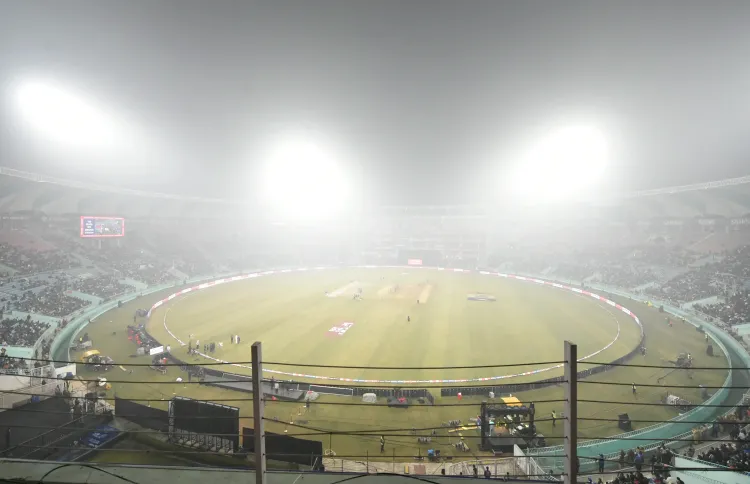
The fourth T20I between India and South Africa was called off due to severe fog, leading to frustration among ticket holders. BCCI Secretary confirms the UPCA's role in managing refunds, reigniting debates on scheduling matches in winter months. Discover the implications of this unexpected weather event on cricket scheduling.
Key Takeaways
- The UPCA is responsible for managing ticket refunds for the abandoned match.
- BCCI's refund policy allows for reimbursement if a match is canceled before any play.
- Severe fog was the primary reason for the match's cancellation.
- This incident has sparked debates about scheduling international matches during winter months.
- The event highlights the challenges of organizing cricket in varying weather conditions.
New Delhi, Dec 18 (NationPress) Following the cancellation of the fourth T20I match between India and South Africa due to severe fog and poor visibility, BCCI Secretary Devajit Saikia confirmed that the Uttar Pradesh Cricket Association (UPCA) is the designated authority responsible for issuing full refunds to ticket holders.
The match's cancellation led to dissatisfaction among fans who are anticipating ticket refunds. According to the BCCI’s refund guidelines, fans can receive reimbursement (minus applicable fees) if a match is canceled or abandoned before any play takes place.
"This falls under the jurisdiction of the state cricket association, which is the UPCA. As the host of this match, they will provide information regarding the refunds and are the competent authority.
"All ticketing matters are handled by the state association, as the BCCI merely grants them the hosting rights, with all arrangements managed by the state association," Saikia informed IANS on Thursday.
Multiple inspections conducted by on-field umpires K.N. Ananthapadmanabhan and Rohan Pandit, along with reserve umpire J.R. Madanagopal, did not produce the desired results, leading to the game's cancellation at 9:30 PM.
With the match called off at the BRSABV Ekana Cricket Stadium, India maintains a 2-1 advantage in the five-match series, with the concluding game scheduled to occur at the Narendra Modi Stadium in Ahmedabad on Friday.
The cancellation of the fourth T20I has reignited discussions regarding the BCCI’s decision to schedule international matches during the winter months, especially given that this series against South Africa is seen as crucial preparation ahead of the Men’s T20 World Cup in February-March.
This was the first December T20I held in Lucknow, and it now holds the unfortunate title of hosting India’s first significant international match abandoned due to extreme fog.
India's seam-bowling all-rounder Hardik Pandya was even seen wearing a mask during the game, highlighting the severity of the fog and the hazardous Air Quality Index (AQI). The scheduling of matches during North Indian winters has long been a contentious topic, and Saikia expressed that Wednesday’s match abandonment in Lucknow was an unusual circumstance.
“No, this is an isolated weather event. Typically, we experience such weather in January. This year, it has come quite early. Additionally, we had a match in Dharamsala recently, which is much colder. Fog and rain are difficult to predict. Nowadays, cricket is a year-round event, and we have to schedule matches accordingly.
“Given the significant disruptions caused by fog in northern India during January, we have already adjusted our domestic cricket schedule. This is why there is a considerable gap between Ranji Trophy matches in North India. Our schedule separates the Ranji Trophy matches into two segments.
“In the first half of January, we do not schedule matches in North India, a practice we adopted from last year. The Lucknow incident was an exceptional weather anomaly. We had three matches in North India - one in Chandigarh, Dharamshala, and one in Lucknow - all in the same timeframe,” he explained.
Saikia cited an example of how prior warnings about smog in New Delhi following Diwali led to the second Test against the West Indies being held in October instead of the initially planned series opener against South Africa.
“If we had anticipated a situation like this, we could refer to the rescheduling of the Test match in New Delhi. For instance, the second Test was played there instead of the first Test originally meant for New Delhi. We swapped the matches from Kolkata and New Delhi based on the smog situation after Diwali. However, Lucknow presented an unexpected scenario. Predicting weather conditions is inherently unreliable.
“I doubt Lucknow typically experiences this level of fog during this time. It may be normal in early January, but we are still in the second or third week of December, meaning we have about 15 days before we might expect such conditions. This was a challenging situation we faced yesterday, and rescheduling isn't feasible for this,” he concluded.
Point of View
It is crucial to approach this situation with a balanced perspective. The abandonment of the match highlights the unpredictability of weather conditions during winter months in North India. While fan frustrations are understandable, it is essential to recognize that organizing cricket matches entails navigating various challenges, including environmental factors. The BCCI's reliance on state associations like UPCA in managing ticketing and refunds reflects the complexity of sports administration. Our commitment remains to keep fans informed and engaged while emphasizing the need for adaptive scheduling strategies.
NationPress
18/12/2025
Frequently Asked Questions
Who is responsible for ticket refunds after the match was abandoned?
The Uttar Pradesh Cricket Association (UPCA) is the competent authority responsible for overseeing ticket refunds, as confirmed by BCCI Secretary Devajit Saikia.
What is the BCCI's refund policy for abandoned matches?
According to the BCCI's refund policy, spectators are eligible for reimbursement (minus fees) if a match is canceled or abandoned before any play occurs.
What caused the fourth T20I match to be canceled?
The match was abandoned due to severe fog and poor visibility, which made playing conditions unsafe.
How does this event impact future scheduling of matches?
The cancellation has reignited discussions regarding scheduling matches in winter months, particularly in North India, where weather conditions can be unpredictable.
What is the significance of this match being canceled?
This match was the first T20I held in December in Lucknow and marked India's first major international match abandoned due to excessive fog.