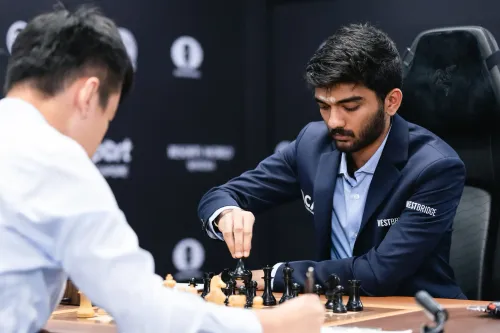
Gukesh held with white as World Chess Championship stays 1-1
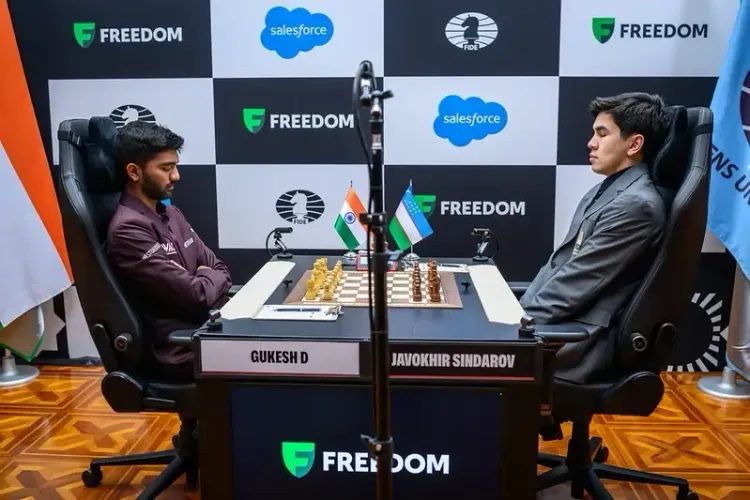
Synopsis
Gukesh could not convert White in Geneva. A 20-move London System draw by threefold repetition left the FIDE World Chess Championship 2026 locked at 1-1, blunting the edge he had taken from Game 1. Sindarov has White on Thursday, with USD 2.5 million still wide open.
Key Takeaways
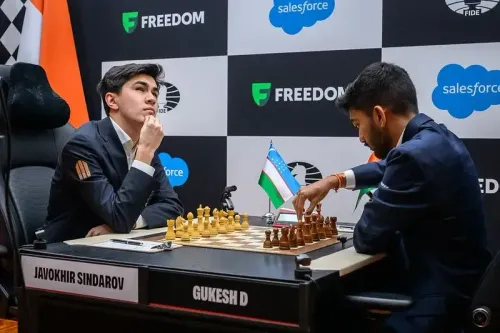
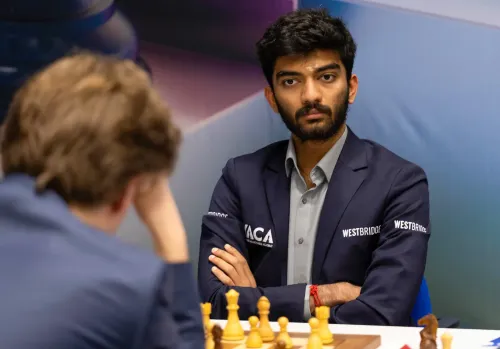
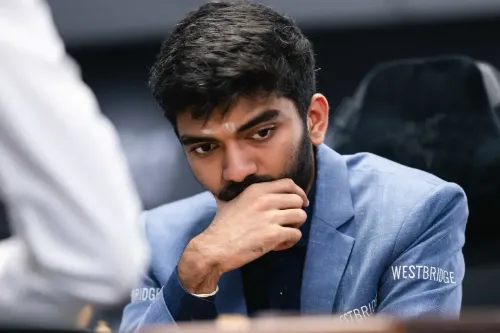
Dommaraju Gukesh was held with White by Javokhir Sindarov in Game 2 in Geneva on 25 November 2026 .
The FIDE Classical World Chess Championship 2026 remains tied 1-1 after a 20-move draw by threefold repetition.
Gukesh used the London System; Game 1 had been a Berlin Defence draw in a sharper tactical fight.
Game 3 is on Thursday , with Sindarov having the white pieces.
The 14-game match, ending 12 December , has a prize fund of USD 2.5 million ; a decisive win is worth USD 200,000 .
Gukesh won the title in Singapore in 2024 against Ding Liren and is the second Indian champion after Viswanathan Anand .
Defending champion Dommaraju Gukesh was held with the white pieces as the FIDE Classical World Chess Championship 2026 remained tied 1-1 after Game 2 against Uzbek Grandmaster Javokhir Sindarov in Geneva on Wednesday, 25 November 2026. The Indian world champion chose the London System but found no advantage, and the players signed a draw after 20 moves by threefold repetition, well before the first time control. The result keeps the 14-game final level heading into Thursday's third game.
Gukesh's London System and a short draw
For the second game in succession, Gukesh surprised his opponent with his opening tactics. After holding Game 1 with the Berlin Defence in a complicated tactical battle, he switched to the London System with White — a solid, flexible setup that builds a sturdy pawn pyramid and is designed to meet almost anything Black can play. The choice signalled caution as much as ambition on a day when the champion was expected to press.
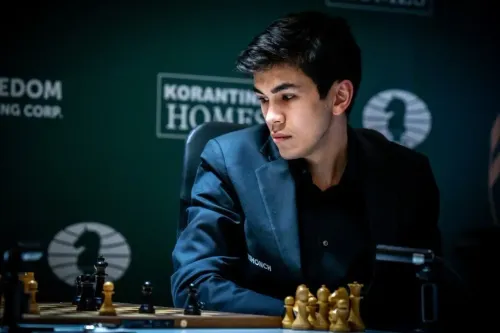
Sindarov answered with precise moves and did not allow Gukesh to generate a meaningful edge. The position remained equal throughout. Unlike the first game, there was little tension: the contest was brief by World Championship standards and was over well before the first time control. The players agreed to share the point after a threefold repetition on move 20.
The London System has long been used to seek a reliable structure rather than a sharp theoretical duel. On this occasion it produced no problems for Black. Sindarov's accuracy left White without a clear plan to unbalance the game, and repetition became the practical outcome. Notably, this was the second consecutive split point of the final, after Game 1 had already ended in a draw.
Match score and the psychological ledger
The draw leaves the score at 1-1. A win is worth one point; a draw gives each player half a point. Gukesh had gained a measure of psychological advantage by using the Berlin Defence and drawing the opening game. That edge was reduced on Wednesday when he could not convert the White pieces into pressure.
This is Gukesh's first defence of the classical title. He became World Champion in Singapore in 2024 by defeating China's Ding Liren, and is the second Indian after five-time winner Viswanathan Anand to hold the crown. The 14-game format, stretching to a closing ceremony on 12 December, rewards stamina and preparation as much as a single flash of tactics.
What Game 3 could bring
Game 3 will be played on Thursday, with Sindarov having the white pieces. Attention will turn to whether Gukesh again relies on the Berlin Defence, even though Sindarov's trainers may have searched for tactical surprises after Game 1. A repeat of the same line would test how deeply the Uzbek camp has prepared; a change of defence would show Gukesh is unwilling to walk into home analysis.
This comes amid a match that has so far produced two draws and no decisive result. The first real imbalance — a win for either side — would be worth USD 200,000 on its own and would shift the remaining classical games. Until then, both players remain on even terms in Geneva.
Prize fund and format
The championship has a total prize fund of USD 2.5 million. Each decisive victory is worth USD 200,000, with the remaining prize money divided equally. If the match is still tied after 14 classical games, the players will contest shorter tie-break games — rapid, followed by blitz if needed. In that scenario the winner would take USD 1.3 million and the runner-up USD 1.2 million.
India will watch Thursday's session closely. Gukesh must now hold with Black against a challenger who has already shown he can neutralise White without drama. How the champion responds, in opening choice and over-the-board nerve, will set the tone for the long stretch to 12 December.
Point of View
Not a statement of intent, and Sindarov treated it like a well-drilled second, not a nervous debutant. The psychological ledger from Game 1 is now even. India's second classical champion after Anand is finding that defending a title over 14 games is a different sport from winning it once in Singapore. The first real test arrives Thursday, when Gukesh must hold Black against a challenger who has already shown he will not blink.
NationPress
25 Nov 2026
Frequently Asked Questions
What happened in Game 2 of the World Chess Championship 2026?
Gukesh, playing White, was held to a 20-move draw by Javokhir Sindarov in Geneva after choosing the London System. The players agreed to share the point by threefold repetition, leaving the 14-game FIDE Classical final tied 1-1.
What is the score between Gukesh and Sindarov?
The score is 1-1 after two games of the 14-game match. Both Game 1 and Game 2 ended in draws, with each player taking half a point from each contest.
When is Game 3 of Gukesh vs Sindarov?
Game 3 is scheduled for Thursday in Geneva, with Sindarov having the white pieces. Gukesh must decide whether to repeat the Berlin Defence he used in Game 1.
What is the prize money for the FIDE World Chess Championship 2026?
The total prize fund is USD 2.5 million. Each decisive victory is worth USD 200,000, and if the match goes to tie-breaks the winner takes USD 1.3 million and the runner-up USD 1.2 million.
Who is Javokhir Sindarov?
Javokhir Sindarov is an Uzbek Grandmaster and Gukesh's opponent in the 14-game FIDE Classical World Chess Championship Final Match 2026 in Geneva. He held the champion with Black in Game 2 and will play White in Game 3.