Jal Shakti Minister Paatil flags India-China flood data talks
Synopsis
Union Jal Shakti Minister C. R. Paatil said timely flood data from transboundary rivers helps alert low-lying communities, stressing India-China technical dialogue under the 2006 Expert Level Mechanism.
Key Takeaways
Union Jal Shakti Minister C.
Paatil said timely river-level and flow data during floods helps alert people in coastal and low-lying areas.
He said India, under Prime Minister Narendra Modi, values dialogue and cooperation on transboundary rivers.
The minister stated that the 16th Expert Level Mechanism meeting with China was held in New Delhi on 22 and 23 April 2025.
The ELM was established in 2006 as a technical platform for hydrological data exchange and disaster management.
China is the upper riparian on rivers including the Brahmaputra and Sutlej that flow into India.
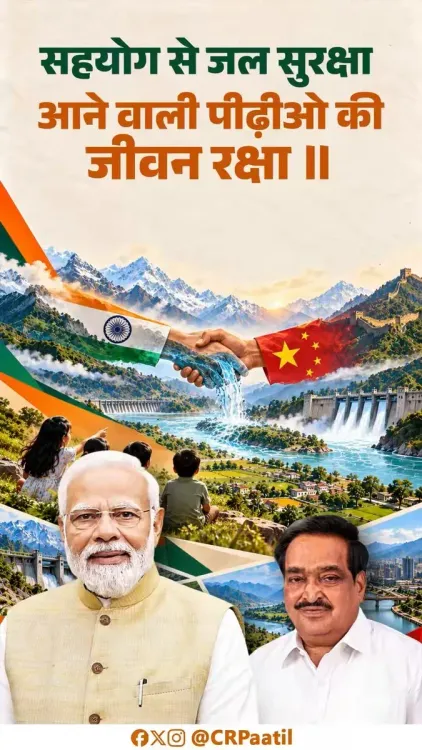
Union Jal Shakti Minister C. R. Paatil on 25 November 2026 put a hard operational point on the table: when Himalayan rivers swell, timely data on water levels and flow is what lets people in coastal and low-lying areas get alerted and lets relief teams prepare. Floods do not wait for diplomacy. Technical talks on transboundary rivers, he said, therefore carry special importance.
In a Hindi-language post on X, Paatil wrote that under Prime Minister Narendra Modi, India gives importance to dialogue and cooperation on issues linked to transboundary rivers. He said the 16th meeting of the Expert Level Mechanism (ELM), established between India and China in 2006, was organised in New Delhi on 22 and 23 April 2025. That forum, he added, is a platform for technical discussion on the exchange of water-related data in the flood season and on disaster management.
How the 2006 Expert Level Mechanism is built
India and China created the Expert Level Mechanism in 2006 as a bilateral technical channel for talks and hydrological data sharing on shared rivers. China is the upper riparian on systems that include the Brahmaputra and the Sutlej as they enter India. Downstream communities in the Northeast and state flood agencies use monsoon-season numbers from upstream gauges to feed early-warning systems.
The arrangement is deliberately narrow. It is meant to keep hydrological information moving even when the wider relationship is strained. India has long treated such functional water talks as separate from border and strategic disputes — a pattern of limited, practical cooperation rather than a full water treaty.
What flood-season numbers mean on the ground
Paatil’s message was blunt. Without timely information on river levels and discharge, alerts to people living along banks and in lower catchments arrive late, and relief stockpiles sit unprepared. Technical communication, he said, therefore has special importance in the transboundary context. The ELM is the standing venue for those exchanges with China.
The users of that data are flood-management agencies in the states that sit on these rivers and the households that occupy the floodplains. The mechanism does not settle larger questions of dam-building or basin-wide allocation. It is a data pipe and a technical table.
A thin channel India still wants kept open
The minister tagged Prime Minister Modi and framed the talks as consistent with the government’s emphasis on transboundary water cooperation. Watchers of the India-China water file typically look to whether flood-season data actually arrives on time and whether official statements name a date for the next ELM round. Those operational tests, more than any communiqué, decide if the 2006 mechanism still does its job.
For a country that lives with the Brahmaputra’s monsoon pulse, keeping even a thin technical line open is not a sideshow. It is how hours of warning get bought.
Point of View
Not by the fact of a meeting being convened. For downstream states on the Brahmaputra, that data pipe is an early-warning tool, not a substitute for a basin treaty.
NationPress
25 Nov 2026
Frequently Asked Questions
What is the India-China Expert Level Mechanism?
The Expert Level Mechanism is a bilateral technical forum set up in 2006 for talks and hydrological data exchange on transboundary rivers. Union Jal Shakti Minister C. R. Paatil described it as a platform for flood-season data sharing and disaster-management discussions.
When was the ELM between India and China started?
India and China established the Expert Level Mechanism in 2006. It is meant for annual technical discussions on shared rivers and flood-related data.
Why does India hold water talks with China?
China is the upper riparian on rivers including the Brahmaputra and Sutlej that flow into India. Timely upstream data on levels and flow helps Indian agencies alert people in low-lying areas and prepare flood relief.
Who is C. R. Paatil?
C. R. Paatil is the Union Minister of Jal Shakti and a senior BJP leader who previously served as BJP Gujarat state president. He posted on the importance of transboundary river dialogue with China.
Which Indian regions depend on China flood data?
Downstream communities in Northeast India and other states on shared Himalayan rivers rely on monsoon data for early warning. State flood-management agencies are the operational users of that information.