Jal Shakti Minister Paatil Pushes Low-Flow Devices Into Quality Norms

Synopsis
Union Jal Shakti Minister C. R. Paatil has proposed studying water savings from low-flow fixtures in commercial premises and urged standards bodies to embed water-use efficiency as a formal quality-control criterion, extending India's conservation push from households to workplaces.
Key Takeaways
On 23 October 2026 , Jal Shakti Minister C.
Paatil announced a proposal to study water savings from low-flow taps and efficient devices in commercial buildings and workplaces.
Paatil also urged that water-use efficiency be included as an additional parameter in existing quality-control provisions for appliances and fittings.
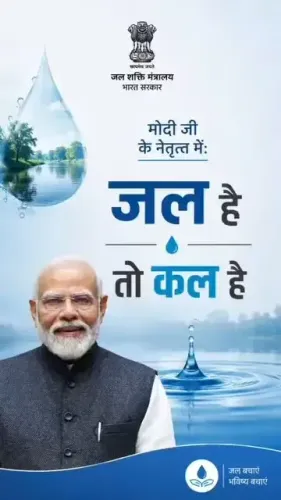
The initiative is framed as part of PM Narendra Modi 's broader goal of making water conservation a daily habit backed by institutional standards.
The move builds on the Jal Jeevan Mission and Jal Shakti Abhiyan , both launched in 2019 , which focused on rural tap connections and behavioural change respectively.
If adopted, mandatory water-efficiency criteria in quality norms could affect the appliance and plumbing-fittings industry's compliance requirements.
The exact timeline and institutional ownership of the proposed commercial-premises study have not yet been confirmed publicly.
Every drop counts — and Union Jal Shakti Minister C. R. Paatil is now pushing to make that maxim a measurable standard. On Friday, 23 October 2026, Paatil announced on X that the government is actively studying water savings from low-flow taps and water-efficient appliances in commercial premises and workplaces, and has formally proposed adding water-use efficiency as an additional parameter in quality-control provisions.
Posting in Hindi, Paatil framed the initiative with a declaration: 'हर बूंद का सदुपयोग, जल सुरक्षित भविष्य का संकल्प' ('Every drop used wisely — a resolve for a water-secure future'). He credited the push to Prime Minister Narendra Modi's leadership and the government's broader goal of embedding conservation into daily habit rather than treating it as a periodic campaign.From Taps at Home to Standards at Factories
The proposal has two moving parts. First, a study into how much water commercial buildings and workplaces can save simply by switching to low-flow fixtures and efficient devices. Second — and potentially more consequential — a request to include water-use efficiency as a formal criterion inside quality-control frameworks. That second move, if adopted by standards bodies, would mean manufacturers of taps, fittings and related appliances would have to meet water-efficiency benchmarks as a condition of product certification, not as a voluntary add-on.
This echoes a pattern the Jal Shakti Ministry has pursued since 2019: layering behavioural nudges onto infrastructure. The Jal Jeevan Mission, launched that year, wired functional tap connections into tens of millions of rural homes. The Jal Shakti Abhiyan, also launched in 2019, turned rainwater harvesting and groundwater recharge into a public campaign. The new proposal is the regulatory tier that would lock efficiency into the product supply chain itself.
Why Workplaces — and Why Now
Homes have been the traditional focus of water-conservation messaging. Offices, factories and commercial complexes have largely escaped the same scrutiny, despite accounting for a significant share of urban water demand. By targeting these spaces explicitly, the ministry is signalling that the next frontier of conservation is institutional, not just individual.
The quality-control angle matters beyond water. Earlier efforts aligned Bureau of Indian Standards (BIS) norms with energy-efficiency goals; integrating water-use efficiency into the same framework would create a parallel resource-efficiency track, potentially giving appliance buyers a reliable benchmark and regulators a compliance lever.
What the Study Could Unlock
The proposed study on commercial-premises savings is not yet confirmed with a specific timeline or institutional owner — but its purpose is clear: to generate the data that justifies mandatory norms. Without credible numbers on how much low-flow fixtures actually save at scale in Indian workplaces, the case for enforceable quality standards remains an argument. With them, it becomes a policy mandate. That sequencing — evidence, then regulation — reflects the ministry's cautious but cumulative approach to water governance.
If standards bodies respond positively and the study moves forward, India's appliance and plumbing-fittings industry will face a new compliance reality — one that aligns product quality not just with safety or durability, but with the country's long-term water security arithmetic.
Point of View
The move signals that the BJP-led government is shifting water security from a welfare narrative toward an economic-productivity and standards-compliance argument ahead of the next election cycle.
NationPress
23 Oct 2026
Frequently Asked Questions
What did Jal Shakti Minister C. R. Paatil announce on 23 October 2026?
Paatil proposed a government study on water savings from low-flow fixtures in commercial buildings and workplaces, and urged standards bodies to add water-use efficiency as a formal quality-control criterion for appliances and fittings.
What is the Jal Shakti Ministry's role in water conservation in India?
The Jal Shakti Ministry is the Union ministry responsible for water resources, conservation programmes, and coordination with states. It oversees missions like the Jal Jeevan Mission and the Jal Shakti Abhiyan, both launched in 2019.
What is the Jal Jeevan Mission and how does it relate to this proposal?
The Jal Jeevan Mission, launched in 2019, aimed to deliver functional household tap connections across rural India. Paatil's new proposal extends the conservation logic from household supply to commercial water-use efficiency and product standards.
How would adding water-efficiency to quality-control norms affect appliance manufacturers?
If accepted by standards bodies, manufacturers of taps, fittings and related appliances would need to meet water-efficiency benchmarks as a mandatory condition of product certification, not just as a voluntary feature.
Has the study on commercial water savings been officially launched?
Not yet. The exact timeline, scope and institutional ownership of the proposed study on low-flow fixtures in commercial premises have not been confirmed in public records as of October 2026.