Jal Shakti Minister Paatil: Sabka Prayas drives Viksit Bharat
Synopsis
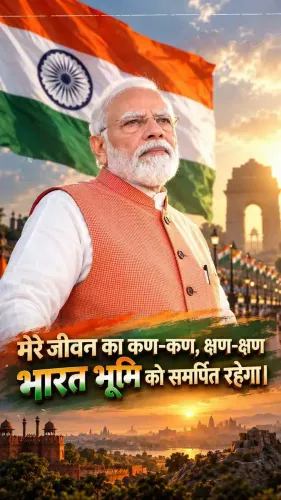
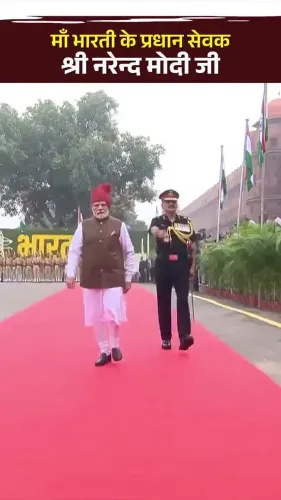
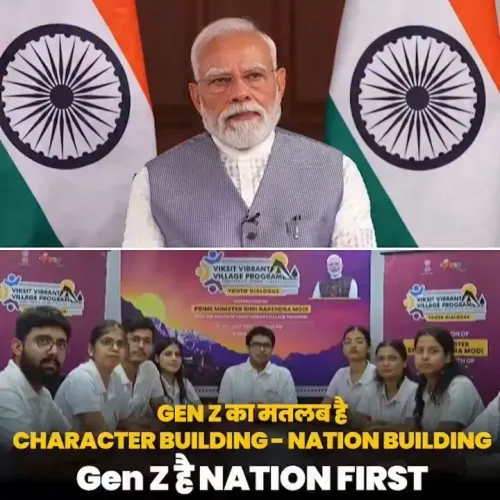
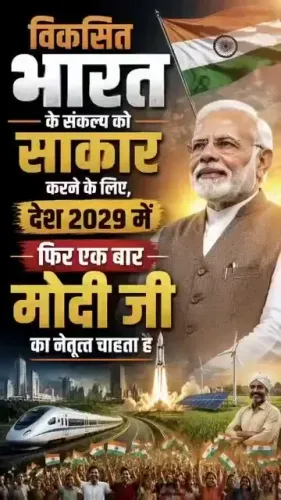
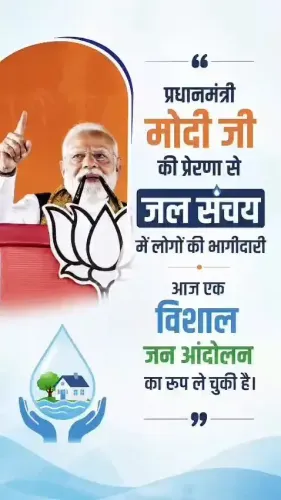
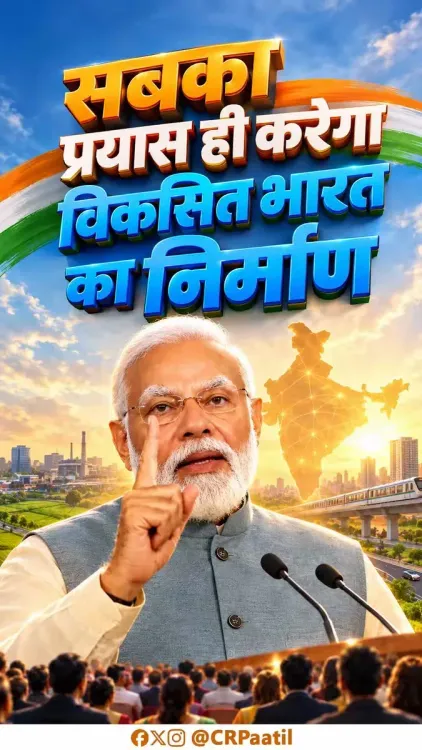
Union Jal Shakti Minister C. R. Paatil said Prime Minister Narendra Modi's Sabka Prayas call puts every citizen's voice at the centre of national progress. Citing Swachh Bharat and Digital India, he argued public ownership of a pledge widens change, and called janbhagidari the biggest capital for Viksit Bharat.
Key Takeaways
Union Jal Shakti Minister C.
Paatil on 25 November 2026 said PM Narendra Modi's Sabka Prayas call means every citizen's voice should shape India's progress.
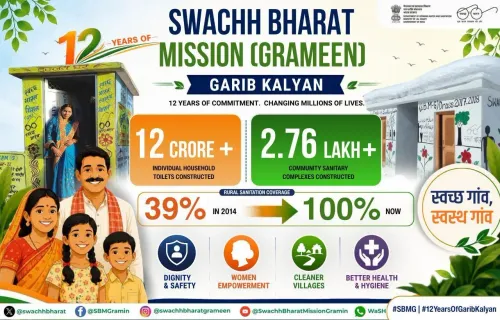
He cited Swachh Bharat Abhiyan, launched in October 2014, and Digital India, launched in July 2015, as proof that public ownership widens change.
Paatil called janbhagidari, or public participation, the biggest capital for building a developed India.
The Viksit Bharat vision, outlined in 2023, targets a developed India by 2047 and treats citizen ownership as essential.
The post announced no new scheme, target, or statistic.
Union Jal Shakti Minister C. R. Paatil on 25 November 2026 recast Prime Minister Narendra Modi's Sabka Prayas slogan as a hard demand: every citizen's voice must help set India's development course. He argued that when people take a national pledge as their own, change stops being a file in a ministry and starts covering the map.
In a Hindi post, Paatil said the original spirit of the Prime Minister's call is that every citizen's voice and active participation should decide the direction of national progress. From Swachh Bharat Abhiyan to Digital India, he wrote, the country has seen how wide the arc of change becomes once citizens own a resolve. In building a developed India, that same force of public participation is 'our biggest capital'.
Swachh Bharat and Digital India as the proof
Swachh Bharat Abhiyan launched in October 2014 as a nationwide sanitation drive that bet on public involvement to push India toward an open-defecation-free map. Digital India followed in July 2015, aiming to put digital infrastructure and citizen-facing services in ordinary hands. Paatil's message stitches those two campaigns into one lesson: mass ownership, not only Cabinet circulars, is what stretched them across districts.
The minister did not announce a new scheme or a fresh target. He was restating a governing idea that has run through official statements since 2014: development as Jan Bhagidari, a shared exercise rather than a top-down delivery chain.
Viksit Bharat 2047 and the citizen as capital
The Viksit Bharat vision, outlined in 2023, sets 2047 as the year India aims to stand as a developed nation. That horizon only works, Paatil implied, if citizens treat it as their project. He called janbhagidari (public participation) the country's largest store of capital for that build-out.
As Union Jal Shakti Minister, Paatil oversees drinking water, sanitation, and river programmes that already lean on household and village-level buy-in. His post keeps those schemes inside a larger political frame used across ministries: earlier flagships as evidence that public ownership can still power the 2047 goal.
Citizen effort, not only government outlays, is the asset he wants India to bank on as the developed-nation clock runs.
Point of View
A continuity argument Union ministers have used for years. The political utility is simple: flagship schemes are recast as rehearsals for a longer national project, with citizen labour as unspent capital. For the Jal Shakti ministry, the line also previews how water and sanitation work will be sold, as shared duty rather than a service delivered only from Delhi. The test is whether that language turns into measurable public roles inside ongoing missions, not only into more statements.
NationPress
25 Nov 2026
Frequently Asked Questions
What did C. R. Paatil say about Sabka Prayas?
Union Jal Shakti Minister C. R. Paatil said Prime Minister Narendra Modi's Sabka Prayas call means every citizen's voice and active participation should shape India's progress. He cited Swachh Bharat Abhiyan and Digital India as examples of how public ownership widens change, and called janbhagidari the biggest capital for a developed India.
What is Sabka Prayas according to C. R. Paatil?
Paatil described Sabka Prayas as the idea that every Indian's voice and active participation should help decide the direction of the country's progress. He linked that call to earlier mass campaigns and to the build-out of a developed India.
How did Paatil link Swachh Bharat and Digital India to Viksit Bharat?
He treated both flagships as proof that when citizens own a national pledge, the reach of change expands. He said the same power of public participation is the main capital for constructing a developed India under the Viksit Bharat vision.
Who is Union Jal Shakti Minister C. R. Paatil?
C. R. Paatil is the Union Minister of Jal Shakti. He is a senior BJP leader and a former BJP Gujarat state president.
When were Swachh Bharat Abhiyan and Digital India launched?
Swachh Bharat Abhiyan was launched in October 2014 as a nationwide cleanliness and sanitation campaign. Digital India was launched in July 2015 to expand digital infrastructure and citizen-facing services.