Nine miners found dead in West Java mine, 17 missing
Synopsis
Nine miners have been recovered dead from a flooded pit in West Java, with 17 still missing in shafts about 100 metres deep. Eleven workers escaped before the workings were submerged. Pumps are running, but high water, narrow passages and poor visibility are stalling the search, and the death toll could still rise.
Key Takeaways
Nine miners were found dead in a flooded pit in West Java , Indonesia, on Wednesday, 25 November .
17 workers remained missing as search and rescue continued underground.
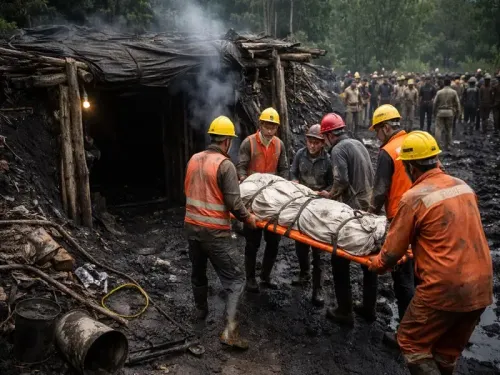
Bodies were recovered from two shafts: six from Tunnel A and three from Tunnel B as of 7 p.m. local time.
The shaft is estimated to be about 100 metres deep; high water, narrow passages and poor visibility have slowed extraction.
11 miners escaped from one section before floodwaters submerged the pit.
Heavy-duty pumps are being used to dewater the workings while disaster agencies support families at the site.
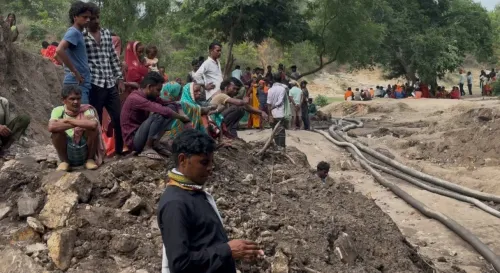
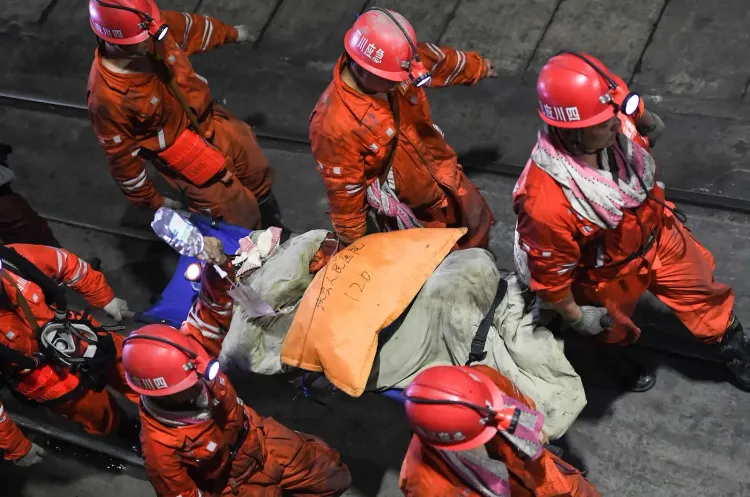
Nine miners were found dead inside a flooded mining pit in Indonesia's West Java province on Wednesday, 25 November, while 17 others remained missing underground as emergency teams pressed ahead with search and rescue operations, local authorities confirmed. The bodies were evacuated from two separate underground shafts, with six recovered from Tunnel A and three retrieved from Tunnel B as of 7 p.m. local time. The mine lies in a rugged, mountainous region south of the Indonesian capital, Jakarta.
Key Developments
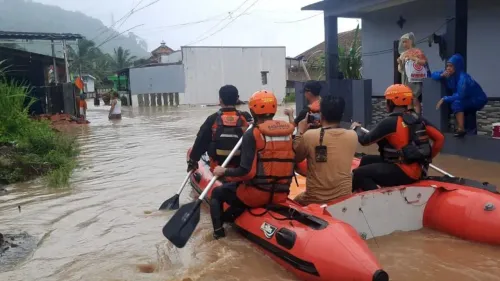
Emergency response and rescue teams began assessing the disaster site and deploying heavy-duty pumps to drain water from the inundated tunnels on Wednesday morning. Officials said extraction operations inside the shaft, estimated to be roughly 100 metres deep, were severely hampered by persistently high water levels, narrow access passages, slippery terrain and poor underground visibility.
Despite the hazardous conditions, authorities stated that search and rescue personnel are continuing round-the-clock efforts to locate the 17 missing workers while strictly prioritising the safety of the rescue teams operating inside the unstable excavation. Local disaster mitigation agencies and emergency personnel remain stationed at the site to coordinate dewatering efforts, medical support and family assistance as the search for survivors continues.
How the Inundation Unfolded
Earlier, 11 miners managed to escape from one section of the underground workings before rushing floodwaters rapidly submerged the pit. That group remains the only confirmed set of survivors so far. Once water filled the headings, two shafts — labelled Tunnel A and Tunnel B in official updates — became the focus of body recovery, while other parts of the pit stayed inaccessible.
No official public account has yet identified what triggered the sudden inflow, and investigators would typically wait until the site is stabilised before issuing that finding. For families waiting at the perimeter, the distinction between a rescue and a recovery now hinges on how fast the water can be lowered.
Why Access Remains Limited
A shaft of about 100 metres with confined, poorly lit galleries is a demanding environment even in dry conditions. With water still high, rescuers face the added risks of drowning, loss of orientation and secondary ground failure on slippery rock. Officials have therefore insisted that the safety of the rescue teams will not be traded for speed. Heavy-duty pumps are the main tool available: until the water column drops, systematic searches of flooded workings cannot proceed.
Notably, recoveries so far have come from the two named shafts, suggesting teams have established at least limited access there even as other workings remain underwater. This is the central bottleneck of underground inundation incidents: the first phase is dewatering and access, not reaching every missing worker at once.
Impact on Families and What Comes Next
Relatives of the missing are being assisted at the site while pumping continues. The confirmed death of nine workers and the unresolved status of 17 others mean the toll may still climb. Medical teams are on standby for any survivors who might be reached if air pockets exist in higher sections of the workings — a possibility rescuers cannot rule out until they can enter those headings.
This comes amid wider attention on underground mining safety in Indonesia's highland districts, where steep catchments can send water into pits with little warning. The fact that 11 miners got out of one section before the pit was fully submerged shows how little time crews had once flooding began. Provincial disaster agencies are expected to keep pumps and search teams on site around the clock until the missing are accounted for. The immediate operational question is whether water levels in the 100-metre shaft can be brought down enough for teams to move beyond Tunnel A and Tunnel B.
Point of View
Not a weather footnote. A 100-metre shaft that rescue teams cannot fully enter because pumps have not yet beaten the water is a reminder that drainage and escape routes are as safety-critical as helmets. The 11 who walked out did so because they were in the right heading when the flood arrived — not because an emergency system bought them time. Until underground pits in this terrain are judged on dewatering capacity and viable exits, families will keep waiting on pump readings instead of prevention.
NationPress
25 Nov 2026
Frequently Asked Questions
What happened at the West Java mine?
Nine miners were found dead in a flooded mining pit in Indonesia's West Java province on 25 November, and 17 others remained missing underground. Rescue teams are pumping water from shafts about 100 metres deep while the search continues.
How many miners died and how many are missing?
Nine miners have been confirmed dead and 17 remain missing. Six bodies were recovered from Tunnel A and three from Tunnel B as of 7 p.m. local time; 11 miners had escaped earlier before the pit was submerged.
Why is the rescue taking so long?
Rescue work is slowed by high water, a shaft about 100 metres deep, narrow passages, slippery ground and poor underground visibility. Officials say teams are pumping the workings around the clock but will not put rescuers at avoidable risk inside the unstable excavation.
Where is the flooded mine located?
The mine is in a rugged, mountainous part of West Java province, south of the Indonesian capital, Jakarta. Local disaster mitigation agencies are stationed at the site to coordinate dewatering, medical support and family assistance.
Did any miners escape the flood?
Yes. Eleven miners escaped from one section of the underground workings before floodwaters rapidly submerged the pit. They are the only confirmed survivors reported so far.