12.65 Lakh Indians Return from Gulf & West Asia Since Feb 28

Synopsis
Over 12.65 lakh Indian passengers have returned from the Gulf and West Asia since February 28, as the MEA runs 24/7 helplines, issues travel advisories, and the Indian Embassy in Tehran helps 2,400+ citizens exit Iran. With 110 UAE-India flights on Saturday alone, India's citizen rescue machinery is in full gear.
Key Takeaways
12.65 lakh Indian passengers have returned from the Gulf and West Asia to India since February 28, 2025 , as per the Ministry of External Affairs .
The Indian Embassy in Tehran has helped over 2,400 Indian nationals exit Iran via land borders amid a government advisory against travel to the country.
Approximately 110 UAE-India flights were scheduled to operate on April 25 , with services also continuing from Saudi Arabia, Oman, Qatar, Kuwait, and Bahrain .
Iraq is allowing restricted flight services for onward travel, while Iran has partially opened airspace only for cargo and chartered flights.
The Ministry of Ports, Shipping and Waterways confirmed all Indian seafarers in the region are safe, with no vessel incidents in the past 24 hours .
Indian missions across the region are operating round-the-clock helplines and coordinating with local governments and Indian community organisations.
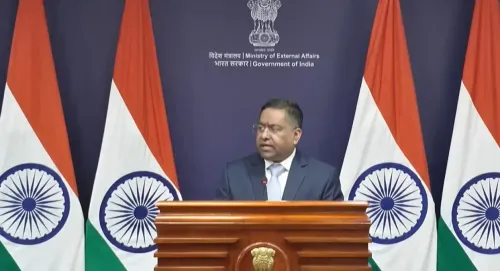
New Delhi, April 25 (NationPress): More than 12.65 lakh Indian passengers have returned to India from the Gulf and West Asia region since February 28, the central government confirmed on Saturday, April 25. The Ministry of External Affairs (MEA) stated it is continuously monitoring the evolving situation in the region, prioritising the safety, security, and welfare of the large Indian diaspora settled across these nations.
Government's Round-the-Clock Response
Indian missions and diplomatic posts spread across the Gulf and West Asia have activated 24/7 helplines to assist stranded or concerned citizens. These missions are maintaining constant coordination with respective local governments to facilitate smooth movement and consular support.
The MEA has also been issuing regular travel advisories, keeping Indian nationals updated on local regulations, flight availability, and consular services accessible in each country. Additionally, missions are actively liaising with Indian community organisations, companies, and professional bodies to ensure timely outreach to those most in need.
Flight Operations: Country-by-Country Update
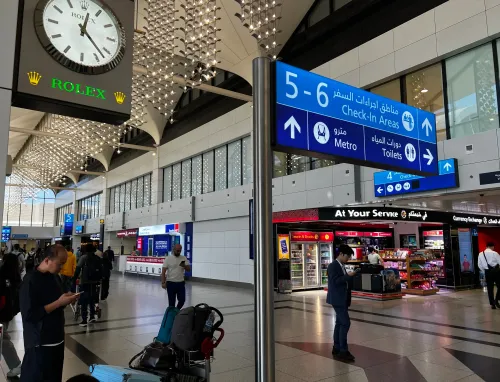
Air connectivity between India and the Gulf region is progressively improving, with airlines introducing additional services to meet demand. In the UAE, approximately 110 commercial flights were expected to operate between the UAE and India on Saturday, subject to ongoing safety assessments.
Flight services from Saudi Arabia and Oman are also continuing without disruption. Qatar Airways has resumed operations following the partial reopening of Qatar's airspace, restoring an important travel corridor for Indian nationals.
In the broader region, Kuwait and Bahrain have both reopened their airspace, with carriers either resuming or announcing limited flight operations to India. Iraq is permitting restricted flight services that can be used for onward travel connections, while Iran has partially opened its airspace for cargo and chartered flights only.
Meanwhile, Israel has resumed limited flight operations, offering additional routing options via connecting destinations for Indians seeking to travel home.
Advisory on Iran: Over 2,400 Indians Assisted
The Indian government has issued a clear advisory urging Indian nationals to avoid travelling to Iran. Those currently present in Iran have been strongly advised to exit via available land border crossings. The Indian Embassy in Tehran has already facilitated the departure of more than 2,400 Indian citizens from the country, demonstrating the scale of consular efforts on the ground.
This advisory reflects the heightened security concerns in Iran amid regional instability, and the government's proactive approach to minimising risk to Indian nationals in conflict-adjacent zones.
Maritime Safety: All Indian Seafarers Secure
On the maritime front, the Ministry of Ports, Shipping and Waterways confirmed that all necessary protocols have been implemented to protect Indian-flagged vessels and seafarers operating in the region. Crucially, no incidents involving Indian vessels were reported in the preceding 24 hours, and all Indian seafarers in the region have been confirmed safe.
The assurance comes at a time when maritime routes through the Red Sea and Persian Gulf have faced heightened security threats, making the safety of Indian seafarers — who represent one of the largest seafarer communities globally — a matter of national priority.
Broader Context and What It Means for India
The Indian diaspora in the Gulf numbers over 9 million people, making it one of the largest overseas Indian communities in the world. This population is also the single largest source of remittances to India, contributing tens of billions of dollars annually to the national economy. Any prolonged disruption to their safety or mobility carries significant economic and humanitarian consequences.
This comes amid escalating geopolitical tensions in West Asia, particularly involving Iran, Israel, and proxy conflicts across the region. The Indian government's decision to maintain diplomatic neutrality while aggressively pursuing citizen welfare reflects a calibrated foreign policy posture that has been tested repeatedly since 2022.
Notably, India's evacuation and repatriation operations — including Operation Ganga in Ukraine and Operation Kaveri in Sudan — have set a benchmark for rapid citizen rescue. The current coordinated response follows this established framework, with the MEA treating Gulf repatriation as a high-priority consular mission.
As regional tensions remain fluid, the government is expected to scale up flight capacity further and may consider dedicated evacuation corridors if the situation deteriorates. Indian nationals in the region are advised to register with their nearest Indian mission and monitor official MEA advisories closely in the days ahead.
Point of View
But the real question is whether India's diplomatic bandwidth can sustain this pace if the region tips into full-scale war. The 2,400 Indians evacuated from Iran via land borders is a quiet but telling detail — it signals that air corridors alone cannot be the only contingency plan, and India needs to pressure-test its crisis evacuation architecture before the next flashpoint, not during it.
NationPress
30 Sept 2026
Frequently Asked Questions
How many Indian passengers have returned from Gulf and West Asia since February 28?
Over 12.65 lakh Indian passengers have returned to India from the Gulf and West Asia region since February 28, 2025 , according to the Ministry of External Affairs. The government confirmed this figure on Saturday, April 25.
Is it safe for Indians to travel to Iran right now?
The Indian government has advised Indian nationals to avoid travelling to Iran due to prevailing security concerns. Those already in Iran are urged to exit via land borders, with the Indian Embassy in Tehran having already assisted over 2,400 Indians in leaving the country.
Are flights operating between India and Gulf countries in April 2025?
Yes, flights between India and Gulf countries are operational and improving. Around 110 flights were expected between the UAE and India on April 25 , while services from Saudi Arabia, Oman, Qatar, Kuwait, and Bahrain are also running. Israel has also resumed limited flights.
What is the MEA doing to help Indians in West Asia?
The Ministry of External Affairs (MEA) has activated 24/7 helplines at all Indian missions across Gulf and West Asia. It is issuing regular travel advisories, coordinating with local governments, and engaging Indian community groups to ensure timely support for citizens in need.
Are Indian seafarers safe in the Gulf region?
Yes, the Ministry of Ports, Shipping and Waterways confirmed that all Indian seafarers in the Gulf and West Asia region are safe. No incidents involving Indian-flagged vessels were reported in the 24 hours preceding April 25, 2025.