Bangladesh: 18 arrested for criticising govt since BNP took power
Synopsis
Bangladesh's BNP-led government has seen at least 18 people arrested for criticising the Prime Minister and ministers in under nine months, according to rights body Odhikar. A proposed Cyber Security (Amendment) Act 2026 is raising alarm that the crackdown could intensify — with even an elected MP saying he fears arrest for speaking out.
Key Takeaways
At least 18 people arrested in Bangladesh for criticising the government between 17 February and 13 November 2026 , per rights body Odhikar .
The proposed Cyber Security (Amendment) Act 2026 could criminalise online dissent, speakers at a Dhaka panel warned.
Sathi Akhter was arrested on 26 October after posting a video critical of the BNP government online.
Jamaat-e-Islami MP Mir Ahmad Bin Quasem said even elected lawmakers fear arrest for criticising the government.
Civil society groups have urged authorities to repeal what they describe as 'repressive provisions' in the proposed cyber law.
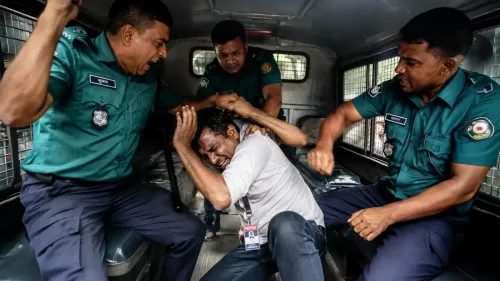
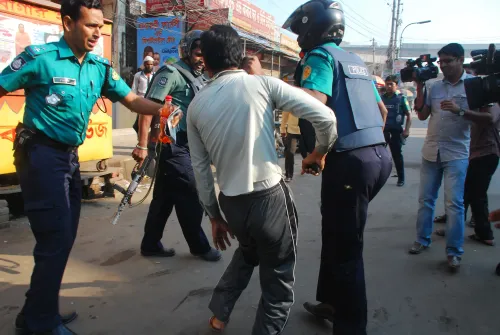
At least 18 people have been arrested in Bangladesh for publicly criticising the Prime Minister, cabinet ministers, and government representatives since the BNP-led government assumed office, according to local media reports citing a human rights organisation. The arrests were recorded between 17 February and 13 November 2026, according to Dhaka-based rights body Odhikar.
Odhikar's Findings
Odhikar presented the data at a panel discussion titled 'Crisis of Freedom of Expression and Democratic System', held in Dhaka. The figures, covering a span of roughly nine months, point to a pattern of arrests linked to critical speech directed at the ruling establishment. Rights advocates warned that the numbers likely undercount incidents that go unreported.
Concerns Over Proposed Cyber Security Law
Speakers at the event flagged the proposed Cyber Security (Amendment) Act 2026 as a potential instrument for silencing online dissent. They warned it could be used to criminalise criticism of the government and enable arbitrary enforcement, and urged authorities to repeal what they called its 'repressive provisions.'
Syed Abdal Ahmed, principal information officer at the Press Information Department, acknowledged that Bangladesh's Digital Security Act (DSA) and the Information and Communication Technology (ICT) Act had been used to harass individuals. He expressed hope that the new cyber security legislation would not similarly be misused to suppress freedom of expression, according to The Daily Star.
Shafiqul Alam, editor-in-chief of The Daily Waadaa, called for legislation aligned with international standards — one that could address online defamation, character assassination, and misinformation while genuinely protecting free expression.
Voices From the Ground
Sathi Akhter, recalling her arrest on 26 October, said she was taken into custody after posting a video online in which she said: 'I am now a victim after I voted for the BNP government.' She stated the arrest followed an alleged attack on her business establishment and that she was detained simply for speaking out.
Jamaat-e-Islami MP Mir Ahmad Bin Quasem said businesspeople were facing mounting financial difficulties, with some unable to pay workers' wages and forced to rent out their shops to survive. He warned that voicing such concerns publicly could invite arrest under the proposed cyber security law on grounds of spreading misinformation or rumours. Notably, Quasem said he himself feared arrest despite being an elected lawmaker. The Daily Star quoted him as saying: 'Imagine the kind of fear this law could create among ordinary people.'
Press Freedom and Democratic Concerns
Shahiduzzaman, deputy editor of New Age, stressed that freedom of thought, expression, and the press were essential pillars of a functioning democracy. He argued that elections alone could not guarantee democratic governance unless citizens had reliable access to information to make informed choices. This comes amid broader international concern over press freedom trends across South Asia.
What Happens Next
Civil society groups and media organisations in Bangladesh are expected to push back against the proposed Cyber Security (Amendment) Act 2026 before it is tabled for a vote. With at least 18 arrests already documented in under nine months and a potentially more restrictive law on the horizon, rights advocates say the space for free expression in Bangladesh faces a critical test in the weeks ahead.
Point of View
ICT Act, and now a proposed cyber security amendment — that its predecessor used to suppress dissent. Odhikar's figure of 18 arrests in nine months is likely a floor, not a ceiling, given underreporting in environments where fear of reprisal is high. The fact that an elected MP from a coalition partner publicly says he fears arrest for criticism is not a footnote — it is a structural warning about how the proposed law could hollow out parliamentary accountability. Bangladesh's international partners, who backed the transition, will be watching whether the Cyber Security (Amendment) Act 2026 is amended or passed as drafted.
NationPress
16 Nov 2026
Frequently Asked Questions
How many people have been arrested in Bangladesh for criticising the government?
At least 18 people have been arrested between 17 February and 13 November 2026 for expressing views critical of the Prime Minister, ministers, or government representatives, according to Dhaka-based rights body Odhikar.
What is the Cyber Security (Amendment) Act 2026 in Bangladesh?
It is a proposed piece of legislation in Bangladesh that civil society groups and rights advocates say could be used to criminalise online dissent and criticism of the government. Speakers at a Dhaka panel urged authorities to repeal its reportedly repressive provisions before it is enacted.
Who is Odhikar and what did it find?
Odhikar is a Dhaka-based human rights organisation that presented arrest figures at a panel discussion titled 'Crisis of Freedom of Expression and Democratic System.' It documented at least 18 arrests linked to criticism of the BNP-led government over a nine-month period.
Why did Sathi Akhter get arrested in Bangladesh?
Sathi Akhter was arrested on 26 October after posting a video online saying she had become a victim despite having voted for the BNP government. She said the arrest followed an alleged attack on her business and that she was detained for speaking out about it.
What have press freedom advocates said about Bangladesh's digital laws?
Advocates argue that the existing Digital Security Act and ICT Act have already been used to harass individuals, and that the proposed Cyber Security (Amendment) Act 2026 risks continuing the same pattern. They are calling for legislation aligned with international free expression standards.