What Caused the High-Speed Train Collision Resulting in 21 Deaths in Spain?
Synopsis
In a devastating incident, two high-speed trains collided near Cordoba, Spain, resulting in at least 21 fatalities and numerous injuries. The nation mourns as investigations continue into the cause of this tragic accident. Discover the details surrounding this catastrophic event and the ongoing rescue efforts.
Key Takeaways
21 fatalities confirmed in the train collision.
Over 70 injuries , with 30 in critical condition.
Accident occurred at approximately 19:45 local time .
The collision involved two high-speed trains.
Rescue operations are ongoing, and rail services have been suspended.
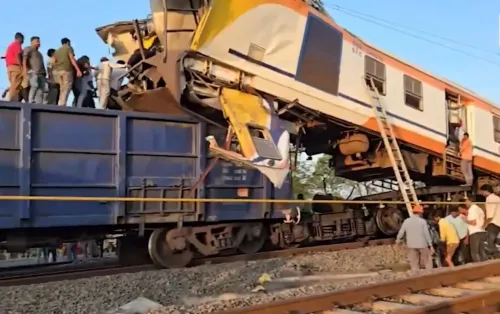
Madrid, Jan 19 (NationPress) Tragically, 21 individuals have been reported dead and over 70 others injured following a collision between two high-speed trains near Cordoba in southern Spain, according to authorities.
Spain's Transport Minister, Oscar Puente, stated on Monday that 30 of the injured are in critical condition and have been hospitalized, while earlier reports had indicated a figure of 25.
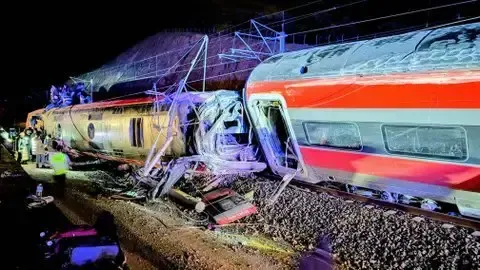
The incident took place at approximately 19:45 local time (1845 GMT) when a train carrying 317 passengers on the Malaga-Madrid route derailed under circumstances that remain unclear, near Amaduz, about 20 km from Cordoba.
The derailed train collided with another high-speed train traveling on a parallel track from Madrid to Huelva, leading to the latter also derailing.
Prime Minister of Spain, Pedro Sanchez, expressed his profound condolences regarding the catastrophe on Monday.
“This evening is filled with profound sorrow for our nation due to the tragic rail incident in Adamuz,” he posted on X. Similarly, Spain's royal family has extended their sympathies to the bereaved families, as reported by Xinhua news agency.
Puente described the crash as “horrific,” noting that the last two cars of the Malaga-Madrid train derailed and collided with the first two cars of the oncoming train, causing them to go off the rails.
Emergency services from the Andalusia region rushed to the site, with local residents assisting in the transfer of passengers with minor injuries to a nearby sports facility for initial medical care. Spain's Military Emergency Unit was also deployed to aid in rescue efforts.
Rescue operations persisted into Sunday night as officials cautioned that the death toll may increase. Authorities announced that rail services on the affected routes would remain suspended until at least Tuesday.
The railway infrastructure operator Adif confirmed the establishment of a dedicated area at Atocha Station in Madrid, Malaga, and Huelva to provide support and information for the families of the affected passengers. A special phone line has also been created.
Notably, Spain's most devastating train disaster occurred in July 2013, when 79 lives were lost as a high-speed train derailed while entering Santiago de Compostela at excessive speeds.
Point of View
It is our responsibility to report on this tragic event with the utmost care and sensitivity. The loss of life and the impact on families and communities is profound, and our thoughts are with those affected. We will continue to provide updates as more information becomes available, ensuring we uphold the highest standards of journalism.
NationPress
29 Sept 2026
Frequently Asked Questions
How many people were injured in the train collision?
More than 70 individuals were injured, with **30 in critical condition**.
What time did the train collision occur?
The collision happened at approximately **19:45 local time** (1845 GMT).
Where did the train accident take place?
The accident occurred near **Amaduz**, approximately **20 km from Cordoba**.
Who expressed condolences for the victims?
Spain's Prime Minister, **Pedro Sanchez**, and the royal family extended their condolences.
What measures have been taken for the affected families?
A dedicated area has been established at **Atocha Station** for information, and a special phone line has been created for families.