Government Achieves Milestone: Nearly 3 Crore Homes Built Under PMAY-G

Synopsis
On March 31, 2023, the government reported that nearly 3 crore homes have been constructed under the Pradhan Mantri Awaas Yojana-Gramin, showcasing significant progress towards its 2029 target of 4.95 crore houses. This initiative highlights the effective use of technology in monitoring and transparency.
Key Takeaways
3 crore homes completed under PMAY-G.
Target of 4.95 crore houses by 2029.
Utilization of AI and machine learning for monitoring.
Geo-tagging for real-time progress tracking.
Direct financial assistance to beneficiaries.
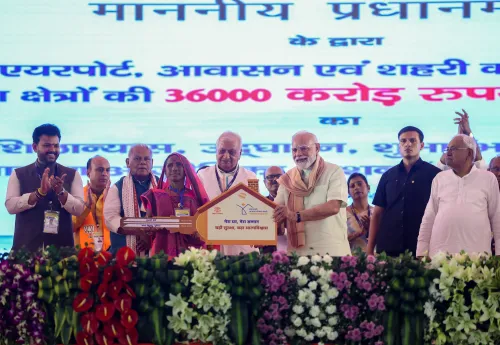
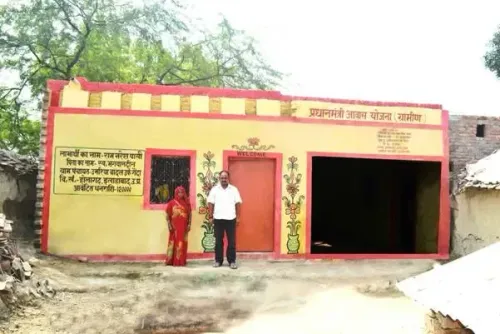
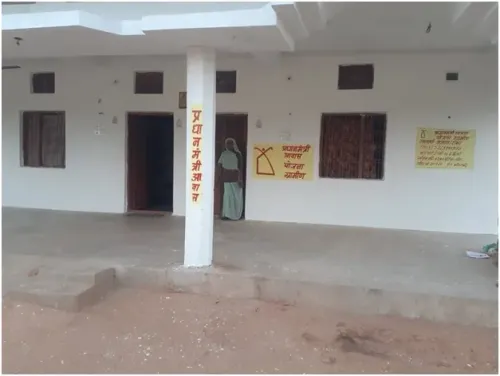
New Delhi, March 31 (NationPress) The government has set an ambitious target of 4.15 crore houses to be constructed under the first two phases of the Pradhan Mantri Awaas Yojana-Gramin. As of Tuesday, 3.90 crore houses have been sanctioned, with 2.99 crore completed. A total fund transfer of Rs 4,03,886 crore has been executed to facilitate timely construction and support for beneficiaries across various states. The program is projected to achieve a cumulative target of 4.95 crore houses by 2029, according to an official announcement.
This beneficiary-driven initiative has been enhanced through geo-tagging of houses, accompanied by time and date-stamped photographs. This digital documentation facilitates real-time monitoring of progress, ensuring compliance with established guidelines.
Additionally, the inclusion of AI-driven monitoring tools assists in detecting anomalies and employs Aadhaar face authentication to enhance transparency and mitigate fraud.
Beneficiaries are further empowered through convergence with other initiatives, including the Viksit Bharat-Guarantee for Rozgar, Ajeevika Mission (Gramin), Swachh Bharat Mission-Gramin, Self-Help Groups, Jal Jeevan Mission, and PM-Surya Ghar: Muft Bijli Yojana.
Designed as a beneficiary-led program, PMAY-G allows families to take charge of constructing their homes, with financial assistance deposited directly into the beneficiaries' bank accounts.
The statement added, "Over the past decade, PMAY-G has shown consistent performance, with annual completions reflecting its ability to sustain steady progress across various phases."
“With the adoption of Artificial Intelligence and Machine Learning tools, monitoring has become more precise, fraud prevention has been fortified, and implementation has gained credibility. These advancements ensure that every constructed house is authentic and every beneficiary is accurately verified,” the statement highlighted.
AI models analyze features of houses, such as walls, roofs, doors, and windows from uploaded photographs, recommending the most suitable final image for approval, thus ensuring that only authentic and complete houses are marked as finished.
Beneficiary verification is carried out through Aadhaar-based, AI-enabled face authentication, ensuring that only eligible households receive assistance and reinforcing the integrity of the database.
Advanced verification techniques like eye-blink and motion detection are utilized during beneficiary authentication, confirming that the process is live and genuine, thereby preventing impersonation or misuse.
Point of View
The Pradhan Mantri Awaas Yojana-Gramin represents a significant step towards improving rural housing. With nearly 3 crore homes completed, the initiative reflects the government's dedication to transparency and efficiency, utilizing advanced technology to ensure that funds directly benefit eligible households.
NationPress
2 Oct 2026
Frequently Asked Questions
What is the Pradhan Mantri Awaas Yojana-Gramin?
It is a government initiative aimed at providing affordable housing to the rural population of India.
How many houses have been completed under PMAY-G?
As of March 31, 2023, nearly 3 crore houses have been completed under the scheme.
What technologies are being used in PMAY-G?
The scheme utilizes geo-tagging, AI-driven monitoring tools, and Aadhaar face authentication to enhance transparency and accountability.
What is the target for PMAY-G by 2029?
The target is to achieve a total of 4.95 crore houses by 2029.
How does the scheme support beneficiaries?
Beneficiaries receive financial assistance directly into their bank accounts, allowing them to take ownership of their housing construction.