5.6-magnitude earthquake near Mt. Fuji injures 10 in Yamanashi, Japan
Synopsis
A century-old seismic record was broken in Yamanashi on 27 June when a 5.6-magnitude quake — the strongest felt there since 1924 — rattled the prefecture home to Mt. Fuji. With 10 injured and tremors reaching Tokyo, the event is part of a 48-hour seismic cluster that also included a 7.2-magnitude hit on Tohoku, raising questions about Japan's current tectonic stress patterns.
Key Takeaways
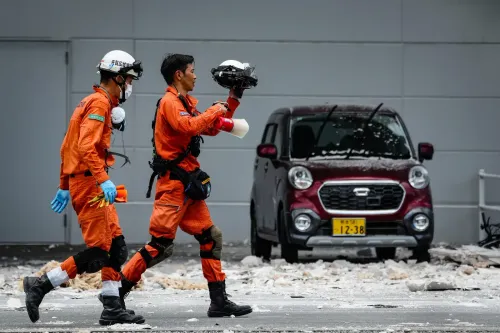
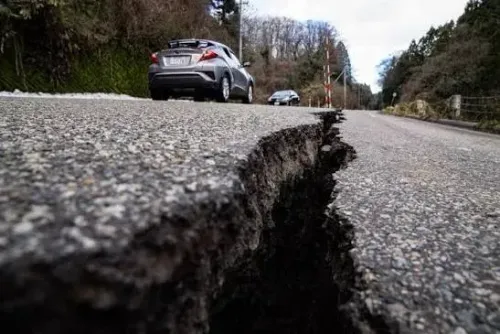
A 5.6-magnitude earthquake struck Yamanashi Prefecture, Japan at 10:29 pm local time on 27 June , injuring 10 people with minor injuries.
The quake reached intensity lower 6 in Fujikawaguchiko Town — the highest such intensity recorded in Yamanashi since 1924 .
The Japan Meteorological Agency (JMA) confirmed no volcanic abnormalities detected at Mt.
Fuji ; experts say eruption is unlikely.
Tremors were felt across Kanagawa , Shizuoka , and Tokyo ; no tsunami warning was issued.
A separate 7.2-magnitude quake struck northeastern Japan near Iwate Prefecture on Thursday , injuring at least four people .
Multiple quakes — including a 5.8 in Chiba and a 4.1 in Ibaraki — struck the Kanto region within the same 48-hour window.
A 5.6-magnitude earthquake struck the central Japanese prefecture of Yamanashi late on Friday, 27 June, injuring 10 people and sending tremors across neighbouring prefectures and as far as Tokyo. The quake is part of a cluster of seismic events that rattled the Kanto and Tohoku regions over a span of roughly 48 hours.
Key Details of the Yamanashi Quake
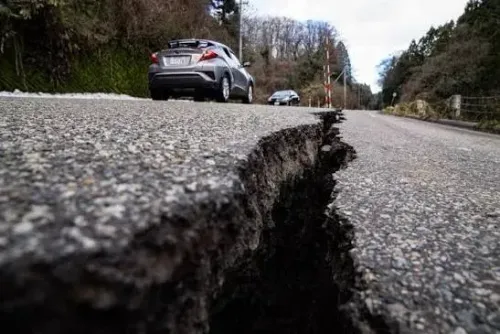
The tremor struck at approximately 10:29 pm local time at a depth of about 20 km, according to the Japan Meteorological Agency (JMA). All 10 reported injuries were minor. The JMA recorded an intensity of lower 6 — the third-highest level on Japan's seven-point seismic intensity scale — in Fujikawaguchiko Town, and upper 5 in Otsuki City, both within Yamanashi Prefecture.
An intensity of lower 6 makes it difficult to remain standing, and unsecured furniture may topple while windows can sustain damage. Shaking of this magnitude was last recorded in Yamanashi in 1924 — a gap of over a century that heightened public concern.
Mt. Fuji Eruption Fears Addressed
Because Yamanashi Prefecture is home to Mt. Fuji, the quake immediately prompted concerns about possible volcanic activity. However, the JMA confirmed after the event that no abnormalities had been detected in the volcano's activity. Experts added that an eruption is unlikely, given that the quake occurred near the boundary between tectonic plates — a mechanism distinct from the volcanic processes that would typically precede an eruption.
Wider Impact Across Prefectures
Tremors were clearly felt in Kanagawa, Shizuoka, and Tokyo. No tsunami warning was issued. The Yamanashi quake was not an isolated event: earlier on the same Friday, a preliminary 5.8-magnitude quake struck Chiba Prefecture, near Tokyo, with its epicentre at 35.7 degrees north latitude and 140.6 degrees east longitude. A 4.1-magnitude tremor had also hit southern Ibaraki Prefecture at 11:49 am that day, making the Yamanashi event the second significant quake near the capital within less than an hour.
Broader Seismic Cluster: Tohoku Also Hit
The activity follows a 7.2-magnitude earthquake that struck northeastern Japan on Thursday, injuring at least four people. That quake — revised upward from a preliminary 6.9 — occurred at around 7:30 am local time off the eastern coast of Iwate Prefecture at a depth of approximately 40 km. The JMA recorded an intensity of upper 6 in Hashikami Town and lower 6 in Hachinohe City, both in Aomori Prefecture. No tsunami warning was issued for that event either.
Japan sits on the Pacific Ring of Fire and is among the world's most seismically active nations. With multiple significant quakes in quick succession, seismologists will be monitoring the region closely for aftershocks and any changes in volcanic indicators around Mt. Fuji.
Point of View
And the JMA's swift volcanic clearance for Mt. Fuji is credible, but the 1924 intensity benchmark being crossed in Yamanashi is a reminder that low-frequency, high-consequence events are always in the tail risk. The deeper question is infrastructure readiness in tourist-heavy zones like Fujikawaguchiko, where international visitor density has surged post-pandemic. A lower-6 intensity event with only 10 minor injuries is fortunate; the next one may not be.
NationPress
25 Sept 2026
Frequently Asked Questions
How strong was the earthquake near Mt. Fuji on 27 June?
The earthquake measured a magnitude of 5.6 and struck Yamanashi Prefecture at around 10:29 pm local time on 27 June. It reached an intensity of lower 6 — the third-highest level on Japan's seven-point scale — in Fujikawaguchiko Town, the strongest shaking recorded in the prefecture since 1924.
Did the earthquake trigger any volcanic activity at Mt. Fuji?
No. The Japan Meteorological Agency confirmed that no abnormalities were detected in Mt. Fuji's volcanic activity following the quake. Experts said an eruption is unlikely given that the earthquake occurred near a tectonic plate boundary, a mechanism unrelated to volcanic processes.
Were there other earthquakes in Japan around the same time?
Yes. A 5.8-magnitude quake struck Chiba Prefecture and a 4.1-magnitude tremor hit Ibaraki Prefecture on the same Friday. A day earlier, on Thursday, a 7.2-magnitude earthquake struck off the coast of Iwate Prefecture in northeastern Japan, injuring at least four people.
Was a tsunami warning issued after the Yamanashi earthquake?
No tsunami warning was issued following the 5.6-magnitude Yamanashi quake. Similarly, no tsunami alert was raised after the 7.2-magnitude earthquake that struck off Iwate Prefecture on Thursday.
Which areas were affected by the 27 June earthquake?
Beyond the epicentre in Yamanashi Prefecture, tremors were clearly felt in Kanagawa, Shizuoka, and Tokyo. The quake struck at a depth of about 20 km, and 10 people sustained minor injuries across the affected areas.