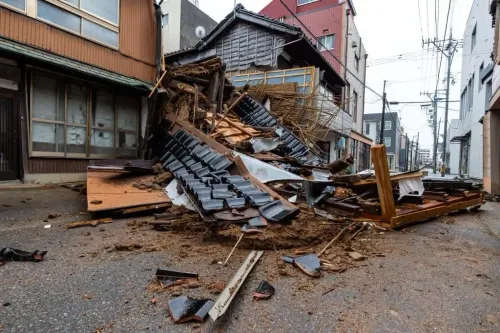
6.1-magnitude earthquake strikes off Iwate, Japan; no tsunami warning
Synopsis
A 6.1-magnitude earthquake off Iwate is the fourth significant tremor to hit Japan in under 72 hours — following a 7.2-magnitude quake on Thursday, two quakes near Tokyo on Friday, and now this. With nuclear plants on watch and the Tohoku coast still scarred by 2011 memories, this seismic cluster is a stark reminder of Japan's relentless geological exposure.
Key Takeaways
A 6.1-magnitude earthquake struck off Iwate Prefecture , northeastern Japan, at 5:21 a.m. on 28 June .
The quake hit at a depth of 40 km ; no tsunami warning was issued.
Lower 5 intensity recorded in parts of Aomori and Iwate on Japan's 7-point seismic scale.
No abnormalities reported at Higashidori or Onagawa nuclear facilities.
A 7.2-magnitude earthquake struck the same region on Thursday , injuring at least 4 people ; two more quakes hit near Tokyo on Friday , injuring at least 10 .
A 6.1-magnitude earthquake struck off the eastern coast of Iwate Prefecture in northeastern Japan at 5:21 a.m. local time on Sunday, 28 June, the Japan Meteorological Agency (JMA) confirmed. No tsunami warning was issued following the tremor, which registered lower 5 on Japan's seismic intensity scale of 7 in parts of Aomori and Iwate prefectures.
Quake Details and Depth
The earthquake's epicentre was recorded at a depth of approximately 40 km, at a latitude of 40.2 degrees north and longitude of 142.4 degrees east. The preliminary magnitude reading of 6.1 placed it firmly in the moderate-to-strong category, though the absence of a tsunami alert provided immediate relief to coastal communities still on edge from recent seismic activity in the region.
Nuclear Plants Unaffected
Operators confirmed no abnormalities at either the Higashidori nuclear power plant in Aomori Prefecture or the Onagawa nuclear power complex in Miyagi Prefecture following the tremor. Both facilities are located in the broader northeastern Japan corridor that has experienced repeated seismic stress this week, making the safety checks a critical priority for authorities.
A Week of Relentless Tremors
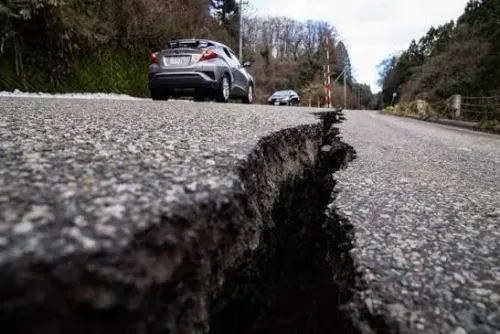
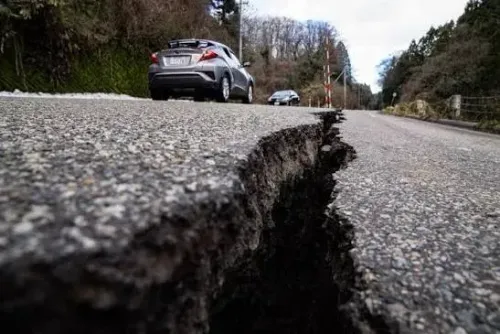
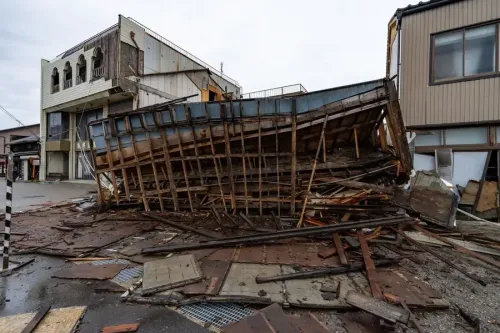
Sunday's quake is the latest in a rapid sequence of earthquakes to rattle northeastern and central Japan within days. On Thursday, 26 June, a 7.2-magnitude earthquake — revised upward from a preliminary reading of 6.9 — struck off the eastern coast of Iwate at a depth of about 40 km, injuring at least four people. That quake registered upper 6, the second-highest intensity level on Japan's seven-point scale, in Hashikami Town, and lower 6 in Hachinohe City, both in Aomori. An intensity of lower 6 means it is difficult to remain standing, and unsecured furniture may topple.
Then on Friday, 27 June, two separate earthquakes — measuring 5.6 and 5.8 magnitude — struck near Tokyo, with shaking clearly felt in the capital and at least 10 people injured. A further 4.1-magnitude tremor hit southern Ibaraki Prefecture at 11:49 a.m. on Friday, with tremors again felt in Tokyo.
Why This Cluster Matters
Northeastern Japan lies along the Pacific Ring of Fire, one of the world's most seismically active zones. The region was devastated by the 2011 Tohoku earthquake and tsunami, and any significant seismic activity here draws immediate scrutiny — particularly regarding nuclear infrastructure. This week's cluster of quakes, ranging from moderate to major, underscores the persistent geological vulnerability of the Tohoku coast. Notably, the same offshore Iwate zone produced both the 7.2-magnitude event on Thursday and Sunday's 6.1-magnitude follow-up, suggesting ongoing stress release along the subduction boundary.
What Authorities Are Monitoring
The JMA continues to monitor aftershock potential across the region. With multiple quakes striking within a 72-hour window, seismologists will be watching for further stress redistribution along the fault system. Residents in Aomori, Iwate, and Miyagi prefectures have been advised to remain alert to aftershocks and to check the structural integrity of buildings affected by the earlier, stronger tremors.
Point of View
And repeated strong shaking warrants independent structural verification, not just operator self-reporting. Mainstream coverage tends to treat each quake as a standalone event; the real story this week is the cluster pattern, which seismologists will be studying closely for what it signals about larger rupture potential on the Pacific Plate boundary.
NationPress
26 Sept 2026
Frequently Asked Questions
What was the magnitude of the earthquake that struck off Iwate on 28 June?
A 6.1-magnitude earthquake struck off the eastern coast of Iwate Prefecture in northeastern Japan at 5:21 a.m. local time on 28 June. The Japan Meteorological Agency confirmed no tsunami warning was issued.
Was a tsunami warning issued after the Iwate earthquake?
No tsunami warning was issued following the 6.1-magnitude earthquake off Iwate on 28 June. Authorities confirmed the tremor did not generate conditions warranting a coastal alert.
Were any nuclear plants affected by the earthquake?
No abnormalities were reported at the Higashidori nuclear power plant in Aomori Prefecture or the Onagawa nuclear power complex in Miyagi Prefecture, according to their operators.
How does this earthquake relate to the other recent quakes in Japan?
It is the latest in a cluster of earthquakes to strike Japan within 72 hours. A 7.2-magnitude quake hit the same Iwate region on Thursday, injuring at least 4 people, while two quakes measuring 5.6 and 5.8 struck near Tokyo on Friday, injuring at least 10.
What does a lower 5 intensity mean on Japan's seismic scale?
Japan uses a seismic intensity scale of 0 to 7. A lower 5 rating — recorded in parts of Aomori and Iwate — indicates strong shaking that can be difficult to withstand while walking, and may cause unsecured objects to fall. It is below the lower 6 recorded in some areas during Thursday's stronger 7.2-magnitude quake.