Giriraj Singh tries hand-block printing, salutes artisan craft
Synopsis
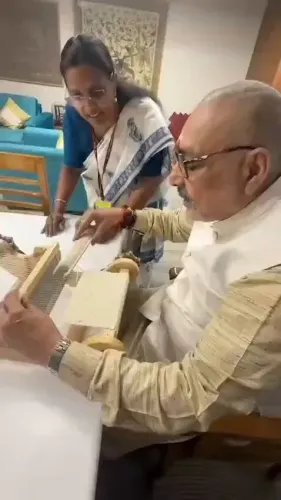
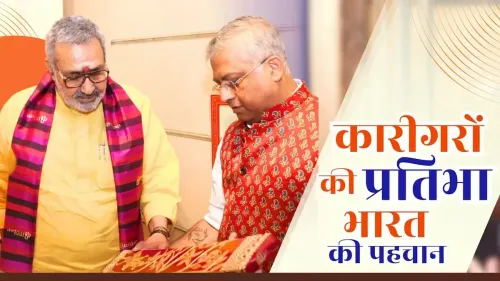
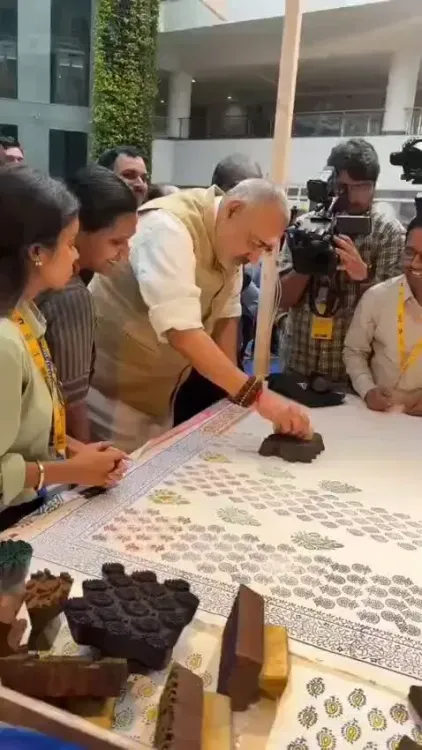
Union Textiles Minister Giriraj Singh tried hand-block printing on 12 August 2026, calling it a humbling lesson in the concentration and skill India's weavers invest daily in their craft, and saluting their talent.
Key Takeaways
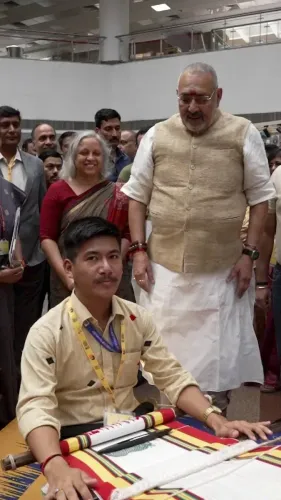
Giriraj Singh , Union Textiles Minister, personally experienced hand-block printing on 12 August 2026 .
He described the craft as demanding 'concentration, patience, precision, and sustained effort' despite appearing simple.
The minister paid tribute to India's weavers and artisans, saying 'Unke hunar ko naman' — 'A salute to their talent.' Hand-block printing is a centuries-old tradition practised across textile clusters in Rajasthan, Gujarat, Madhya Pradesh, and Uttar Pradesh.
The Ministry of Textiles oversees multiple schemes for handloom and handicraft livelihood support and export promotion.
The wood block meets the cloth, the ink blooms into pattern — and Union Textiles Minister Giriraj Singh got a first-hand lesson in just how much that moment demands. On Wednesday, 12 August 2026, the minister shared his experience trying hand-block printing, a craft that looks deceptively simple but exacts a precise toll of concentration, patience, and skill from those who practise it for a living.
In his post, Singh wrote: 'Aaj hand-block printing ka anubhav liya' — 'Today I experienced hand-block printing.' He noted that while the process may appear straightforward to the eye, imprinting the right design onto fabric requires 'concentration, patience, precision, and sustained effort.' The exercise, he said, gave him a close-up sense of the labour and skill that India's weavers and artisans pour into their craft every day. He signed off with a salute to their talent: 'Unke hunar ko naman.'
What hand-block printing actually demands
Hand-block printing is one of India's oldest textile traditions, practised across clusters in Rajasthan, Gujarat, Madhya Pradesh, and Uttar Pradesh. A craftsperson carves a design into a wooden block, dips it in natural or synthetic dye, and stamps it onto fabric — repeating the motion hundreds of times across a single length of cloth, each impression needing to align perfectly with the last. Slight tremors, uneven pressure, or a fraction of misalignment can ruin a piece. The skill is typically passed down through generations, and master printers spend years developing the muscle memory the craft demands.
The Ministry's stake in keeping the craft alive
The Ministry of Textiles oversees several schemes aimed at sustaining handloom and handicraft livelihoods — from cluster development programmes to market-linkage initiatives and export promotion. Hand-block printing sits at the intersection of cultural heritage and economic livelihood for thousands of artisan families. Ministerial engagement with the craft — even at the level of a personal demonstration — signals attention to a sector that often struggles for visibility against mechanised textile production. Whether Singh's experience translates into follow-up policy action or scheme announcements for artisan welfare remains the question to watch.
A politician picking up a block and pressing it to cloth is a small gesture. For the artisans who do it every day of their working lives, it is everything — and Singh's public acknowledgement of that weight is, at minimum, a signal that the ministry is watching.
Point of View
But it carries real policy weight for the textiles portfolio — the sector employs millions and sits at the heart of the government's 'vocal for local' and export-diversification push. Singh's public salute to artisan skill keeps the handloom and handicraft constituency visible at a time when mechanised competition and supply-chain pressures squeeze traditional producers. Whether the gesture is followed by concrete scheme announcements or cluster-support measures will determine whether it registers as policy intent or ceremonial goodwill.
NationPress
12 Aug 2026
Frequently Asked Questions
What is hand-block printing?
Hand-block printing is a traditional Indian textile technique where a carved wooden block is dipped in dye and stamped onto fabric by hand, requiring precise alignment and sustained skill. It is practised across clusters in Rajasthan, Gujarat, Madhya Pradesh, and Uttar Pradesh.
Why did Giriraj Singh try hand-block printing?
Singh tried hand-block printing as a hands-on engagement with India's traditional textile crafts in his capacity as Union Textiles Minister, sharing the experience on 12 August 2026 to highlight the skill and effort of Indian weavers and artisans.
What did Giriraj Singh say about weavers and artisans?
Singh said the experience made him feel up close how much labour and skill India's weavers and artisans invest in shaping their art, and he saluted their talent with the phrase 'Unke hunar ko naman' — 'A salute to their talent.'
What schemes does the Ministry of Textiles run for handloom artisans?
The Ministry of Textiles oversees several programmes including cluster development initiatives, market-linkage schemes, and export promotion efforts aimed at sustaining handloom and handicraft artisan livelihoods across India.
Who is Giriraj Singh?
Giriraj Singh is a senior BJP leader, Lok Sabha MP from Begusarai in Bihar, and currently serves as India's Union Minister of Textiles.