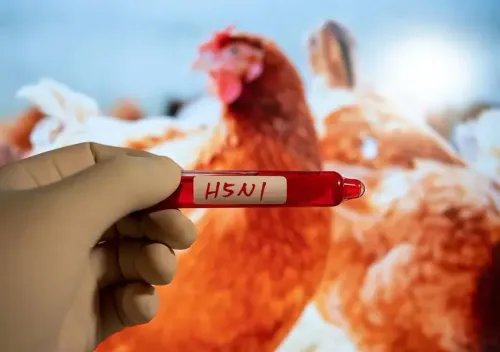
H5N1 bird flu: 7 new suspected cases found in South Australia
Synopsis
Seven new suspected H5N1 cases in greater crested terns on South Australia's Limestone Coast — five from the same town in two days — could push Australia's total to 27 since mid-June. Confirmatory testing is now underway to determine if local bird-to-bird transmission has occurred, a finding that would significantly escalate the national response.
Key Takeaways
South Australia reported 7 new suspected H5N1 cases on 27 July , all in greater crested terns on the Limestone Coast .
Five of the seven cases were found in the same town over two days , raising localised transmission concerns.
Samples have been sent to the Australian Centre for Disease Preparedness for confirmatory testing.
If confirmed, Australia's total H5N1 case count would reach 27 since the strain was first detected on the mainland in mid-June .
Federal authorities confirm no H5N1 in poultry or agricultural systems and say the risk to human health remains low .
The WHO recorded 477 deaths from 993 confirmed human H5N1 cases globally between 2003 and December 2025 .
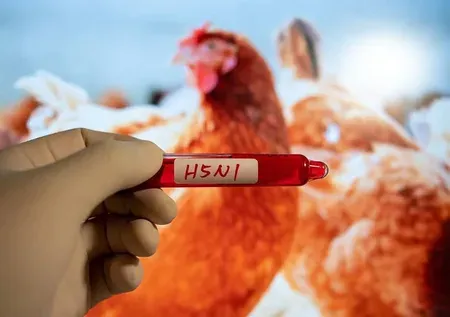
Authorities in South Australia (SA) on Monday, 27 July reported seven new suspected cases of the highly pathogenic H5N1 bird flu strain, all detected in greater crested terns along the state's Limestone Coast. If confirmed, the total number of H5N1 cases in Australia would rise to 27 since the strain was first detected on the mainland in mid-June.
Where the Cases Were Found
SA Minister for Primary Industries and Regional Development Clare Scriven told reporters that all seven suspected cases involved greater crested terns located on the state's southeast Limestone Coast. Of those, five were found in the same town over two days, raising concern about localised spread. Samples from all seven birds were initially tested by local authorities and have since been sent to the Australian Centre for Disease Preparedness for confirmatory testing to determine whether local transmission has occurred.
Surveillance Being Stepped Up
SA Chief Veterinary Officer Skye Fruean, speaking alongside Scriven, said authorities would increase surveillance in areas where high-risk seabird species — including crested terns — are expected to be present. The move signals that officials are treating the cluster as a potential transmission event until confirmatory results rule otherwise.
No Threat to Poultry or Human Health So Far
Federal Minister for Agriculture, Fisheries and Forestry Julie Collins said earlier on Monday that there have been no H5N1 mass mortality events in Australia and no evidence of the strain entering poultry or agricultural systems. She added that the risk to human health remains low. This comes amid growing global concern about the virus's expanding host range, with mammalian infections on the rise internationally.
About H5N1: What the Data Shows
H5N1 is a highly pathogenic avian influenza virus that spreads readily between birds. It is classified as a zoonotic disease — one capable of transmitting from animals to humans — though it remains less well-adapted to mammals. Notably, mammal-to-mammal transmission has been documented in recent years, a development that has heightened global vigilance. Between 2003 and December 2025, the World Health Organization (WHO) recorded 477 deaths from 993 confirmed human cases of H5N1 avian influenza worldwide.
What Happens Next
Confirmatory results from the Australian Centre for Disease Preparedness are awaited. A positive result would mark a significant step in tracking whether the virus is spreading locally among bird populations. Authorities are expected to expand monitoring zones along the Limestone Coast, and the outcome of these tests could shape the national response framework in the weeks ahead.
Point of View
But the pattern of clustering is precisely what epidemiologists watch before a situation escalates. Australia detected H5N1 on the mainland only in mid-June; reaching a potential tally of 27 cases in under six weeks suggests the virus is moving faster through coastal seabird populations than early assessments may have anticipated. The confirmatory test results from the Australian Centre for Disease Preparedness will be the real inflection point.
NationPress
26 Oct 2026
Frequently Asked Questions
What are the new H5N1 bird flu cases reported in South Australia?
South Australian authorities reported seven new suspected H5N1 bird flu cases on 27 July, all found in greater crested terns along the state's Limestone Coast. Samples have been sent to the Australian Centre for Disease Preparedness for confirmatory testing.
How many total H5N1 cases has Australia recorded?
If the seven new suspected cases are confirmed, Australia's total would rise to 27 H5N1 cases since the highly pathogenic strain was first detected on the mainland in mid-June. The current confirmed count stands at 20.
Is H5N1 bird flu a risk to humans in Australia?
Federal Minister Julie Collins said the risk to human health remains low, and there is currently no evidence of H5N1 in Australian poultry or agricultural systems. However, H5N1 is a zoonotic disease capable of transmitting from animals to people, and the WHO has recorded 477 human deaths from 993 confirmed cases globally since 2003.
Why are crested terns considered high-risk for H5N1?
Greater crested terns and similar seabird species are considered high-risk carriers of H5N1 avian influenza. SA Chief Veterinary Officer Skye Fruean confirmed that surveillance will be increased in areas where these species congregate along the Limestone Coast.
What is being done to contain the H5N1 spread in South Australia?
Authorities are expanding surveillance in coastal areas frequented by high-risk seabird species. Confirmatory testing by the Australian Centre for Disease Preparedness is underway to establish whether local bird-to-bird transmission has occurred, which would inform the next steps in the national response.