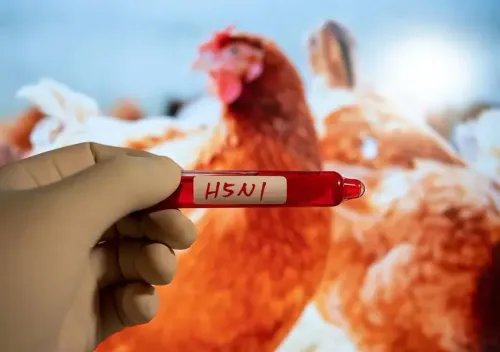
Tasmania confirms first H5N1 bird flu case, completing Australia-wide spread
Synopsis
Tasmania's first H5N1 detection means the highly pathogenic strain has now reached every Australian state — completing a spread that began in Western Australia just months ago. With federal vaccine stocks secured and a plan to inoculate 350 critically endangered orange-bellied parrots already in motion, Australia is racing to contain a pathogen that has already reshaped wild bird populations across four continents.
Key Takeaways
Tasmania confirmed its first H5N1 avian influenza case on 13 August , becoming the sixth and final Australian state to detect the strain.
The infected bird was a migratory brown skua found dead on Tasmania's northwest coast by Parks and Wildlife Service staff.
H5N1 was first detected in Australia in Western Australia in June 2025 .
The federal government has acquired 1,500 vials of H5N1 vaccine for high-risk captive birds, announced by Agriculture Minister Julie Collins .
Tasmania plans to vaccinate up to 350 critically endangered orange-bellied parrots in captivity once approvals are granted.
The H5 clade 2.3.4.4b variant has driven unprecedented wild bird and poultry deaths across Africa, Asia, Europe, and the Americas since 2020 .
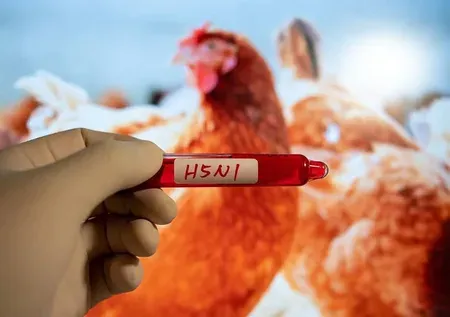
The Australian island state of Tasmania on Thursday, 13 August confirmed its first case of H5N1 avian influenza, making it the sixth and final Australian state to detect the highly pathogenic strain. The virus has now been recorded across every state on the continent, following its initial detection on the mainland in Western Australia in June 2025.
How the Case Was Detected
Gavin Pearce, Tasmania's Minister for Primary Industries and Water, told reporters that a migratory brown skua found dead on the state's northwest coast tested positive for the highly pathogenic H5N1 strain. The bird was discovered by Parks and Wildlife Service staff conducting active surveillance of coastal areas — part of an ongoing monitoring effort that preceded this find.
Pearce moved to reassure the public, stating: 'I want to reassure Tasmanians that we are prepared to respond to H5 bird flu, and we will continue to provide updates as more information becomes available.'
Federal and State Response
Australia's Agriculture Minister Julie Collins on Tuesday announced that the federal government had acquired an initial 1,500 vials of the H5N1 vaccine, to be administered to high-risk birds held in captivity. Tasmania's Environment Minister Guy Barnett separately confirmed on Thursday that the state would begin vaccinating up to 350 critically endangered orange-bellied parrots in captivity once the necessary approvals are received.
Authorities in Tasmania have been coordinating with industry, wildlife, and biosecurity experts to strengthen surveillance, preparedness, and response frameworks ahead of this confirmation.
What Is H5N1 and Why It Matters
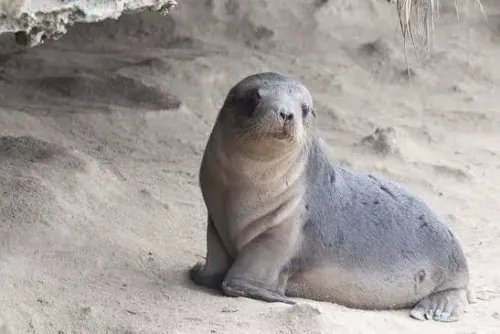
Avian influenza A(H5N1) is a subtype of influenza virus that primarily infects birds and mammals, with rare documented instances of human infection. The goose/Guangdong lineage of H5N1 first emerged in 1996 and has triggered recurring outbreaks in bird populations since then.
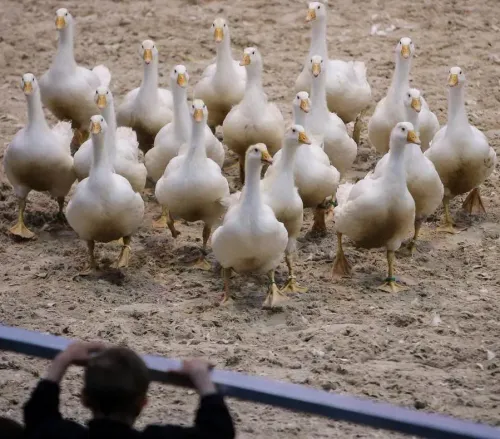
Since 2020, a variant belonging to the H5 clade 2.3.4.4b has caused an unprecedented wave of deaths among wild birds and poultry across Africa, Asia, and Europe. The virus crossed into North America in 2021 and reached Central and South America by 2022, marking a sustained global expansion of the pathogen.
What Happens Next
With H5N1 now confirmed in all six Australian states, biosecurity agencies face mounting pressure to prevent spillover into commercial poultry operations and to protect critically endangered species. The orange-bellied parrot vaccination programme in Tasmania is among the first targeted wildlife interventions of its kind in Australia. Surveillance of migratory bird corridors along the coastline is expected to intensify in the coming weeks.
Point of View
500-vial vaccine stockpile and state-level preparedness plans are calibrated for a pathogen that has already overwhelmed surveillance systems on four continents. The orange-bellied parrot programme is a meaningful conservation intervention, but with H5N1 now embedded in wild migratory populations, containment of further spread into commercial poultry remains the harder, unresolved challenge.
NationPress
28 Sept 2026
Frequently Asked Questions
What is the H5N1 bird flu case confirmed in Tasmania?
A migratory brown skua found dead on Tasmania's northwest coast tested positive for highly pathogenic H5N1 avian influenza on 13 August, making Tasmania the sixth and final Australian state to confirm the strain. The bird was discovered by Parks and Wildlife Service staff during active coastal surveillance.
How did H5N1 spread to all Australian states?
H5N1 was first detected in Australia in Western Australia in June 2025 and has since been confirmed in all six states, primarily through migratory wild birds. Tasmania's confirmation completes the nationwide spread.
What is Australia doing to respond to H5N1?
The federal government has acquired 1,500 vials of H5N1 vaccine for high-risk captive birds. Tasmania additionally plans to vaccinate up to 350 critically endangered orange-bellied parrots in captivity, pending regulatory approval.
Can H5N1 infect humans?
H5N1 avian influenza can infect humans, but such cases are rare. The virus primarily affects birds and some mammals. Australian authorities have not reported any human cases linked to the current outbreak.
Why is the orange-bellied parrot particularly at risk?
The orange-bellied parrot is critically endangered, with a small captive population that is especially vulnerable to novel pathogens like H5N1. Tasmania's Environment Minister Guy Barnett announced a targeted vaccination programme for up to 350 of these birds to prevent the virus from devastating the species further.