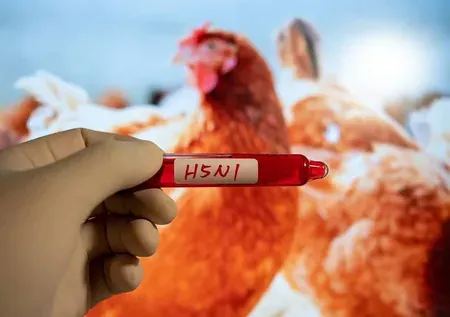
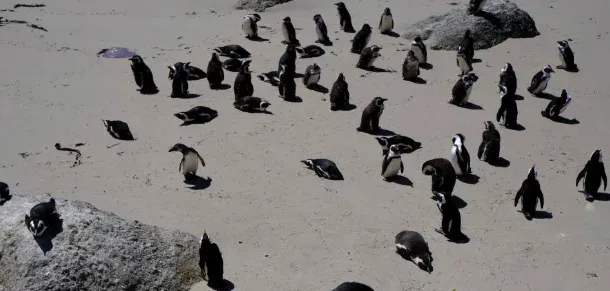
H5N1 bird flu: 28 dead penguins on King Island to be tested
Synopsis
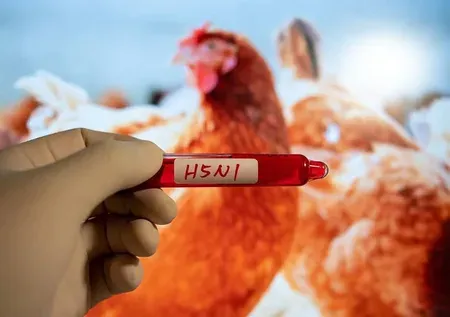
Twenty-eight penguins and three terns found dead on King Island have been sent for H5N1 testing — the latest sign that Tasmania's bird flu outbreak, which began just days ago, is spreading fast. With 11 confirmed cases already and 262 wildlife events nationally, Australia's containment window may be narrowing.
Key Takeaways
28 penguins and 3 greater crested terns were found dead on King Island, Tasmania on 20 August 2025 and are being tested for H5N1 avian influenza.
Tasmania recorded its first H5N1 case on 13 August , about two months after the strain was first detected on the Australian mainland in June .
As of Thursday, Tasmania has 11 confirmed H5N1 cases , all in the state's northwest or on King Island.
Nationally, there have been 262 confirmed H5N1 events in Australian wildlife as of 18 August , with no detections in poultry or agriculture .
Authorities have urged Tasmanians to keep pets restrained and avoid contact with sick or dead animals.
Authorities in Tasmania, Australia have confirmed that 28 penguins and three greater crested terns found dead on King Island — approximately 100 km off Tasmania's northwest coast — will be tested for the H5N1 strain of avian influenza. Surveillance teams discovered the birds on Wednesday, 20 August 2025, prompting immediate sample collection and biosecurity measures.
What Was Found on King Island
Tasmania's Department of Natural Resources and Environment confirmed the discovery, stating that samples from the dead birds have been dispatched to a laboratory for H5N1 testing. The carcasses were scheduled to be collected on Thursday to reduce any risk of further transmission to wildlife or domestic animals in the area.
Incident controller Wes Ford acknowledged the distress such reports cause among residents. 'Tasmanians care deeply about our wildlife, and particularly our penguins, so we understand that reports like these may be distressing for the community,' he said.
Tasmania's Escalating H5N1 Situation
Tasmania recorded its first confirmed H5N1 case on 13 August, nearly two months after the highly pathogenic strain was first detected on the Australian mainland in June. As of Thursday, there have been 11 confirmed H5N1 cases in Tasmania, all concentrated in the state's northwest or on King Island itself.
Ford warned that further incidents are anticipated. 'We expect to continue receiving reports of sick and dead birds on King Island, along the northwest coast and in other parts of Tasmania,' he said. Authorities have urged residents to keep cats indoors and walk dogs on leads to minimise infection risk, and to avoid contact with sick or dead animals.
National Picture: 262 Confirmed Events, No Poultry Cases Yet
According to the federal Department of Agriculture, Fisheries and Forestry, there have been 262 confirmed H5N1 bird flu events in Australian wildlife as of 18 August. Notably, no detections have been recorded in poultry or the broader agriculture industry — a distinction that authorities are keen to maintain as the outbreak spreads geographically.
This comes amid growing global concern over H5N1's reach into new ecosystems and species. Penguins, as colonial-nesting seabirds with limited natural immunity to avian influenza, are considered particularly vulnerable. The King Island cluster marks a southward expansion of the outbreak within Australia that wildlife agencies will be watching closely.
What Authorities Are Asking the Public to Do
Biosecurity officials have issued clear guidance for Tasmanians: avoid handling any sick or dead birds, keep pets restrained, and report unusual wildlife deaths to the relevant state authority. Ford's team is coordinating surveillance across the northwest coast as the situation develops.
Test results from the King Island birds are expected to confirm or rule out H5N1 in the coming days, which will determine the scale of the response required.
Point of View
The outbreak's geographic spread is outrunning containment messaging. The critical line to hold is the poultry sector; once H5N1 breaches commercial flocks, the economic and food-security calculus changes entirely. Authorities have been careful to separate wildlife detections from agricultural risk, but that distinction will be harder to maintain if the virus continues to find new species and new islands.
NationPress
4 Oct 2026
Frequently Asked Questions
Why were dead penguins found on King Island being tested for H5N1?
Surveillance teams discovered 28 dead penguins and three greater crested terns on King Island, Tasmania, on 20 August 2025. Given Tasmania's active H5N1 outbreak, authorities sent samples for testing to determine whether the deaths were caused by the highly pathogenic avian influenza strain.
How many H5N1 cases has Tasmania confirmed so far?
As of Thursday, 20 August 2025, Tasmania has confirmed 11 H5N1 cases, all located in the state's northwest or on King Island. The state recorded its first case on 13 August, roughly two months after the virus was first detected on the Australian mainland.
Has H5N1 spread to Australian poultry or farms?
No. According to the federal Department of Agriculture, Fisheries and Forestry, all 262 confirmed H5N1 events in Australia as of 18 August have been in wildlife. There have been no detections in poultry or the agriculture industry.
What precautions are authorities recommending for Tasmanians?
Incident controller Wes Ford has urged residents to keep cats indoors, walk dogs on leads, avoid touching sick or dead birds, and report unusual wildlife deaths to authorities. These measures are aimed at minimising the risk of transmission between wildlife and domestic animals.
When did H5N1 first appear in Australia?
H5N1 was first detected in Australian wildlife in June 2025 on the mainland. Tasmania reported its first confirmed case on 13 August 2025, with King Island emerging as a cluster site in the days that followed.