H5N1 bird flu in seals: South Australia reports 2nd suspected mammal case
Synopsis
Australia confirmed its first H5N1 mammal case on Sunday — and South Australia had a second suspected case in a seal by Monday. With over 1,000 birds already dead on the Page islands and the Invasive Species Council warning of an extinction-level threat to endangered Australian sea lions, this outbreak is escalating faster than authorities had publicly projected.
Key Takeaways
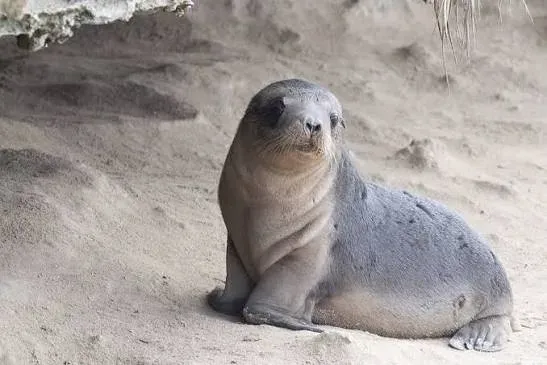
South Australia reported a second suspected H5N1 case in a long-nosed fur seal at Pages Conservation Park on Monday, 25 August .
Australia's first confirmed H5N1 mammal case was verified in a separate seal found dead on the mainland on Wednesday .
Over 1,000 birds have been found dead in suspected H5N1 mass mortality events on three islands, including North Page and South Page .
The Invasive Species Council has warned the outbreak could be an extinction-level event for the endangered Australian sea lion .
Approximately 13,000 of 17,000 elephant seal pups on Heard Island died from H5N1 in a prior outbreak, according to the Australian Antarctic Program .
Federal Minister Murray Watt said more mass mortality events are expected as surveillance continues.
South Australian authorities on Monday, 25 August reported a second suspected case of H5N1 avian influenza in a seal, just one day after the state confirmed Australia's first-ever detection of the highly pathogenic strain in a mammal. The rapid back-to-back findings have alarmed wildlife officials and conservationists, who warn the outbreak could have catastrophic consequences for already-endangered marine species.
Second Suspected Case: What Is Known
The South Australia Department of Primary Industries and Regions confirmed that a long-nosed fur seal was discovered at Pages Conservation Park — a protected zone comprising North Page and South Page islands, situated approximately 18 km off the state's south coast. Samples from the animal have been dispatched to the Australian Centre for Disease Preparedness for confirmatory laboratory testing, and results are pending.
Australia's First Confirmed Mammal Case
The federal government on Sunday announced that Australia's first confirmed H5N1 case in a mammal had been verified in a separate long-nosed fur seal found dead on the mainland of South Australia on Wednesday. That confirmation set off immediate concern among authorities, given the strain's well-documented capacity to cause mass mortality events in marine mammal populations globally.
Notably, the Page islands had already been flagged as a hotspot: state authorities reported on Thursday that over 1,000 birds had been found dead in suspected H5N1 mass mortality events across three islands, including both North Page and South Page.
Extinction-Level Threat to Endangered Sea Lions
According to the National Parks and Wildlife Service, the Page islands host one of only three large colonies of endangered Australian sea lions in South Australia. The Invasive Species Council has warned that the H5N1 outbreak could constitute an extinction-level event for the species — a stark assessment that underscores the ecological stakes.
South Australian Minister for Climate, Environment and Water Emily Bourke described the two cases as 'incredibly concerning.' Speaking to Australian Broadcasting Corporation (ABC) radio on Monday, Bourke said: 'We've seen devastation in seals around the world when it comes to bird flu.'
Likely Origin: Heard Island
Minister Bourke indicated that the strain circulating in South Australia potentially arrived from Heard Island, a remote sub-Antarctic Australian territory. The scale of the Heard Island crisis provides grim context: the Australian Antarctic Program reported in June that approximately 13,000 of an estimated 17,000 elephant seal pups on the island had died from H5N1 avian influenza — a mortality rate exceeding 76%.
Federal Response and What Comes Next
Federal Minister for the Environment and Water Murray Watt told ABC television on Monday that the seal cases were 'not unexpected,' adding that authorities anticipate further mass mortality events. The candid acknowledgement signals that wildlife managers are bracing for a prolonged outbreak rather than an isolated incident.
With confirmatory testing underway and surveillance intensifying across South Australian coastlines, the coming weeks will be critical in determining the geographic spread of the virus and the viability of any intervention to protect the endangered sea lion colonies.
Point of View
Over a thousand dead birds, and a direct lineage to the catastrophic Heard Island die-off — suggests H5N1 has already established a foothold in South Australian marine ecosystems, not merely made a one-off crossing. The federal government's admission that more mass mortality events are 'expected' is notable for its candour but raises the question of what, if anything, can be done to protect isolated island colonies. The Australian sea lion's critically small population size means even a moderate mortality event could be irreversible. Whether Australia's wildlife agencies have the resources and protocols to intervene at scale in remote island ecosystems is a question mainstream coverage has not yet pressed hard enough.
NationPress
8 Oct 2026
Frequently Asked Questions
What is the H5N1 bird flu case reported in South Australia?
South Australian authorities reported a second suspected case of H5N1 avian influenza in a long-nosed fur seal found at Pages Conservation Park on 25 August, one day after the federal government confirmed Australia's first-ever H5N1 case in a mammal. Samples have been sent for confirmatory testing to the Australian Centre for Disease Preparedness.
Why is the H5N1 outbreak in South Australia so alarming?
The Page islands, where the suspected seal case was found, host one of only three large colonies of the endangered Australian sea lion. The Invasive Species Council has warned the outbreak could be an extinction-level event for the species, given H5N1's documented capacity to cause mass marine mammal die-offs globally.
Where did the H5N1 strain in South Australia likely come from?
South Australian Minister Emily Bourke indicated the strain potentially arrived from Heard Island, a remote sub-Antarctic Australian territory. The Australian Antarctic Program reported in June that around 13,000 of an estimated 17,000 elephant seal pups on Heard Island had died from H5N1.
How many animals have died in the South Australia H5N1 outbreak so far?
Over 1,000 birds have been found dead in suspected H5N1 mass mortality events across three islands, including North Page and South Page, according to state authorities. Two seals — one confirmed and one suspected — have also been affected, with further cases anticipated by federal officials.
Is H5N1 bird flu a risk to humans in Australia?
The current South Australian cases involve seals and birds; no human infections have been reported in connection with this outbreak. However, H5N1 is classified as highly pathogenic, and authorities are conducting confirmatory testing and surveillance as a precaution. Members of the public are advised to avoid contact with sick or dead wildlife.