H5 bird flu kills 80+ terns in South Australia, sea lions at risk
Synopsis
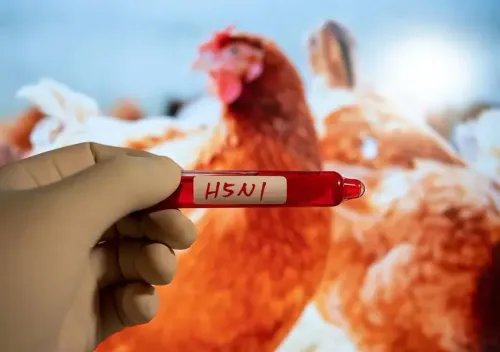
More than 80 greater crested terns found dead or dying on a remote South Australian island have pushed the state's confirmed H5 bird flu cases to 39 out of Australia's total 53 — and now the virus has been detected at Seal Bay, home to 5% of the world's endangered Australian sea lions. A wildlife veterinarian says transmission from birds to sea lions is 'almost certainly' coming, echoing a 2022 South American event that killed 30,000 sea lions in six months.
Key Takeaways
More than 80 dead and sick greater crested terns were found on Baudin Rocks , about 5 km south of Cape Jaffa , South Australia.
South Australia has recorded 39 of Australia's 53 confirmed H5 bird flu cases .
H5 bird flu detected at Seal Bay, Kangaroo Island , home to roughly 5% of the global endangered Australian sea lion population.
Wildlife veterinarian Wayne Boardman of the University of Adelaide warned transmission to sea lions is 'almost certainly' imminent.
The H5N1 strain killed an estimated 30,000 sea lions in South America in 2022 and 13,359 elephant seal pups on Heard Island between August 2025 and January 2026 .
Beach tours at Seal Bay have been temporarily suspended; human and agricultural risk remains low, officials say.
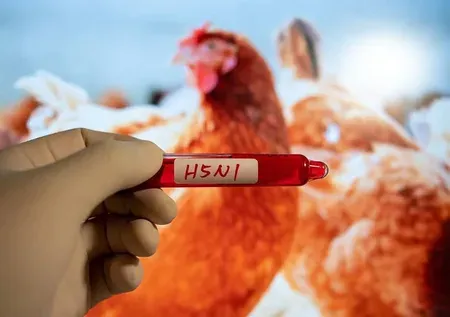
South Australian authorities are investigating a mass mortality event after more than 80 dead and sick greater crested terns were discovered on Baudin Rocks, an island approximately five kilometres south of Cape Jaffa on the state's southeast coast. Testing is underway to confirm whether the birds were infected with the H5 strain of avian influenza, with officials indicating a negative result is considered highly unlikely.
What Was Found on Baudin Rocks
State aerial surveillance conducted on Friday detected 49 dead and 35 sick greater crested terns on the island. South Australia's Chief Veterinary Officer Skye Fruean described it as 'very unlikely' the birds would test negative for H5, though laboratory results remain pending.
The discovery adds to a growing tally: South Australia has now recorded 39 of Australia's 53 confirmed H5 bird flu cases, according to official updates. Australian Chief Veterinary Officer Beth Cookson stated that the risk to agriculture and human health remains low.
Endangered Sea Lions Now in the Crosshairs
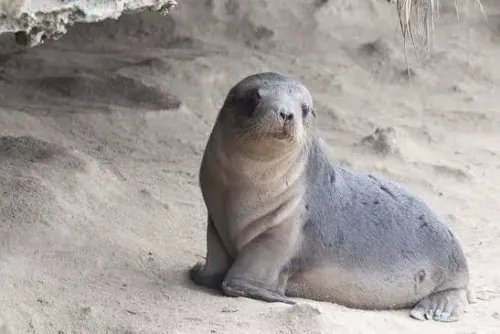
The outbreak's reach has extended beyond seabirds, raising urgent concern for the endangered Australian sea lion. One of the Kangaroo Island cases was detected at Seal Bay, which is home to approximately five per cent of the global population of the species.
Wayne Boardman, a wildlife veterinarian from the University of Adelaide, warned that historical precedent from South America makes the jump from birds to sea lions near-inevitable. 'The issue now with bird flu being found on Seal Bay is that it's almost certainly going to go from the birds into the sea lions,' he said.
His concern is grounded in documented evidence: the H5N1 strain killed an estimated 30,000 sea lions in South America within six months in 2022, and an estimated 13,359 southern elephant seal pups on Australia's Heard Island in the Southern Ocean between August 2025 and January 2026.
Government Response and Beach Closures
The South Australian government on Wednesday announced the temporary suspension of beach tours at Seal Bay to protect local sea lion and seal populations. The move reflects growing official concern that the virus could devastate a species already classified as endangered.
Minister for Agriculture, Fisheries and Forestry Julie Collins told reporters on Friday that authorities would continue working with experts to contain the spread. She confirmed there has been no evidence of the virus entering agricultural or poultry systems, and that the threat to human health remains low.
A Seagull First and the Broader Outbreak
Separately, authorities in South Australia reported that Australia's first suspected case of the highly pathogenic strain in a seagull was also detected on the state's southeast coast — another marker of the outbreak's widening geographic and species footprint. This comes amid warnings that the virus, already entrenched across 39 confirmed SA cases, is tracking toward a wildlife crisis with few recent parallels in Australia.
With laboratory results pending and sea lion populations directly in the virus's path, the coming days will be critical in determining the scale of South Australia's H5 bird flu emergency.
Point of View
Which holds 5% of the world's Australian sea lions, is the kind of threshold event that tends to be underreported until the damage is irreversible. The South American precedent — 30,000 sea lions dead in six months — is not a distant analogy; it is a documented outcome of the same strain, and Australian authorities are now racing against a biological clock. The temporary beach closure is a precaution; what the situation may actually require is a far more aggressive containment and monitoring protocol, and the question of whether that capacity exists in remote Southern Ocean territories deserves sharper public scrutiny.
NationPress
16 Sept 2026
Frequently Asked Questions
What is the H5 bird flu outbreak in South Australia?
South Australian authorities are investigating a mass mortality event in which more than 80 greater crested terns were found dead or sick on Baudin Rocks near Cape Jaffa. The state has recorded 39 of Australia's 53 confirmed H5 avian influenza cases, and testing is underway to confirm the latest deaths.
Why are Australian sea lions at risk from bird flu?
H5 bird flu has been detected at Seal Bay on Kangaroo Island, home to about 5% of the global population of the endangered Australian sea lion. Wildlife veterinarian Wayne Boardman of the University of Adelaide has warned that the virus is 'almost certainly' going to spread from infected birds to sea lions, based on historical outbreaks in South America.
How deadly has H5N1 been to sea lions elsewhere?
The H5N1 strain killed an estimated 30,000 sea lions in South America within six months in 2022. It also killed an estimated 13,359 southern elephant seal pups on Australia's Heard Island between August 2025 and January 2026, illustrating the strain's lethal potential for marine mammals.
Is there a risk to humans or agriculture from the South Australia outbreak?
Australian Chief Veterinary Officer Beth Cookson and Agriculture Minister Julie Collins have both stated that the risk to human health and agricultural or poultry systems remains low. No evidence of the virus entering farming systems has been found.
What steps has the South Australian government taken to contain the outbreak?
The SA government suspended beach tours at Seal Bay on Wednesday to protect sea lion and seal populations. Aerial surveillance is ongoing, and authorities are working with wildlife experts to monitor and contain the spread of the virus.