737-page chargesheet filed 35 years after Kashmiri Pandit nurse Sarla Bhat's murder

Synopsis
Thirty-five years after Kashmiri Pandit nurse Sarla Bhat was abducted and shot dead by JKLF operatives in Srinagar, the SIA has filed a 737-page chargesheet naming Yasin Malik and four others. The filing is one of the most significant breakthroughs in the investigation of legacy terror crimes from the 1990 Kashmir exodus — and a signal that the state's memory for atrocity is longer than the perpetrators counted on.
Key Takeaways
SIA J&K filed a 737-page chargesheet on 29 June 2025 in the murder of Kashmiri Pandit nurse Sarla Bhat , killed on 18 April 1990 .
The chargesheet was filed before the Court of the Additional Sessions Judge, TADA/POTA , Special Judge, Srinagar .
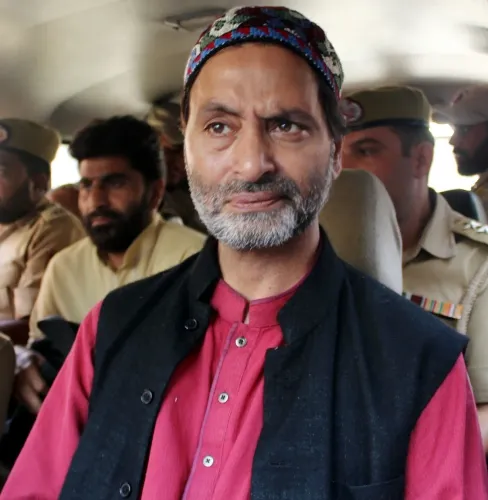
Named accused include Mohammad Yaseen Malik (currently in judicial custody), Khurshid Ahmad Chalkoo (believed to be in Pakistan-occupied J&K), and three others who are deceased.
The investigation concluded that the 'informer' allegation used to justify the killing was entirely fabricated .
The murder is established as part of the JKLF 's systematic campaign to terrorise and displace the Kashmiri Pandit community.
The case was transferred to SIA J&K on 18 March 2024 ; the chargesheet covers oral, forensic, ballistic, medical and electronic evidence.
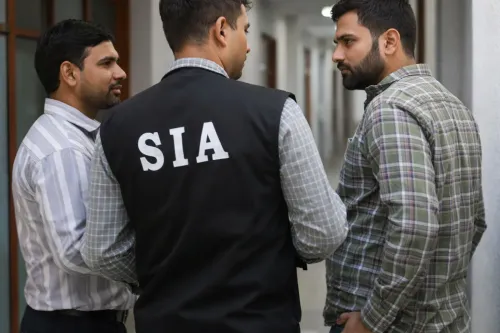
The State Investigation Agency (SIA) of Jammu and Kashmir has filed a 737-page chargesheet before a designated court in Srinagar in connection with the abduction, torture and killing of Sarla Bhat, a Kashmiri Pandit staff nurse at Sher-i-Kashmir Institute of Medical Sciences (SKIMS) — more than 35 years after her murder on 18 April 1990. The chargesheet was filed before the Court of the Additional Sessions Judge, TADA/POTA, Special Judge designated under the NIA Act, Srinagar, on Monday, 29 June 2025.
The Crime and Its Long Shadow
Sarla Bhat was abducted from near the SKIMS campus on 18 April 1990, subjected to brutal torture and physical assault, and subsequently killed by automatic rifle fire at Omer Colony, Malbagh, Srinagar. The killing took place during the early and most violent phase of the insurgency in the Kashmir Valley, when a climate of fear, intimidation and organised terror had effectively silenced witnesses and stalled investigations for decades.
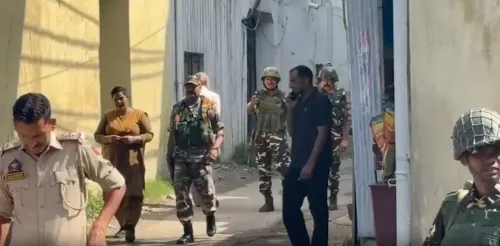
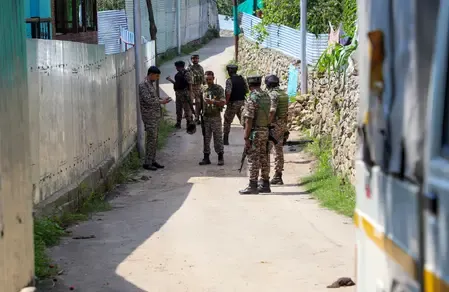
The case was transferred to SIA J&K on 18 March 2024 under orders of the Director General of Police, J&K. Investigators subsequently reconstructed the sequence of events through protected witness testimonies, independent eyewitness accounts, forensic and ballistic analysis, medical evidence, documentary records, electronic evidence and extensive field investigations — despite the passage of more than three and a half decades.
Who Is Named in the Chargesheet
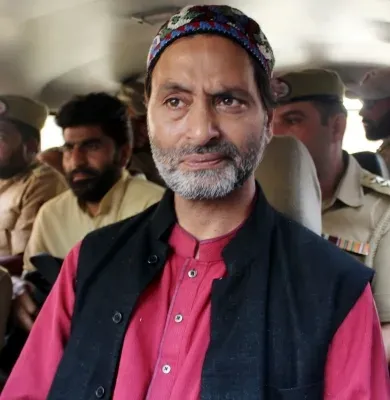
The investigation has established that the killing of Sarla Bhat was not an isolated act but part of a larger terrorist conspiracy orchestrated under the command and control of the Jammu and Kashmir Liberation Front (JKLF). The chargesheet names Mohammad Yaseen Malik, then Chief Commander of JKLF, along with Khurshid Ahmad Chalkoo, Abdul Hamid Sheikh, Mohammad Yousuf Sofi alias Idrees and Ghulam Mohammad Taploo as being involved in planning and executing the abduction and killing.
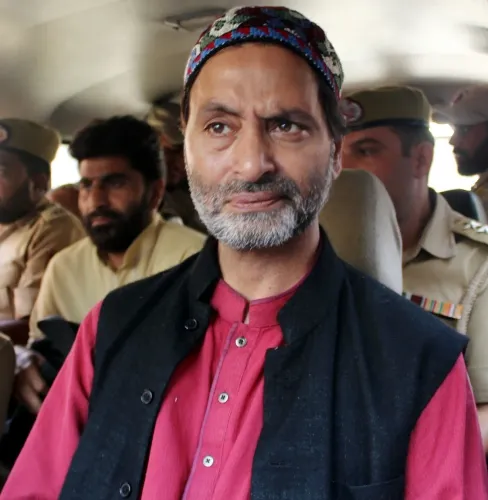
Of those named, Abdul Hamid Sheikh, Mohammad Yousuf Sofi alias Idrees and Ghulam Mohammad Taploo are deceased. Mohammad Yaseen Malik is presently in judicial custody in a separate case. Khurshid Ahmad Chalkoo, described in the chargesheet as the individual who pulled the trigger, is believed to have crossed into Pakistan-occupied Jammu and Kashmir; proclamation proceedings have been initiated against him.
Charges and Legal Framework
The chargesheet establishes offences under Sections 364, 341, 302 read with 34, 201 and 120-B of the Ranbir Penal Code (RPC); Sections 3(2), 3(3), 4 and 6 of the Terrorist and Disruptive Activities (Prevention) Act, 1987 (TADA); and Sections 7 and 27 of the Indian Arms Act, 1959.
Investigators also concluded that the allegation portraying Sarla Bhat as an 'informer' — used by the perpetrators to justify the killing — was entirely false and constituted a fabricated pretext for a premeditated assassination.
Broader Significance: Terror, Displacement and the Kashmiri Pandit Community
According to the SIA, the murder formed part of the JKLF's systematic campaign of targeted violence designed to spread fear among civilians, particularly members of the Kashmiri Pandit community, create conditions for their forced displacement from the Valley, and advance the organisation's secessionist agenda. The mass exodus of Kashmiri Pandits from the Valley — which began in 1990 — remains one of the most consequential humanitarian crises in post-Independence India.
The Sarla Bhat case is widely regarded as emblematic of that dark chapter. The SIA described the filing as 'a tribute to the memory of a victim who was denied justice for decades and a reaffirmation of the rule of law.'
What Happens Next
With the chargesheet now before the designated court, trial proceedings are expected to commence. The case of absconding accused Khurshid Ahmad Chalkoo will proceed through proclamation proceedings. The outcome will be closely watched by survivors and families of victims of the 1990 Kashmiri Pandit exodus, for whom this filing represents a rare instance of institutional accountability after decades of silence.
Point of View
A case transfer in 2024, and sustained political will to reach a court filing that should have come far sooner. The naming of Yasin Malik, already in judicial custody, adds to an already formidable legal burden against him, but the real accountability gap is Khurshid Ahmad Chalkoo, the alleged triggerman, who remains beyond reach across the Line of Control. For the Kashmiri Pandit community, this chargesheet matters less as a legal milestone and more as a formal acknowledgment that their suffering was not incidental — it was orchestrated. Whether the trial delivers convictions, and how quickly, will determine whether this is justice or a well-documented reminder of its absence.
NationPress
28 Sept 2026
Frequently Asked Questions
Who was Sarla Bhat and how was she killed?
Sarla Bhat was a Kashmiri Pandit staff nurse at the Sher-i-Kashmir Institute of Medical Sciences (SKIMS) in Srinagar. She was abducted from near the SKIMS campus on 18 April 1990, subjected to torture, and killed by automatic rifle fire at Omer Colony, Malbagh, Srinagar, by operatives of the Jammu and Kashmir Liberation Front (JKLF).
Who has been named in the chargesheet filed by SIA J&K?
The chargesheet names Mohammad Yaseen Malik, then Chief Commander of JKLF (currently in judicial custody in a separate case); Khurshid Ahmad Chalkoo (believed to be in Pakistan-occupied J&K and named as the alleged triggerman); Abdul Hamid Sheikh; Mohammad Yousuf Sofi alias Idrees; and Ghulam Mohammad Taploo — the latter three are deceased.
Why did the case take 35 years to reach a chargesheet?
The case remained unresolved for decades due to the extreme climate of fear, intimidation and violence created by terrorist organisations during the peak years of militancy in Kashmir, which prevented witnesses from coming forward. The case was transferred to SIA J&K only in March 2024, after which a comprehensive scientific investigation was conducted.
What charges have been framed in the Sarla Bhat murder case?
The chargesheet establishes offences under Sections 364, 341, 302 (read with 34), 201 and 120-B of the Ranbir Penal Code; Sections 3(2), 3(3), 4 and 6 of the Terrorist and Disruptive Activities (Prevention) Act, 1987 (TADA); and Sections 7 and 27 of the Indian Arms Act, 1959.
What is the broader significance of this chargesheet for Kashmiri Pandits?
The SIA's investigation concluded that Sarla Bhat's murder was part of the JKLF's systematic campaign to terrorise and forcibly displace the Kashmiri Pandit community from the Kashmir Valley — a campaign that culminated in the mass exodus of 1990. The chargesheet formally establishes that the 'informer' allegation used to justify the killing was entirely fabricated, making it one of the first cases to legally document the targeted nature of anti-Pandit violence from that period.