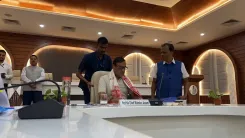
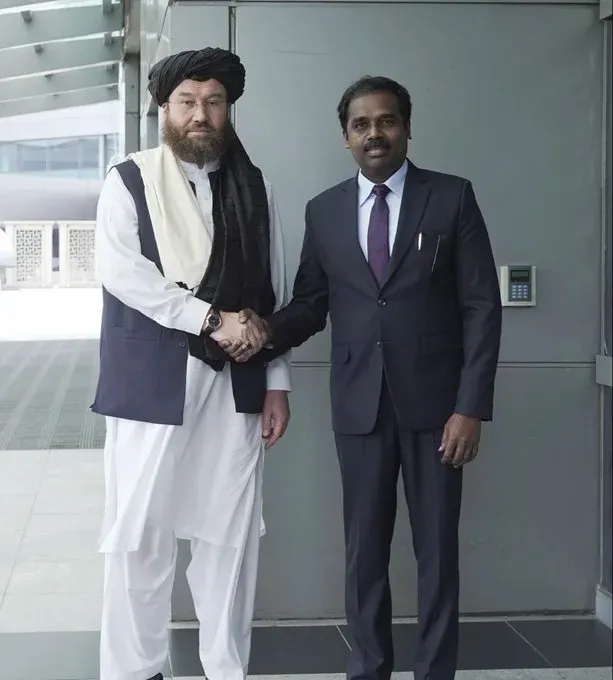
Afghan Agriculture Minister Omari visits New Delhi amid India-Pak tensions
Synopsis
Afghanistan's Agriculture Minister landed in New Delhi just days after India condemned Pakistani airstrikes on Afghan territory. The visit signals that India is quietly deepening its engagement with Kabul — through aid, vaccines, and now ministerial diplomacy — even as the Taliban government remains formally unrecognised.
Key Takeaways
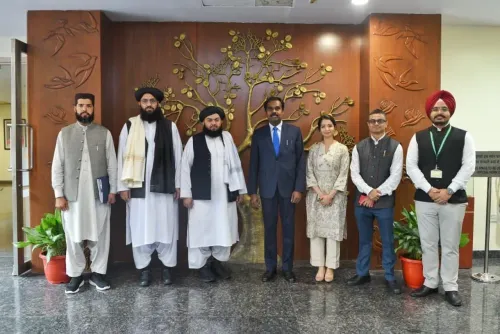
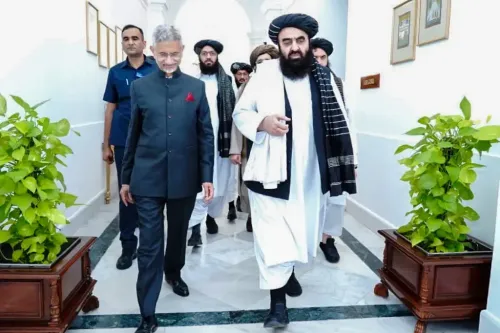
Mawlawi Ataullah Omari , Afghanistan's Minister of Agriculture, Irrigation, and Livestock, arrived in New Delhi on 7 July for an official bilateral visit.
The MEA welcomed the visit on X, citing 'engaging discussions on issues of mutual interest.' India strongly condemned recent Pakistani airstrikes on Afghan provinces, calling them a 'reckless' and 'desperate' act.
On 17 June , India delivered 5 tonnes of essential medicines to Kabul; on 22 May , it sent 20 tonnes of BCG and Td vaccines for Afghan children.
MEA Spokesperson Randhir Jaiswal reaffirmed India's support for Afghanistan's territorial integrity and ongoing humanitarian cooperation.
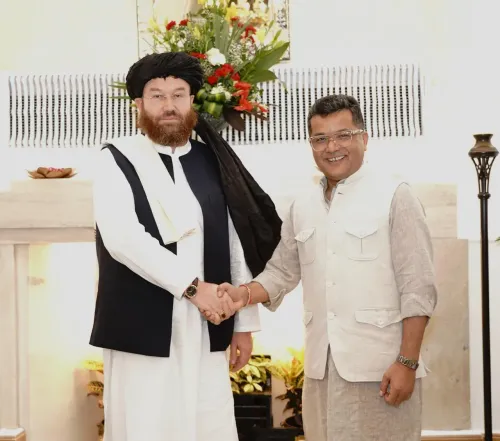
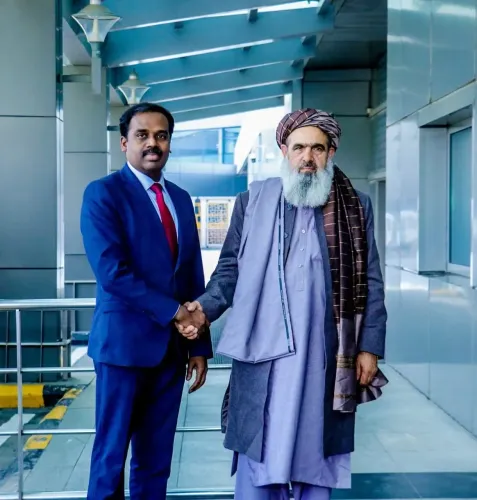
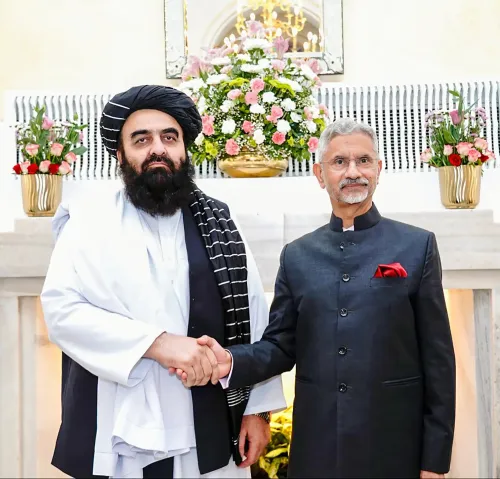
Afghanistan's Minister of Agriculture, Irrigation, and Livestock, Mawlawi Ataullah Omari, arrived in New Delhi on Tuesday, 7 July for an official visit aimed at strengthening bilateral ties and holding discussions on issues of mutual interest with Indian counterparts. The visit marks a notable diplomatic engagement between India and the Taliban-led Afghan government at a time of heightened regional tensions.
MEA Extends Welcome
The Ministry of External Affairs (MEA) acknowledged the visit on social media platform X, expressing that it was 'looking forward to engaging discussions on issues of mutual interest.' The warm reception signals India's continued intent to maintain functional engagement with Kabul despite the complex diplomatic landscape surrounding Taliban governance.
Visit Set Against Afghan-Pakistan Tensions
The arrival comes amid a sharp deterioration in relations between Afghanistan and Pakistan, following recent Pakistani airstrikes on Afghan provinces that killed and injured several Afghan civilians, including women and children. India was among the first countries to formally condemn the strikes. The MEA characterised the attacks as reflecting 'Pakistan's persistent pattern of reckless behaviour and its futile attempt to externalise internal failures through desperate acts of violence beyond its borders.'
India's Humanitarian Support to Afghanistan
MEA Spokesperson Randhir Jaiswal, speaking at a weekly media briefing in New Delhi, reaffirmed India's position: 'We had strongly condemned the airstrikes that happened from Pakistan into Afghanistan, in which several civilian lives, including women and children, were lost. We had offered our condolences on the passing away of precious lives, and we had also at the same time reiterated our strong support for the territorial integrity and sovereignty of Afghanistan.'
Jaiswal further noted: 'As far as in terms of support with Afghanistan, we have an ongoing humanitarian assistance cooperation. We have been sending them medicines. We have been sending them other support, and we have also been offering development projects which can bring benefit to the lives of people there, and that continues.'
Recent Aid Deliveries
India has maintained a steady flow of humanitarian assistance to Afghanistan in recent months. On 17 June, India delivered five tonnes of essential medicines to Kabul. Earlier, on 22 May, India dispatched 20 tonnes of Bacillus Calmette-Guerin (BCG) and Tetanus, Diphtheria (Td) vaccines to bolster immunisation efforts among Afghan children — underscoring a development-focused approach that has persisted even as formal diplomatic ties remain in a grey zone.
What to Watch
Minister Omari's visit is expected to cover agricultural cooperation and development project pipelines, areas where India has historically been an active partner in Afghanistan. With Pakistan-Afghanistan tensions showing no sign of easing, New Delhi's ability to position itself as a reliable partner for Kabul — without formally recognising the Taliban government — will be closely watched by regional observers.
Point of View
Vaccines, development projects, and now ministerial visits — reflects a pragmatic calculation that abandoning the relationship entirely serves neither humanitarian nor strategic interests. Yet the optics are delicate: New Delhi has not formally recognised the Taliban, making each interaction a careful act of diplomatic calibration. The timing of Omari's visit, days after India condemned Pakistani airstrikes on Afghan soil, is unlikely to be coincidental. For India, Afghanistan is also a lever in its broader rivalry with Pakistan, and being seen as Kabul's dependable partner — when Islamabad is bombing its neighbour — is a strategic dividend that costs relatively little.
NationPress
6 Oct 2026
Frequently Asked Questions
Why did Afghan Minister Ataullah Omari visit India?
Mawlawi Ataullah Omari, Afghanistan's Minister of Agriculture, Irrigation, and Livestock, visited New Delhi on 7 July to strengthen bilateral ties and hold discussions on issues of mutual interest. The visit is part of India's ongoing engagement with Kabul that spans humanitarian aid and development cooperation.
What is India's position on the Pakistani airstrikes in Afghanistan?
India strongly condemned the Pakistani airstrikes on Afghan provinces, stating they reflect 'Pakistan's persistent pattern of reckless behaviour.' MEA Spokesperson Randhir Jaiswal said India offered condolences for civilian lives lost and reiterated support for Afghanistan's territorial integrity and sovereignty.
What humanitarian aid has India sent to Afghanistan recently?
India delivered five tonnes of essential medicines to Kabul on 17 June, and 20 tonnes of BCG and Tetanus-Diphtheria (Td) vaccines on 22 May to support immunisation of Afghan children. The MEA has confirmed that medicines and development project support are ongoing.
Does India officially recognise the Taliban government in Afghanistan?
India has not formally recognised the Taliban government but maintains functional engagement through humanitarian assistance, medicine deliveries, and diplomatic interactions. This approach allows New Delhi to preserve its presence in Afghanistan without extending formal legitimacy to the Taliban.
What areas are expected to be covered in Omari's discussions with India?
As Afghanistan's Agriculture Minister, Omari's talks are expected to focus on agricultural cooperation and development projects. The MEA indicated discussions will cover 'issues of mutual interest,' which have historically included food security, infrastructure, and humanitarian aid pipelines.