Afghan police raze 1,000 acres of poppy farms in Samangan province
Synopsis
Afghan police have razed 1,000 acres of poppy fields in Samangan in just two days — the latest strike in a multi-province counter-narcotics blitz that has also seen 80 traffickers arrested, 55 kg of methamphetamine seized, and over 100 kg of narcotics publicly burned since mid-April. The scale and pace suggest a sustained enforcement campaign, not a one-off sweep.
Key Takeaways
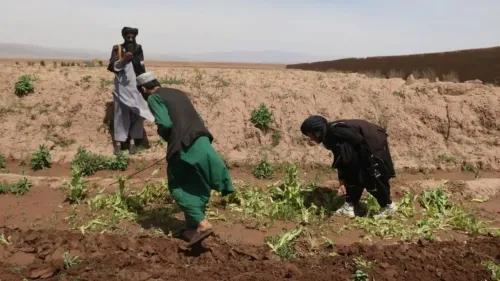
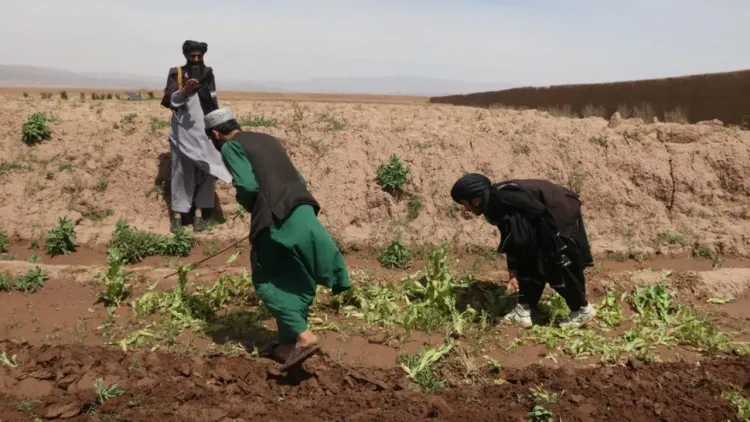
Afghan police destroyed approximately 1,000 acres of poppy fields in Samangan province over two days ending 25 May 2025 .
Operations were conducted in Dara-i-Suf Payen district , covering several villages, according to spokesman Hashmatullah Rahmani .
Nearly 400 acres of narcotic crops were also cleared in Baghlan province on 10 May , with further eradication reported in Takhar and Badakhshan.
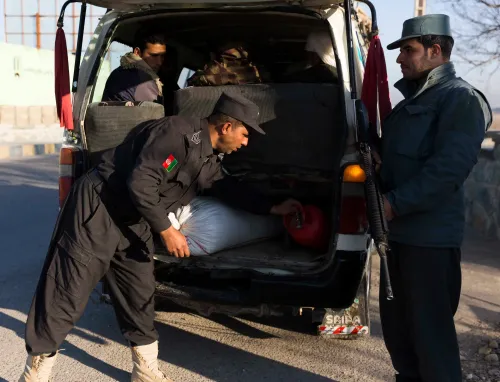
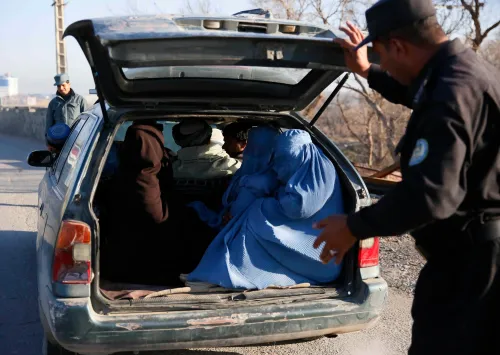
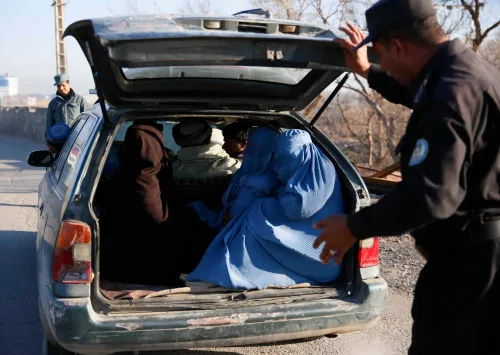
80 individuals were arrested on drug trafficking charges following coordinated raids announced on 26 April by the Ministry of Interior Affairs.
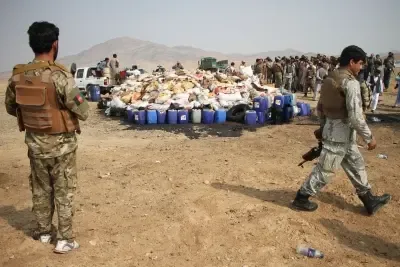
More than 100 kg of narcotics — including hashish, heroin, and 'Tablet K' — were publicly burned in Khost province on 15 April .
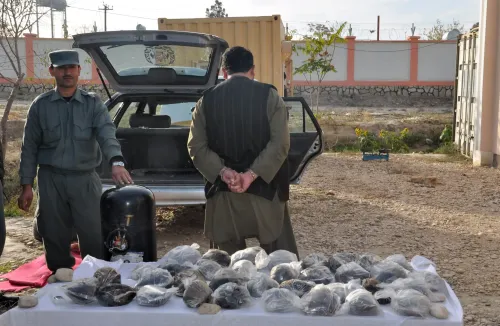
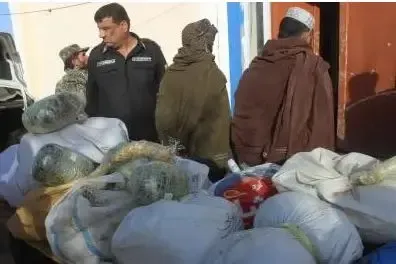
55 kg of methamphetamine was seized in Nimroz province on 2 May .
Afghan police have destroyed approximately 1,000 acres of poppy fields in Samangan province, northern Afghanistan, over a two-day sweep targeting illegal narcotic cultivation, provincial police spokesman Hashmatullah Rahmani confirmed on Monday, 25 May. The eradication drive, conducted across several villages in Dara-i-Suf Payen district, forms part of an intensifying nationwide counter-narcotics campaign.
Key Developments in the Samangan Operation
According to Rahmani, the operations commenced over the weekend and had cleared roughly 1,000 acres of poppy-cultivated land by Monday. Authorities issued a stern warning that anyone found producing or trafficking illegal drugs will face legal action. The operation in Samangan is the latest in a series of coordinated eradication drives across northern Afghanistan.
Wider Counter-Narcotics Sweep Across Northern Provinces
The Samangan drive follows a pattern of escalating enforcement activity in recent weeks. On 10 May, Afghan police destroyed nearly 400 acres of narcotic crops in Baghlan province, with eradication operations spanning several districts. Prior to that, hundreds of acres of poppy farms were also cleared in Takhar and Badakhshan provinces. Notably, this marks at least the fourth northern province targeted within a single month, signalling a coordinated regional push rather than isolated local action.
Seizures, Arrests and Public Burns
The ground operations have extended beyond field destruction. On 2 May, security forces seized 55 kg of methamphetamine in Nimroz province, western Afghanistan. On 26 April, the Ministry of Interior Affairs announced the arrest of 80 individuals on drug trafficking charges following raids across multiple provinces, during which significant quantities of hashish, narcotic tablets, and heroin-production materials were confiscated. Earlier, on 15 April, counter-narcotics police in Khost province publicly burned more than 100 kg of narcotics — including hashish, heroin, opium poppy, and thousands of stimulant tablets locally known as 'Tablet K' — according to provincial Counter-Narcotics Director Qari Wahidullah Matawakil.
What Officials Have Said
Authorities have repeatedly reaffirmed their commitment to dismantling drug distribution networks across Afghanistan. 'No one has the right to produce or smuggle illegal drugs,' Matawakil said, warning that police would take legal action against any violator. The Ministry of Interior Affairs has described the arrests and seizures as part of ongoing nationwide efforts to curb trafficking and break supply chains.
What Comes Next
With eradication operations now documented across at least five provinces — Samangan, Baghlan, Takhar, Badakhshan, and Khost — in under six weeks, Afghan authorities appear to be sustaining a multi-province enforcement tempo. Whether the campaign translates into a measurable reduction in cultivation and trafficking will likely depend on the consistency of follow-through beyond the planting season.
Point of View
000 acres in Samangan alone, following hundreds more in Baghlan, Takhar, and Badakhshan — points to a deliberate, coordinated enforcement tempo rather than sporadic local action. What remains less clear is whether eradication is being matched by alternative livelihood programmes for farmers, whose dependence on poppy cultivation is structural, not incidental. Past counter-narcotics drives in Afghanistan have repeatedly demonstrated that field destruction without economic substitution tends to displace cultivation rather than eliminate it. The arrests and seizures add credibility to the campaign, but the true test will be whether trafficking networks are disrupted or merely rerouted across provinces.
NationPress
27 Sept 2026
Frequently Asked Questions
How many acres of poppy fields have Afghan police destroyed in Samangan?
Afghan police destroyed approximately 1,000 acres of poppy fields in Samangan province over two days, with operations concluding around 25 May 2025. The eradication was carried out across several villages in Dara-i-Suf Payen district.
Which provinces have been targeted in Afghanistan's counter-narcotics drive?
At least five provinces have been targeted since mid-April 2025: Samangan, Baghlan, Takhar, Badakhshan in the north, and Khost in the east, along with a methamphetamine seizure in Nimroz in the west. The operations include field eradication, drug seizures, and trafficking arrests.
How many people have been arrested for drug trafficking in Afghanistan recently?
The Ministry of Interior Affairs announced the arrest of 80 individuals on drug trafficking charges on 26 April 2025, following coordinated raids across multiple provinces. Seized materials included hashish, narcotic tablets, and heroin-production inputs.
What narcotics were publicly burned in Khost province?
Counter-narcotics police in Khost publicly burned more than 100 kg of narcotics on 15 April 2025, including hashish, heroin, opium poppy, and thousands of stimulant tablets locally known as 'Tablet K', according to provincial Counter-Narcotics Director Qari Wahidullah Matawakil.
Why is Afghanistan's poppy eradication campaign significant?
Afghanistan has historically been the world's largest producer of opium, making domestic eradication efforts critical to global narcotics supply chains. The current multi-province campaign — spanning field destruction, seizures, and arrests within a single month — represents one of the more sustained enforcement pushes in recent years, though experts caution that lasting impact requires economic alternatives for farming communities.