What Led to the De-Rostering of Air India Staff Over Expired A320 Licence?
Synopsis
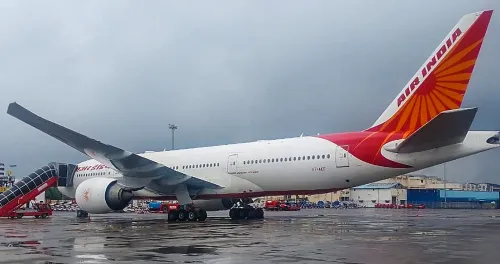
In a significant oversight, Air India staff have been de-rostered after allowing an Airbus A320 to operate with an expired airworthiness certificate. The DGCA is conducting an investigation into this lapse, emphasizing the importance of compliance in aviation safety. This incident raises critical questions about the airline's operational protocols.
Key Takeaways
Air India executives de-rostered due to oversight of operating an expired aircraft.
DGCA investigation underway to examine the lapse.
Airworthiness Review Certificate ensures compliance with safety standards.
Internal investigation initiated by Air India to identify systemic weaknesses.
Importance of aviation safety and adherence to regulations emphasized.
New Delhi, Dec 2 (NationPress) Executives from Air India associated with the incident of permitting a 164-seat Airbus A320 aircraft with an expired airworthiness certificate to operate eight commercial flights in November have been temporarily removed from duty. This decision will remain in effect until the Directorate General of Civil Aviation (DGCA) concludes its investigation into this serious oversight, the regulator announced on Tuesday.
The DGCA has initiated an inquiry and has directed the airline to ground the aircraft.
According to the DGCA, "The process of the Airworthiness Review Certificate is currently underway. The involved personnel have been de-rostered immediately pending the investigation. Air India, following DGCA's directives, is conducting an internal review to identify system weaknesses and implement corrective actions to avoid future occurrences of such lapses," stated the regulator.
The Continuing Airworthiness Management Organisation (CAMO) at Air India is responsible for issuing the annual Airworthiness Review Certificate (ARC) to ensure the validity of the aircraft's Certificate of Airworthiness.
As per the DGCA's statement, "The ARC is granted annually after a thorough examination of maintenance records, physical condition, and adherence to all airworthiness regulations. It serves as confirmation of the aircraft's primary Certificate of Airworthiness."
The statement further elaborated that following the merger of Vistara into Air India in 2024, it was determined that the initial post-merger ARC for all 70 Vistara aircraft would be reviewed and renewed by the DGCA rather than by the internal delegation of Air India.
As of now, the DGCA has issued ARC for 69 of the 70 aircraft, having met satisfactory compliance from the operator. Regarding the 70th aircraft, the operator submitted an application to the DGCA, and during the required engine replacement, the ARC expired. Despite this, the aircraft was cleared for service post-engine change," the DGCA explained.
This aircraft was utilized for eight flights between November 24 and 25. On November 26, Air India disclosed to the DGCA that it had operated the aircraft with the expired ARC on the "eight revenue flights."
In response, Air India described the situation as "unfortunate" and has launched a thorough internal investigation.
"Upon discovering the incident, we promptly reported it to the DGCA, and all personnel involved in the decision have been suspended pending further assessment. We are fully cooperating with the regulator and have initiated a detailed internal investigation," said a spokesperson for Air India.
The airline reiterated its strong commitment to uphold the highest safety and operational standards, asserting that any deviation from required compliance protocols is treated with the utmost seriousness and is intolerable within the organization.
On June 12, a tragic incident occurred involving a London-bound Air India flight which crashed just 32 seconds after takeoff from Ahmedabad airport. Out of the 12 crew members and 229 passengers on board, only one passenger survived, while 19 individuals on the ground lost their lives, and 67 others sustained serious injuries.
Point of View
This incident underscores a crucial need for diligence within the aviation sector. The DGCA's swift action reflects a commitment to maintaining safety standards and ensuring accountability in the industry. It is imperative that Air India and other airlines adhere to compliance protocols to uphold public trust.
NationPress
9 Oct 2026
Frequently Asked Questions
What led to the de-rostering of Air India staff?
Air India staff were de-rostered after permitting an Airbus A320 to operate with an expired airworthiness certificate, prompting an investigation by the DGCA.
How many flights did the expired aircraft operate?
The Airbus A320 operated eight commercial flights between November 24 and 25 before the issue was reported.
What is an Airworthiness Review Certificate?
An Airworthiness Review Certificate confirms that an aircraft meets all safety and operational standards and is valid for one year.
What actions are being taken by Air India?
Air India has initiated an internal investigation and suspended all personnel involved with the incident pending further review.
What is the role of the DGCA?
The DGCA is responsible for regulating civil aviation in India and ensuring safety and compliance standards are met by airlines.