Alliances only viable path in current politics, says Salman Khurshid
Synopsis
Congress leader Salman Khurshid has declared alliances the ‘only viable path’ for the opposition — and backed a Congress–SP tie-up in Uttar Pradesh. But his sharpest remarks were reserved for the Ayodhya Ram Temple donation controversy, where he questioned why an SIT was announced before an FIR was even filed.
Key Takeaways
Salman Khurshid called alliances the ‘only viable path’ to counter the BJP in the current political climate.
He backed a Congress–Samajwadi Party alliance in Uttar Pradesh , saying “any sane person” would see it as necessary.
On INDIA bloc leadership, Khurshid said the decision must reflect ground realities and be made collectively — not imposed by any party.
He questioned why an SIT was announced in the Ayodhya Ram Temple donation case without an FIR being registered first.
Khurshid expressed regret over India’s diminished global stature, calling for a return to the standing it held during the Nehru–Gandhi era.
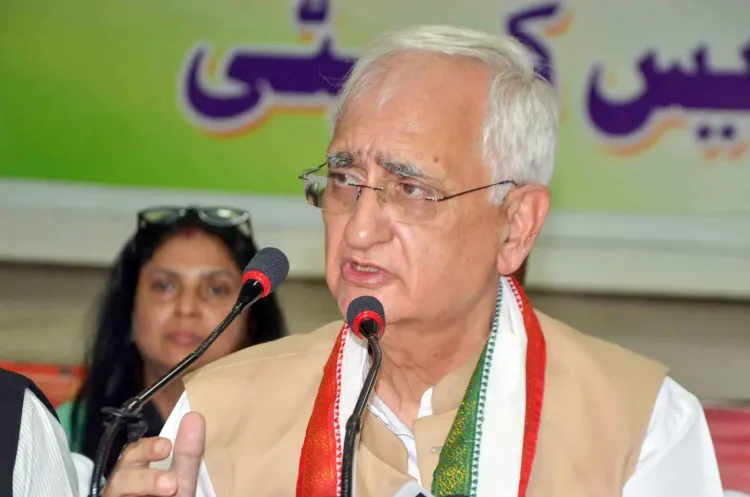
Congress leader and senior advocate Salman Khurshid on Thursday, 25 June asserted that in the prevailing political climate, forging alliances remains the “only viable path” to mount an effective challenge to the Bharatiya Janata Party (BJP)’s successive electoral dominance. Speaking in an exclusive interview, Khurshid addressed a range of issues — from the future of the INDIA bloc and a possible Congress–Samajwadi Party tie-up in Uttar Pradesh, to the alleged donation irregularities at the Ayodhya Ram Temple and his vision for India beyond 2029.
On Alliances and the INDIA Bloc
Khurshid was unequivocal on the question of political partnerships. “In the current political situation, alliances appear to be the only viable path,” he said, adding that such coalitions allow the opposition to “effectively oppose what we believe are the BJP’s policies to damage society.” He noted that wherever alliances could not be formed, the opposition had faced setbacks, and called on parties to translate the INDIA bloc from a conceptual framework to a grassroots reality.
On reports of a possible merger between the All India Trinamool Congress (TMC) and the Congress, Khurshid kept the door open without committing. “Why should we say today that our doors are closed?” he said, stressing that the current focus remained on consolidating the INDIA bloc platform. He added that future possibilities “can be examined when the situation arises.”
Rahul Gandhi’s Leadership of the INDIA Bloc
Asked whether Leader of Opposition Rahul Gandhi should head the INDIA bloc, Khurshid said the decision must be grounded in political realities. He pointed out that Gandhi currently commands the backing of governments in four states, with alliance governments in several others. “The leaders of the INDIA bloc will collectively discuss and decide the matter among themselves,” he said, cautioning against any party “imposing conditions” or insisting its own leader must lead the alliance.
On BJP’s criticism of Gandhi’s frequent overseas travel, Khurshid offered a pointed rebuttal: “Rahul Gandhi is not just a leader of our country alone, but many people across the world consider him a leader.” He added that not every global stakeholder is aligned with the BJP’s worldview, and that international interest in Gandhi reflects a distinct reading of India’s political landscape.
Delimitation Bill and Minority Security
On the proposed Delimitation Bill, Khurshid framed the issue as one of universal democratic concern. He argued that the exercise must ensure fair representation and that communities should not be “fragmented and scattered in a way that diminishes the value of their vote,” regardless of which community a voter belongs to.
Responding to remarks by Samajwadi Party MP Afzal Ansari that Muslims are safer in India than anywhere else, Khurshid broadened the frame. “I believe that not only Muslims, but every individual deserves security,” he said. He acknowledged the community’s historical sacrifices for the nation and called for strengthening “humanity” as a first principle.
Ayodhya Temple Donation Controversy
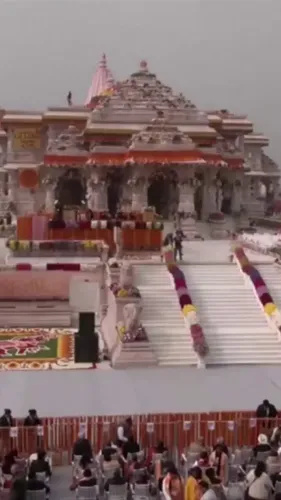
Khurshid raised procedural concerns over the alleged missing crores from offerings at the Ayodhya Ram Temple. He questioned why an SIT (Special Investigation Team) had been announced without a prior FIR being registered — describing it as a departure from normal legal course. Notably, he pointed out that several figures associated with the BJP and the Ram Mandir movement are themselves raising questions. “Was all this done so that people could engage in loot? Was it done so that the offerings made in the name of Lord Ram would end up in someone’s pocket?” he asked, attributing the sentiment to those critics.
Post-2029 Vision for India
Looking ahead beyond the 2029 general elections, Khurshid expressed a desire for an India that reclaims the global stature it held during the eras of Mahatma Gandhi, Jawaharlal Nehru, and Indira Gandhi. “India had a powerful presence in the world order, even when it was lacking in terms of finances and industries,” he said, adding that he did not see that standing reflected in the present. The remark carries an implicit critique of the current government’s foreign policy positioning, even as India officially brands itself a ‘Vishwaguru’. How the opposition translates such sentiment into electoral strategy ahead of 2029 remains the defining challenge for the INDIA bloc.
Point of View
Which is itself a negotiating posture ahead of 2029. His procedural critique of the Ayodhya SIT is pointed: by asking why no FIR preceded it, he is invoking rule-of-law norms that the BJP has itself championed, turning the argument inward. The nostalgia for Nehru-era global standing, however, risks reading as a retreat to legacy politics at a moment when the opposition needs a forward-looking economic and governance narrative to compete.
NationPress
24 Sept 2026
Frequently Asked Questions
What did Salman Khurshid say about political alliances in India?
Khurshid said that in the current political situation, alliances are the ‘only viable path’ for the opposition to effectively challenge the BJP. He specifically backed a Congress–Samajwadi Party alliance in Uttar Pradesh, calling it a near-necessity under present circumstances.
What is Khurshid’s position on Rahul Gandhi leading the INDIA bloc?
Khurshid said the question of INDIA bloc leadership must be decided on the basis of ground-level political realities, not imposed by any single party. He noted that Rahul Gandhi currently has the backing of governments in four states, making him a strong contender, but said the bloc’s leaders will decide collectively.
What did Khurshid say about the Ayodhya Ram Temple donation controversy?
Khurshid questioned why an SIT was announced in the alleged donation irregularity case without an FIR being registered first, calling it a departure from normal legal procedure. He also noted that several BJP-linked figures associated with the Ram Mandir movement are themselves raising questions about the matter.
What is Khurshid’s vision for India after the 2029 elections?
Khurshid said he wants to see India reclaim the global respect it commanded during the eras of Mahatma Gandhi, Jawaharlal Nehru, and Indira Gandhi. He expressed regret that he does not see that standing in India’s current global presence.
What did Khurshid say about the proposed Delimitation Bill?
Khurshid argued that delimitation must ensure fair representation for all citizens and that communities should not be fragmented in ways that reduce the value of their votes. He framed it as a concern for every citizen, regardless of community.