Ambubachi Mela 2026: Assam gears up for 8 lakh devotees at Kamakhya Temple
Synopsis
More than eight lakh pilgrims are expected to converge on Kamakhya Temple's Nilachal Hills for Ambubachi Mahayoga 2026, beginning 22 June — one of eastern India's largest religious gatherings. The Assam government has deployed shelter camps, tightened security, and set regulated access hours as the Tantric festival draws saints, sadhus, and devotees from across the country and abroad.
Key Takeaways
Ambubachi Mahayoga 2026 begins at Kamakhya Temple , Guwahati , with the Pravritti ritual at 9:08:42 p.m. on 22 June .
The Assam government expects more than 8 lakh devotees over the four-day congregation.
Chief Minister Himanta Biswa Sarma has publicly invited pilgrims from India and abroad via social media.
Three major shelter camps have been established at Kamakhya Railway Station , Pandu riverfront , and Nahebati .
The temple will reopen on 26 June after the customary Nitya Puja following three days of closure.
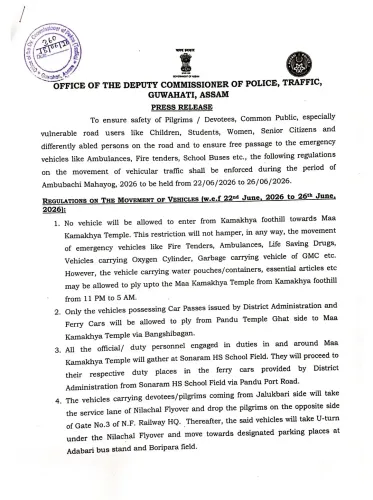
Access to the main temple route is regulated from 5 a.m. to 6 p.m. daily during the festival.
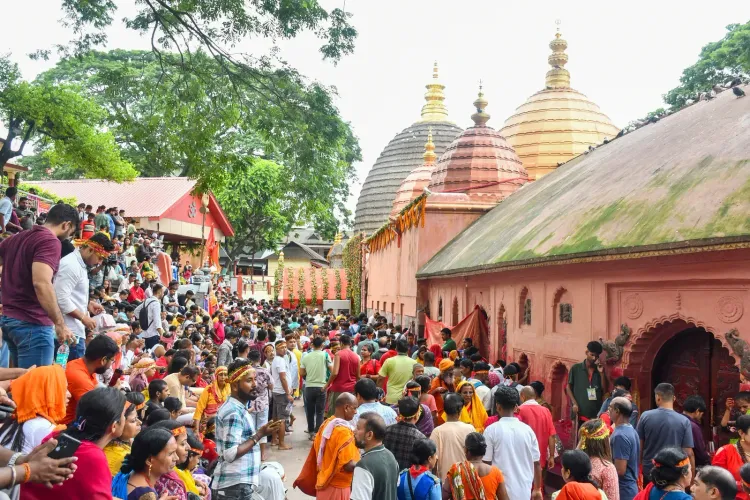
The Kamakhya Temple atop Nilachal Hills in Guwahati is set to host the annual Ambubachi Mahayoga from 22 June 2026, with the Assam government intensifying preparations to receive more than eight lakh devotees during the four-day spiritual congregation — one of the largest religious gatherings in eastern India.
Chief Minister's Invitation
Chief Minister Himanta Biswa Sarma on Wednesday extended a formal invitation to pilgrims from across India and abroad to attend Ambubachi Mahayoga 2026. In a message posted on social media, Sarma said the sacred occasion has adorned the Kamakhya Temple to receive pilgrims from around the world, calling it a unique confluence of spirituality and nature.
Infrastructure and Security Arrangements
Authorities have established three major shelter camps for devotees at Kamakhya Railway Station and the Pandu riverfront, with a separate camp set up at Nahebati for police and security personnel. The main access route to the temple will remain open from 5 a.m. to 6 p.m. daily, ensuring regulated movement of pilgrims. Security, sanitation, healthcare, and transportation services have all been reinforced ahead of the event.
Ritual Timeline and Significance
Temple authorities have confirmed that the sacred Pravritti ritual — marking the onset of the observance — will begin at 9:08:42 p.m. on 22 June. The temple will remain closed for three days before reopening on the morning of 26 June following the customary Nitya Puja. The Ambubachi Mela marks the annual menstruation period of Goddess Kamakhya, revered as the embodiment of feminine creative power, and celebrates the fertility of Mother Earth — a belief central to this Tantric tradition.
Who Attends and Why It Matters
The festival draws saints, sadhus, Tantric practitioners, and pilgrims from across India and abroad, making the Kamakhya Shakti Peetha one of the most significant pilgrimage destinations in the country during this period. Nilachal Hills are expected to transform into a vibrant centre of faith and devotion over the four days. This is among the most prominent Tantric festivals in South Asia, and the scale of state-level preparation reflects the event's growing national and international profile.
Point of View
Or whether crowd management will again be tested as in previous editions. The festival's Tantric and feminine-power symbolism also gives it a cultural distinctiveness that mainstream coverage often flattens into generic 'religious gathering' framing.
NationPress
21 Sept 2026
Frequently Asked Questions
What is Ambubachi Mela 2026 and when does it begin?
Ambubachi Mela 2026, also called Ambubachi Mahayoga, is a four-day Tantric festival held at the Kamakhya Temple in Guwahati, Assam. The sacred Pravritti ritual marking its onset is scheduled for 9:08:42 p.m. on 22 June 2026, with the temple reopening on 26 June after the Nitya Puja.
How many devotees are expected at Ambubachi Mela 2026?
The Assam government expects more than eight lakh devotees to attend the four-day congregation at Kamakhya Temple atop Nilachal Hills. The event draws saints, sadhus, Tantric practitioners, and pilgrims from across India and abroad.
What is the religious significance of Ambubachi Mahayoga?
Ambubachi Mahayoga marks the annual menstruation period of Goddess Kamakhya, who is revered as the embodiment of feminine creative power. The festival celebrates the fertility of Mother Earth and is considered one of the most significant Tantric festivals in South Asia.
What facilities has the Assam government arranged for pilgrims?
Three major shelter camps have been set up at Kamakhya Railway Station, the Pandu riverfront, and Nahebati. The main temple access route will be open from 5 a.m. to 6 p.m. daily, with reinforced security, sanitation, healthcare, and transportation arrangements.
Why does the Kamakhya Temple close during Ambubachi?
The temple closes for three days during the Ambubachi observance in keeping with the belief that Goddess Kamakhya undergoes her annual menstrual cycle during this period. It reopens on the morning of 26 June 2026 following special rituals, including the customary Nitya Puja.