CM Assam Office Marks Start of Ambubachi Mahayog 2026
Synopsis
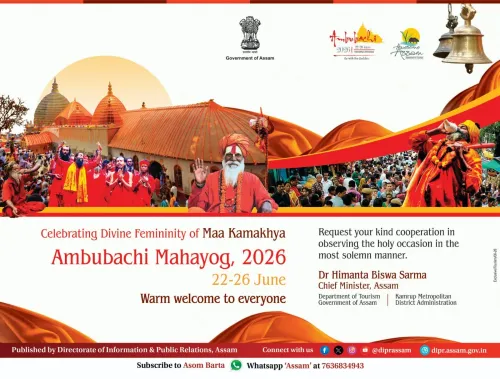
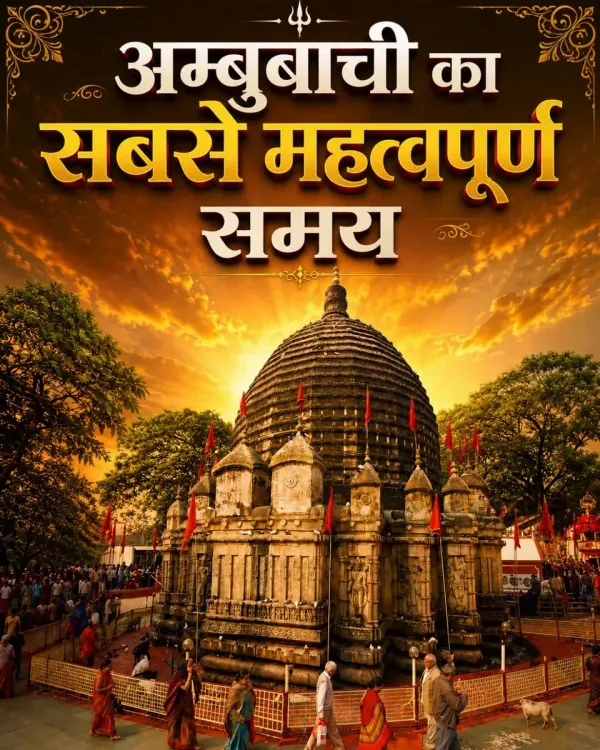
Ambubachi Mahayog 2026 began on June 22 at Maa Kamakhya Dham on Nilachal Hills in Guwahati. The Chief Minister's Office of Assam marked the occasion by sharing a video of the sacred Prabritti and Nibritti ceremonies that define this annual tantric festival at one of India's 51 Shakti Peethas.
Key Takeaways
Ambubachi Mahayog 2026 commenced on Monday, June 22, 2026 at Maa Kamakhya Dham on the Nilachal Hills in Guwahati .
The Chief Minister's Office of Assam officially marked the festival's start and shared a video of the associated rituals.
The festival centres on two key ceremonies: the Prabritti (ritual closure of the temple) and the Nibritti (ritual reopening).
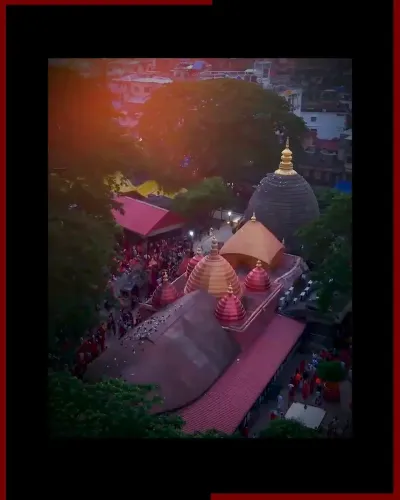
Kamakhya Temple is one of the 51 Shakti Peethas and a primary centre of tantric worship in India.
The event draws pilgrims and tantric practitioners from across the country, with significant economic impact on Guwahati and surrounding areas.
The state's public engagement with the festival reflects Assam's ongoing effort to promote Northeast India as a religious tourism destination.
The Chief Minister's Office of Assam on Monday, June 22, 2026, announced the commencement of Ambubachi Mahayog 2026 at Maa Kamakhya Dham on the Nilachal Hills in Guwahati, sharing a video glimpse into the rituals and traditions that define this sacred annual observance.
Context
The post states: 'As devotees gather for this sacred occasion, here is a glimpse into the rituals and traditions associated with Ambubachi, including the revered Prabritti and Nibritti ceremonies.' The Ambubachi Mahayog is one of the most significant tantric festivals in the Hindu calendar, observed annually at the Kamakhya Temple — a site revered as one of the 51 Shakti Peethas of the subcontinent. It marks the period during which the presiding deity, Maa Kamakhya, is believed to undergo her annual menstrual cycle.
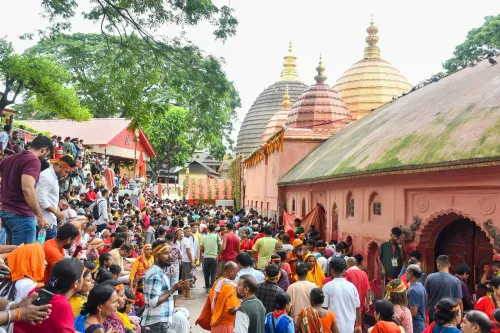
The festival draws hundreds of thousands of pilgrims, sadhus, and tantric practitioners from across India and beyond. The Nilachal Hills, which house the Kamakhya Temple complex, become the focal point of an intense convergence of faith, ritual, and living tradition during this period.
The Prabritti and Nibritti Ceremonies
Central to the Ambubachi observance are two distinct ritual phases: the Prabritti and the Nibritti. The Prabritti marks the beginning of the goddess's period of seclusion, during which the temple doors are ceremonially closed to devotees. The Nibritti, which follows after three days, marks the ritual reopening of the temple — an event greeted with immense jubilation, as pilgrims who have waited outside are finally permitted to enter and receive the goddess's blessings.
These ceremonies are steeped in tantric tradition and are considered among the most potent ritual observances in Shakta worship. The sanctity attached to prasad and other offerings distributed during Nibritti is regarded as exceptionally auspicious by the faithful.
Policy Backdrop and State Role
State administrations in Assam have coordinated logistics, security, and sanitation for the annual Ambubachi Mela for several decades. The involvement of the Chief Minister's Office in publicly marking the festival's commencement reflects a consistent pattern of official engagement with major religious observances in the state.
The Government of Assam has in recent years actively worked to position Kamakhya Dham and similar heritage sites as anchors of religious tourism in Northeast India. This official communication forms part of that broader effort to amplify the cultural and spiritual significance of the region on a national stage.
Stakeholders and Impact
The festival has significant economic and social dimensions beyond its religious character. Local vendors, hospitality providers, and transport operators in and around Guwahati see a substantial seasonal uptick in activity during Ambubachi. Pilgrims travelling from states across India contribute meaningfully to the local economy.
For the wider community of Shakta devotees and tantric practitioners, the Ambubachi Mahayog represents an irreplaceable annual moment of collective spiritual renewal. The state's public acknowledgement of the festival's commencement serves to validate and amplify its cultural importance.
What's Next
Observers will watch for state announcements on pilgrim facilities, crowd-management measures, and any infrastructure initiatives tied to this year's Ambubachi cycle. The Nibritti ceremony — the ritual reopening of the Kamakhya Temple — will be the next major milestone that devotees and administrators alike are focused on, marking the culmination of this year's Mahayog.
Point of View
The communication also serves an educational function, introducing the festival's tantric traditions to a wider national audience. This sits within a broader political pattern across several Indian states where official accounts actively engage with major religious observances to reinforce cultural identity and boost pilgrimage-linked economies. The move underscores how heritage and tourism policy increasingly intersect with digital public communication at the state level.
NationPress
21 Sept 2026
Frequently Asked Questions
What is Ambubachi Mahayog and when does it take place?
Ambubachi Mahayog is an annual tantric festival at the Kamakhya Temple in Guwahati, Assam, marking the period during which the goddess Kamakhya is believed to undergo her menstrual cycle. In 2026, it began on June 22.
What are the Prabritti and Nibritti ceremonies at Ambubachi?
Prabritti is the ritual ceremony marking the closure of the Kamakhya Temple at the start of Ambubachi, while Nibritti is the ceremonial reopening of the temple after three days, which devotees celebrate with great fervour.
Where is Maa Kamakhya Dham located?
Maa Kamakhya Dham is located on the Nilachal Hills in Guwahati, the largest city in Assam. It is one of the 51 Shakti Peethas and a major centre of tantric worship in India.
Why is the Kamakhya Temple significant?
The Kamakhya Temple is one of the 51 Shakti Peethas — sites considered supremely sacred in the Shakta tradition of Hinduism. It is a primary pilgrimage destination in Northeast India and a major centre of tantric practice.
How does the Assam government support the Ambubachi Mela?
The state administration has for several decades coordinated logistics, security, and sanitation for the Ambubachi Mela. The Chief Minister's Office also uses official channels to publicise the festival and promote Assam's religious tourism.