Is the PM and HM Following RSS Ideology While Securing a Mandate?
Synopsis
Union Home Minister Amit Shah fiercely defended the SIR and electoral reforms in a Lok Sabha debate, emphasizing that there are no legal barriers for those with RSS ideology to hold government positions. His remarks ignited significant opposition reactions and highlighted ongoing border security discussions.
Key Takeaways
Amit Shah defended the SIR and electoral reforms during Lok Sabha debates.
He insisted that RSS ideology does not disqualify individuals from key positions.
Shah accused the opposition of spreading falsehoods.
He emphasized the need for border security and referenced historical electoral issues.
The NDA remains committed to deporting illegal infiltrators.
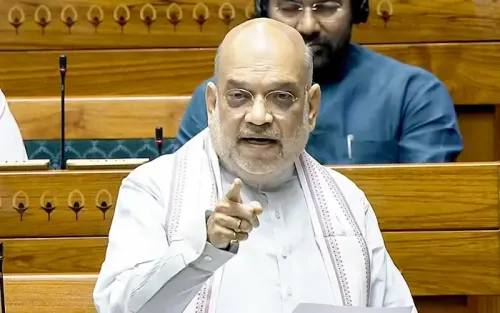
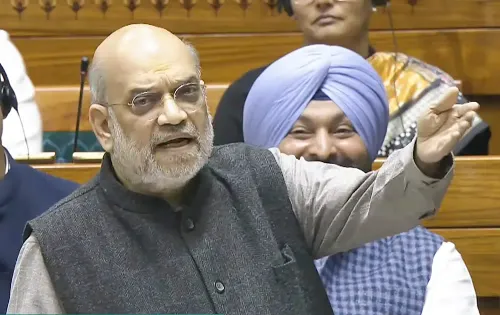
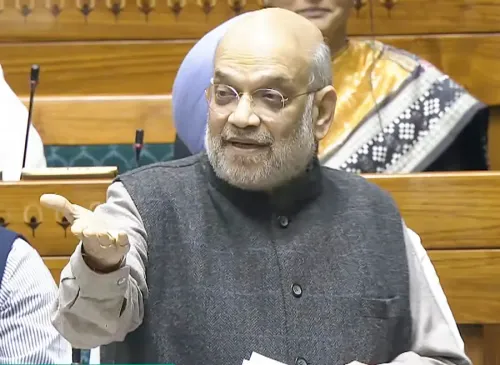
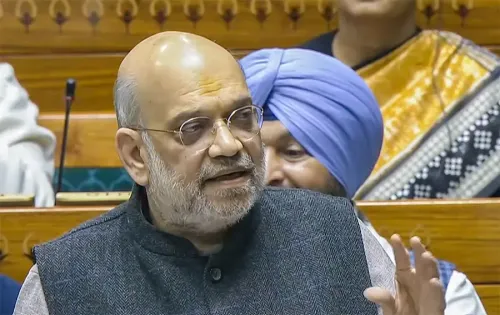
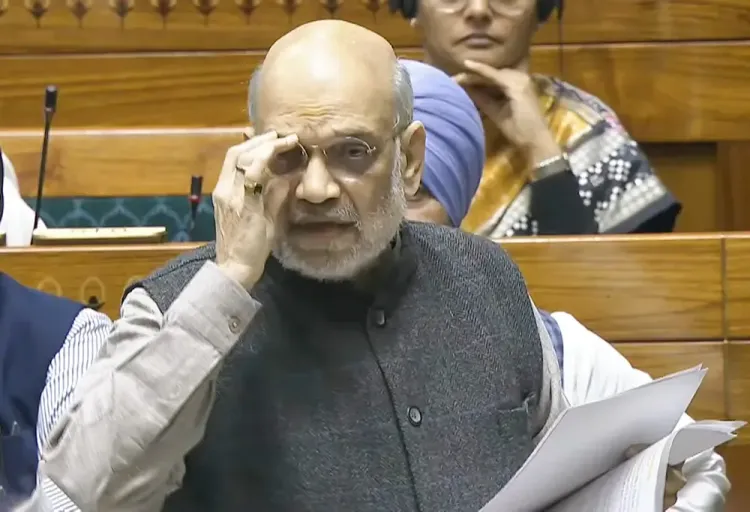
New Delhi, Dec 10 (NationPress) Union Home Minister Amit Shah provided a robust defense of the SIR and the larger initiative for electoral reform on Wednesday, stating emphatically that neither the law nor democratic principles prevent individuals with an RSS ideology from occupying significant governmental roles.
In response to accusations from the opposition during a tense debate in the Lok Sabha, Shah remarked: "The opposition claims that individuals with an RSS ideology are appointed to key positions. What’s the issue? Is there any legislation in this country that prohibits individuals with an RSS ideology from holding important roles? The Prime Minister subscribes to the RSS ideology, the Home Minister subscribes to the RSS ideology, and they attained power through the mandate of the people, not due to your benevolence."
During the discourse on election reforms, he accused the opposition of disseminating "falsehoods" regarding the SIR and questioned whether democracy could endure if decisions about the Prime Minister and the Chief Minister are made by "ghuspethiye" (infiltrators).
His comments incited a commotion, leading opposition MPs to walk out mid-speech, with the Home Minister noting their choice to exit rather than listen to a rebuttal.
In advocating for electoral integrity, Shah recounted what he termed historical examples of "voter chori," including the election of India’s inaugural Prime Minister.
"Sardar Patel received 28 votes while Jawaharlal Nehru secured only 2, yet Nehru became the Prime Minister," he emphasized, claiming that the opposition avoids discussions about historical facts.
He also directed a pointed critique at West Bengal regarding infiltration issues, highlighting that of the 2,216 km India–Bangladesh border, 1,653 km is already secured with fencing.
“Only 563 km remains, all located in West Bengal. Other states like Assam, Meghalaya, Tripura, Jammu & Kashmir, Punjab, Rajasthan, Gujarat — they have all completed fencing. Only Bengal is pending,” he accused the state’s ruling Trinamool Congress of collaborating with the Congress in a “Save the Infiltrators Yatra” akin to that in Bihar.
Reaffirming the NDA’s position, he stated: "Even if they boycott this two hundred times, we will not permit a single illegal infiltrator to remain in this country. Our approach is to identify, remove their names from voter lists, and deport them."
Point of View
It is essential to recognize the complexities of political discourse in India. Amit Shah's defense of RSS ideology in governance highlights the ongoing tensions between the ruling party and the opposition. While his assertions raise questions about electoral integrity, they also reflect the broader ideological battles shaping our democracy. It is vital to remain informed and critical as these discussions unfold.
NationPress
30 Sept 2026
Frequently Asked Questions
What accusations did the opposition make?
The opposition accused the government of appointing individuals with RSS ideology to significant positions, questioning the implications for democracy.
What historical example did Amit Shah provide?
Amit Shah cited the election of India’s first Prime Minister, Jawaharlal Nehru, as an example of 'voter chori,' where Nehru became Prime Minister despite receiving fewer votes than Sardar Patel.
What is the significance of border security in this context?
Border security is a critical issue, especially concerning infiltration from neighboring countries, which Shah highlighted during his debate to emphasize the government's commitment to national security.
What is the NDA’s stance on illegal infiltrators?
The NDA has a firm policy of identifying, removing, and deporting illegal infiltrators from India, as reiterated by Amit Shah during the debate.