Pakistan military courts: Amnesty urges end to civilian trials on May 9 anniversary
Synopsis
On the first anniversary of Pakistan's Supreme Court reversing its own fair-trial ruling, Amnesty International is demanding an end to secret military trials of civilians — pointing to 105 May 9 protesters and activist Idris Khattak as emblematic of a system that denies written judgements, appeals, and basic due process.
Key Takeaways
Amnesty International on 7 May 2025 called on Pakistan to ban military trials of civilians and overturn all unlawful convictions.
Pakistan's Supreme Court constitutional bench on 7 May 2025 reversed its own October 2023 ruling that had declared civilian military trials unconstitutional.
In December 2024 , military courts convicted 105 May 9 protesters and sentenced them to two to ten years in prison.
Human rights activist Idris Khattak , forcibly disappeared in 2019 , was convicted in a secret military trial in 2021 and sentenced to 14 years .
Amnesty's Deputy Regional Director Isabelle Lassee said convicted civilians are denied written judgements as a "deliberate tactic to prolong unlawful detention."
Amnesty International on Thursday, 7 May 2025 called on Pakistani authorities to immediately ban military trials of civilians and overturn all unlawful convictions handed down by such courts. The appeal comes on the first anniversary of a pivotal Pakistan Supreme Court constitutional bench ruling that reversed a landmark October 2023 judgment which had declared civilian trials before military courts unconstitutional.
The Supreme Court Reversal That Triggered the Call
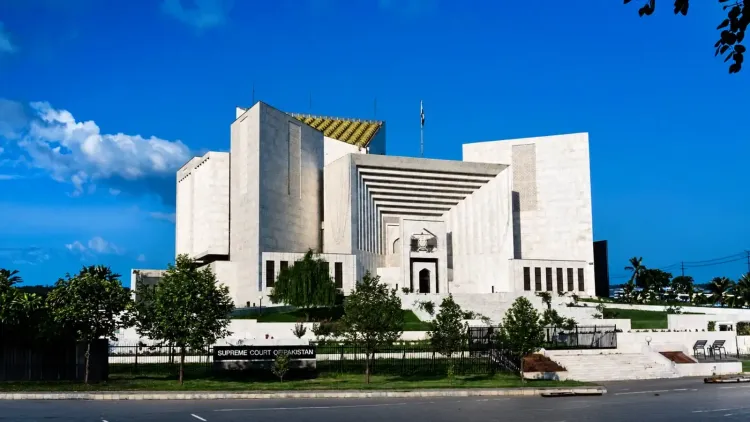
On 7 May 2025, Pakistan's Supreme Court constitutional bench overturned its own earlier ruling from October 2023, which had held that trying civilians involved in the May 9 protests before military courts was unconstitutional. Amnesty International described this reversal as having "fundamentally undermined" the right to a fair trial and the right to liberty in Pakistan. The organisation marked the first anniversary of that ruling by renewing its demand for an end to what it termed a systemic injustice.
What Amnesty International Said
Isabelle Lassee, Amnesty International's Deputy Regional Director for South Asia, stated that the court's 2025 decision had intentionally disregarded virtually every protection guaranteed under international human rights law. She described the process as deeply flawed at every stage.
"A civilian before a military court is first subjected to a secret trial without procedural safeguards, conducted by army officials that lack independence and impartiality. If convicted, they are denied the right to appeal, despite orders by the Supreme Court that this protection be guaranteed," Lassee said.
She further noted that convicted individuals are not provided access to the courts' reasoned judgements and, in many instances, have not received any written order at all. Amnesty International characterised this as "a deliberate tactic to prolong their unlawful detention."
Key Cases: May 9 Protesters and Idris Khattak
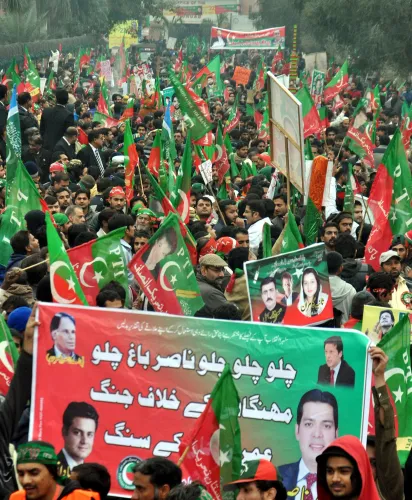
In December 2024, military courts convicted 105 protesters who had participated in the May 2023 demonstrations that erupted following the arrest of former Prime Minister Imran Khan. Those convicted were sentenced to between two and ten years in prison. Many are reportedly still serving those sentences without access to independent appeal.
Amnesty International also highlighted the case of human rights activist Idris Khattak, who was forcibly disappeared in 2019 and subsequently convicted after a secret military trial in 2021, receiving a sentence of 14 years' imprisonment. His case has been cited internationally as emblematic of the broader pattern of opaque military justice in Pakistan.
What Amnesty International Is Demanding
The organisation called on Pakistani authorities to ensure that all those convicted by military courts are provided with a meaningful right to appeal before a competent, independent, and impartial tribunal. It demanded that all unlawful civilian convictions be overturned and that the practice of trying civilians before military courts be permanently banned. Notably, these demands align with the position taken by the Supreme Court itself in its now-reversed October 2023 ruling.
Broader Context and What Comes Next
Pakistan's use of military courts to try civilians has drawn sustained international criticism. The May 9, 2023 protests, which followed Khan's arrest, saw widespread unrest across the country, including attacks on military installations — a fact the Pakistani government has used to justify military jurisdiction. Critics, however, argue that the scale of convictions and the secrecy surrounding trials indicate a broader crackdown on political dissent rather than a targeted response to violence. This is not the first time Pakistan's military justice system has faced international scrutiny; the conviction of Idris Khattak in 2021 had already drawn condemnation from multiple human rights bodies. With the Supreme Court's 2025 reversal now entrenched, pressure from international organisations like Amnesty International is likely to intensify ahead of Pakistan's next Universal Periodic Review at the UN Human Rights Council.
Point of View
No written judgements, no appeals, and convictions handed down by officers with no judicial independence. Framing the May 9 protesters as a national security threat rather than political dissenters allows the state to invoke military jurisdiction while avoiding the scrutiny of open courts. With 105 convictions already logged and Idris Khattak's 14-year sentence still running, the human cost of this institutional arrangement is no longer abstract. International pressure alone has not moved Pakistan's establishment before; it is unlikely to do so now without coordinated multilateral consequences.
NationPress
25 Sept 2026
Frequently Asked Questions
Why is Amnesty International calling for a ban on Pakistan's military trials of civilians?
Amnesty International says Pakistan's military courts deny civilians basic fair-trial rights, including access to independent judges, written judgements, and the right to appeal. The call was renewed on the first anniversary of the Supreme Court's 2025 ruling that reversed earlier protections.
What happened at Pakistan's Supreme Court on 7 May 2025?
Pakistan's Supreme Court constitutional bench overturned a previous October 2023 ruling that had declared the military trial of civilians involved in the May 9 protests unconstitutional. The reversal effectively reinstated the legality of trying civilians before military courts.
Who are the May 9 protesters and why were they tried by military courts?
The May 9 protesters took part in widespread demonstrations in May 2023 following the arrest of former Prime Minister Imran Khan. Pakistani authorities used attacks on military installations during the unrest to justify bringing some protesters under military jurisdiction. In December 2024, 105 of them were convicted and sentenced to two to ten years in prison.
Who is Idris Khattak and why is his case significant?
Idris Khattak is a Pakistani human rights activist who was forcibly disappeared in 2019 and convicted after a secret military trial in 2021, receiving a 14-year prison sentence. His case is cited by Amnesty International as a prominent example of the opaque and rights-violating nature of Pakistan's military justice system.
What specifically is Amnesty International demanding from Pakistani authorities?
Amnesty International is demanding that Pakistan permanently ban military trials of civilians, overturn all unlawful convictions by military courts, and guarantee all convicted individuals a meaningful right to appeal before a competent, independent, and impartial tribunal.