Pakistan's Military Courts: Erosion of Civilian Justice and Fair Trial Rights
Synopsis
The rise of military courts in Pakistan post-May 2023 protests raises serious concerns about the erosion of civilian justice and fair trial rights. This situation reflects a dangerous trend towards militarization that must be addressed.
Key Takeaways
Military courts in Pakistan are increasingly used to try civilians, raising concerns about justice.
The Supreme Court found military trials unconstitutional but later reinstated them.
Defendants face secrecy and lack of legal protections in military trials.
The International Commission of Jurists criticizes these practices as violations of human rights.
The ongoing situation reflects a troubling trend towards militarization of justice.
London, March 16 (NationPress) The military courts in Pakistan are increasingly employed to address perceived threats to the security apparatus. This practice, however, significantly undermines the integrity of fair trial rights and the authority of civilian courts. The recent court martials of civilians following the protests on May 9, 2023, as well as the Supreme Court's controversial 2025 ruling to reauthorize these trials, signal a troubling trend towards deeper militarization, according to a recent report.
"The fundamental issue lies in the structural design of military courts, which are essentially executive-controlled entities aimed at maintaining discipline within the military, rather than adjudicating civilian legal matters under standard criminal law. These proceedings lack transparency, with judges being active military officers, and defendants face the denial of essential legal protections such as public hearings, independent judicial oversight, and full access to legal representation and evidence," noted Sakariya Kareem in the UK-based newspaper Asian Lite.
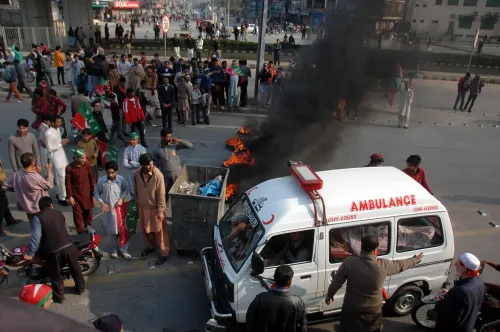
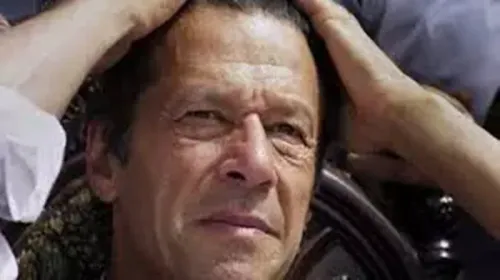
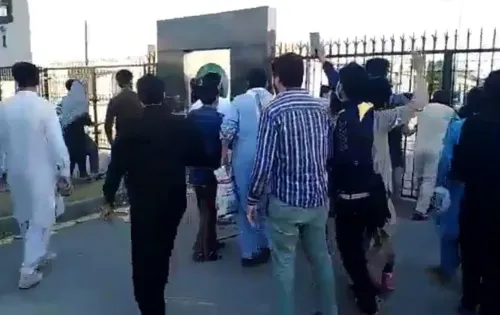
The International Commission of Jurists (ICJ) has consistently asserted that Pakistan's military judicial framework fails to align with fair justice principles and contravenes Article 14 of the International Covenant on Civil and Political Rights (ICCPR). The protests triggered on May 9, 2023, following the arrest of former Prime Minister Imran Khan, have provided a pretext for subjecting civilians to military trials. Demonstrators targeted various military facilities, including the General Headquarters (GHQ) in Rawalpindi and the residence of the Lahore Corps Commander.
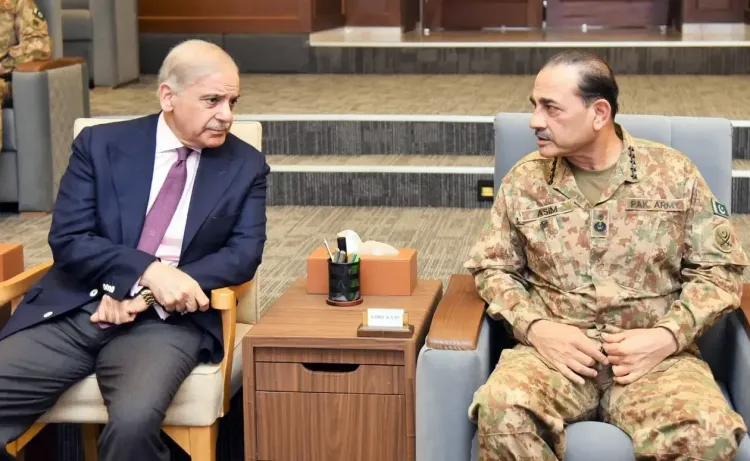
In response to these events, Pakistan's army chief declared that the trials of those implicated as planners, accomplices, and participants would be conducted under the Pakistan Army Act of 1952 and the Official Secrets Act of 1923. Over 100 civilians, accused of assaulting military properties, were removed from the civilian judicial process and transferred to military jurisdiction.
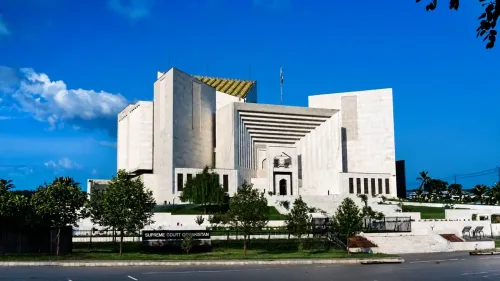
In October 2023, a five-judge panel of the Supreme Court declared the military trials of 103 civilians unconstitutional. It ruled that section 2(1)(d) of the Army Act, which allowed military trials for civilians, was invalid and mandated that these cases be handled in civilian courts according to standard criminal law. However, a larger bench of the Supreme Court later overturned this decision on May 7, 2025.
The reversal reinstated the contested provisions of the Army Act and permitted the trial of civilians connected to the May 9 protests in military courts for offenses against the military and national security. The Court instructed the government to legislate within 45 days to establish a right of appeal, yet rights advocates argue that this does not resolve the fundamental issues of secrecy, lack of independence, and executive oversight inherent in military justice, as highlighted in the report.
"The ICJ’s comprehensive review of these trials exposes numerous violations of due process. Defendants and their attorneys frequently lack access to crucial documents, evidence, and verdicts; trials are conducted in undisclosed venues; and families are often left uninformed about hearing schedules or outcomes until after sentences are imposed. There are also alarming reports of torture and mistreatment used to elicit confessions, alongside harassment of relatives trying to attend proceedings or challenge verdicts," Kareem elaborated in Asian Lite.
"During previous military court proceedings under Pakistan's constitutional amendments from 2015 to 2019, at least eight civilians were executed following secret trials, causing the ICJ to categorize these executions as unlawful and a violation of both domestic and international law. The current cycle threatens to replicate this troubling pattern, now aimed at a new political demographic," the analyst concluded.
Point of View
I believe that the increasing reliance on military courts for civilian trials in Pakistan poses a serious threat to the principles of justice and human rights. This trend not only undermines civilian authority but also sets a dangerous precedent for the future of governance and rule of law in the country. It's imperative that we prioritize transparency and accountability in our judicial processes.
NationPress
24 Sept 2026
Frequently Asked Questions
What are military courts in Pakistan?
Military courts in Pakistan are judicial bodies established to handle cases involving military personnel and, in certain instances, civilians accused of offenses against the armed forces or national security.
Why are civilians being tried in military courts?
Civilians are being tried in military courts following the protests on May 9, 2023, which were triggered by the arrest of former Prime Minister Imran Khan, where the military claimed to address threats to national security.
What rights do defendants have in military trials?
Defendants in military trials often face significant limitations, including lack of access to legal counsel, secretive proceedings, and the absence of public hearings or independent oversight.
What has the International Commission of Jurists said about Pakistan's military justice system?
The International Commission of Jurists has criticized Pakistan's military justice system as incompatible with fair trial standards and as violating international human rights obligations.
What was the Supreme Court's ruling on military trials for civilians?
In October 2023, the Supreme Court ruled that the military trials of 103 civilians were unconstitutional; however, this ruling was later overturned in May 2025, allowing military trials to resume.