Anbumani urges Tamil Nadu to advance Vettri Payanam funds, cites ₹25 crore daily shortfall

Synopsis
Tamil Nadu's expanded Vettri Payanam free bus scheme — covering 84 lakh women daily — may be running on empty. PMK's Anbumani Ramadoss says transport corps have already racked up ₹150 crore in oil-company dues in under a month, and that daily revenue has halved. Without advance monthly disbursements, he warns, the buses could stop running.
Key Takeaways
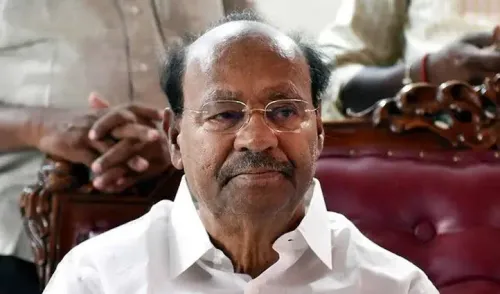
PMK leader Dr Anbumani Ramadoss on 28 October 2026 demanded advance monthly funding for Tamil Nadu's Vettri Payanam free bus travel scheme.
Transport corporations face a daily revenue shortfall of about ₹25 crore ; daily receipts have fallen from ₹21 crore to ₹7–8 crore (excluding subsidies).
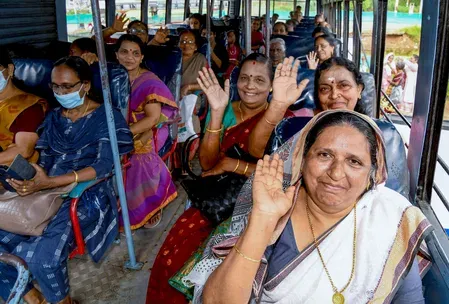
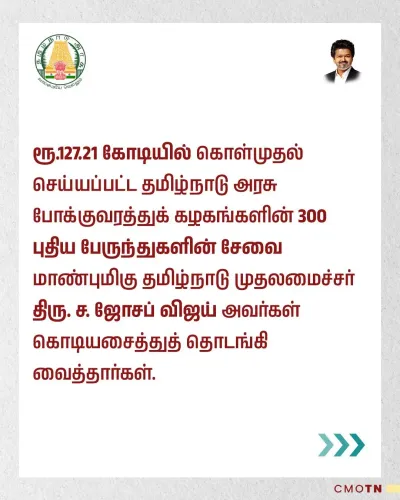
The expanded scheme, launched on 2 October , covers roughly 84.32 lakh women across 12,695 buses — up from 7,714 buses under the earlier Vidiyal Payanam programme.
Corporations have accumulated ₹150 crore in dues to oil companies and lost approximately ₹3 crore in cash-payment discounts over 25 days of credit buying.
Daily operating costs of ₹18.52 crore (diesel + maintenance) far exceed fare collections of around ₹8 crore , making state disbursements critical to solvency.
PMK leader Dr Anbumani Ramadoss on 28 October 2026 called on the Tamil Nadu government to release funds in advance every month for the Vettri Payanam free bus travel scheme, warning that state transport corporations were struggling to cover basic operating costs. He alleged that delayed compensation had left corporations facing a daily revenue shortfall of roughly ₹25 crore.
Scale of the Financial Strain
According to figures cited by Anbumani, daily operating receipts excluding government subsidies had fallen sharply — from an earlier average of ₹21 crore to just ₹7–8 crore. Citing trade union data, he added that total daily income, including subsidies from other schemes, had dropped from ₹47 crore to ₹22 crore.
On the expenditure side, corporations reportedly spend ₹16.17 crore daily on diesel and ₹2.35 crore on maintenance — a combined ₹18.52 crore — against daily fare collections of only around ₹8 crore. Anbumani argued this arithmetic makes the corps financially unviable without timely state disbursement.
How the Expanded Scheme Changed the Numbers
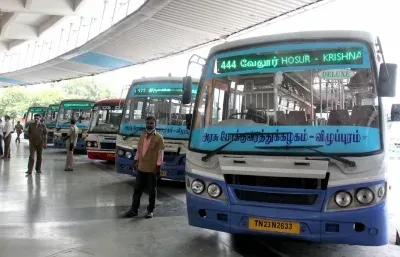
The Vettri Payanam scheme was launched on 2 October, broadening the free travel facility that had previously existed under the Dravida Munnetra Kazhagam (DMK) government's Vidiyal Payanam programme. Where the earlier scheme covered 7,714 city buses, the expanded version now enables approximately 84.32 lakh women to travel daily across 12,695 buses — part of a statewide fleet of 19,283 buses.
The estimated daily revenue foregone has risen commensurately: from around ₹10 crore under the earlier scheme to ₹25 crore under the expanded one. Annual compensation to corporations for the earlier programme was estimated at ₹3,599 crore last year and revised upward to ₹3,999 crore this year, according to Anbumani.
Accumulated Dues and Operational Fallout
Anbumani alleged that corporations had accumulated ₹150 crore in dues to oil companies since the expanded scheme began operating. Procuring diesel on credit over the past 25 days had also cost them approximately ₹3 crore in foregone discounts, he said, noting that oil companies offer a two per cent concession for cash payments.
The cash crunch was reportedly forcing operators to use retreaded tyres and previously used spare parts rather than new components — a practice that raises concerns about passenger safety and fleet longevity.
What Anbumani Is Demanding
The PMK leader reiterated that advance monthly funding is the only sustainable fix, warning that continued financial strain could bring bus operations to a standstill and disrupt services for lakhs of daily commuters. He urged the state government to intervene immediately to bridge the cash gap and protect uninterrupted public transport across Tamil Nadu.
With the scheme still in its early weeks, how the government responds to this funding pressure will determine whether one of the state's flagship welfare programmes can sustain itself without crippling the very corporations that run it.
Point of View
But Anbumani's figures — if accurate — expose a structural design flaw: the scheme was widened without a concurrent mechanism to accelerate state compensation to the corporations that absorb the cost. A ₹150 crore dues pile-up in under a month is not a teething problem; it signals that the disbursement cycle was never calibrated to the scheme's expanded scale. The deeper issue is that Tamil Nadu's transport corporations have long been financially fragile, propped up by subsidies that arrive late and in arrears. Layering a flagship welfare programme on top of that fragility, without ring-fencing advance payments, risks turning a welfare win into a service-delivery failure — and the commuters who benefit most will bear the cost first.
NationPress
28 Oct 2026
Frequently Asked Questions
What is the Vettri Payanam scheme in Tamil Nadu?
Vettri Payanam is a free bus travel scheme launched by the Tamil Nadu government on 2 October, expanding the earlier Vidiyal Payanam programme. It enables approximately 84.32 lakh women to travel free daily on 12,695 state-run buses across the state.
Why is Anbumani Ramadoss demanding advance funding for the scheme?
Anbumani says delayed government compensation has left transport corporations with a daily revenue shortfall of about ₹25 crore, making it difficult to pay for diesel, tyres, and spare parts. He warns that without advance monthly disbursements, bus operations could come to a standstill.
How much debt have Tamil Nadu transport corporations accumulated under the expanded scheme?
According to Anbumani, corporations have accumulated ₹150 crore in dues to oil companies since the expanded Vettri Payanam scheme began. Buying diesel on credit over 25 days has also cost them approximately ₹3 crore in foregone cash-payment discounts.
How does Vettri Payanam differ from the earlier Vidiyal Payanam scheme?
The earlier Vidiyal Payanam programme covered 7,714 city buses, while Vettri Payanam extends free travel to roughly 84.32 lakh women across 12,695 buses. The daily revenue foregone by corporations has risen from around ₹10 crore to ₹25 crore as a result of the expansion.
What are the daily operating costs of Tamil Nadu transport corporations?
Corporations spend ₹16.17 crore daily on diesel and ₹2.35 crore on maintenance, totalling ₹18.52 crore. Against daily fare collections of only around ₹8 crore, this leaves a gap that can only be covered by timely state compensation.