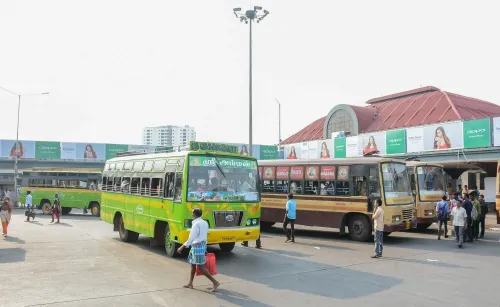
Diesel hike to cost Tamil Nadu transport corps ₹175 crore more annually
Synopsis
Tamil Nadu's state buses carry over 2 crore passengers daily — the most of any state in India — yet bleed ₹19 crore every day. A ₹2.86/litre diesel hike now adds ₹175.58 crore to annual losses, and fares haven't moved since 2018 when diesel cost ₹30 less per litre. The arithmetic is unsustainable, and the government has yet to signal a way out.
Key Takeaways
Oil marketing companies raised high-speed diesel prices by ₹2.86 per litre , adding ₹175.58 crore to Tamil Nadu transport corporations' annual costs.
The eight state transport undertakings — MTC, SETC , and six TNSTC divisions — already record a combined daily loss of nearly ₹19 crore .
Daily losses are expected to rise by a further ₹48.11 lakh due to the fuel price hike.
Bus fares were last revised in January 2018 when diesel cost around ₹65 per litre ; it now stands at nearly ₹95 per litre .
Daily ridership has grown to nearly 2.05 crore in 2025-26, including 70 lakh women travelling free under Vidiyal Payanam .
Tamil Nadu maintains the cheapest ordinary bus fare in the region at 58 paise per kilometre .
Tamil Nadu's eight state-run transport corporations face an additional annual financial burden of nearly ₹175.58 crore after oil marketing companies raised high-speed diesel prices by ₹2.86 per litre, pushing an already loss-making public transport sector deeper into crisis. The development, reported on 16 May from Chennai, compounds years of mounting operational deficits across the state's bus network.
Scale of the Crisis
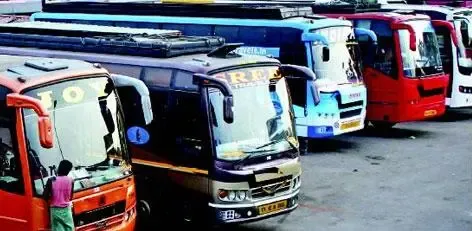
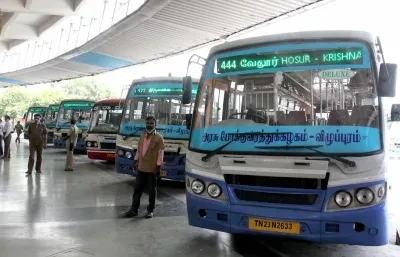
The affected undertakings — Metropolitan Transport Corporation (MTC), State Express Transport Corporation (SETC), and the six regional divisions of Tamil Nadu State Transport Corporation (TNSTC) — collectively run around 19,000 buses daily across more than 10,120 routes. These fleets consume an average of 16.82 lakh litres of diesel every day while covering nearly 81 lakh kilometres across the state.
According to Transport Department Secretary Shunchonngam Jatak Chiru, the corporations were already recording a combined daily loss of nearly ₹19 crore before the fuel price revision. The diesel hike is now expected to push daily operational losses up by a further ₹48.11 lakh.
Fuel Costs Already Dominate Expenditure
Officials noted that the transport corporations spend approximately ₹5,200 crore annually on diesel alone — accounting for around 26 per cent of total operating expenditure. The steady climb in losses is well-documented: average daily losses rose from ₹16.83 crore in 2022-23 to ₹17.7 crore in 2023-24, and further to ₹18.9 crore in 2024-25. The latest diesel hike threatens to accelerate that trajectory.
Fare Freeze Since 2018 at the Heart of the Problem
Transport workers' unions argue that the deepening financial strain is directly linked to the government's prolonged reluctance to revise bus fares in line with fuel costs. Ordinary bus fares in Tamil Nadu were last revised in January 2018, when diesel was priced at around ₹65 per litre. Diesel has since climbed to nearly ₹95 per litre — a rise of roughly 46 per cent — while fares have remained frozen.
Tamil Nadu's ordinary bus fare currently stands at just 58 paise per kilometre, with ultra deluxe services charging ₹1 per kilometre. By comparison, ordinary bus fares in neighbouring Karnataka and Kerala range between 75 paise and ₹1 per kilometre, with premium services charging between ₹1.20 and ₹1.68 per kilometre.
Ridership Paradox: Record Passengers, Record Losses
Despite the financial distress, Tamil Nadu continues to record the highest public transport ridership in the country. Average daily passenger usage has grown from 1.55 crore commuters in 2021-22 to nearly 2.05 crore in 2025-26. Around 70 lakh women travel free each day under the state government's Vidiyal Payanam scheme, which operates across 7,331 ordinary buses.
The network also serves a critical social function: state-run buses connect nearly 98 per cent of villages with populations exceeding 1,000, making them indispensable to rural mobility. The tension between keeping fares low for commuters and sustaining viable transport operations is now sharper than ever, with the diesel hike forcing a reckoning that successive governments have deferred.
Point of View
Which makes fare revision politically costly — but the same ridership makes the network's collapse socially catastrophic. The Vidiyal Payanam free-travel scheme, while laudable, adds fiscal pressure without a compensatory mechanism from the state budget. Every year the fare revision is deferred, the restructuring required grows larger. The diesel hike is the latest stress test; the underlying problem is a governance model that treats public transport as a welfare instrument without funding it as one.
NationPress
13 Oct 2026
Frequently Asked Questions
How much will the diesel price hike cost Tamil Nadu transport corporations?
The ₹2.86 per litre rise in high-speed diesel prices will add approximately ₹175.58 crore to the annual expenditure of Tamil Nadu's eight state transport undertakings. Daily operational losses are expected to increase by a further ₹48.11 lakh on top of the existing ₹19 crore daily deficit.
When were Tamil Nadu bus fares last revised?
Bus fares were last revised in January 2018, when diesel was priced at around ₹65 per litre. Diesel has since risen to nearly ₹95 per litre, while fares have remained unchanged — a gap that transport workers' unions say is the primary driver of the corporations' mounting losses.
Which transport corporations are affected by the diesel price hike?
The eight affected undertakings are the Metropolitan Transport Corporation (MTC), the State Express Transport Corporation (SETC), and the six regional divisions of the Tamil Nadu State Transport Corporation (TNSTC). Together they operate around 19,000 buses daily on more than 10,120 routes.
What is the Vidiyal Payanam scheme and how does it affect finances?
Vidiyal Payanam is the Tamil Nadu government's free bus travel scheme for women, under which around 70 lakh women commute daily at no charge across 7,331 ordinary buses. While the scheme has boosted ridership, it adds to the revenue shortfall of the already loss-making transport corporations.
How do Tamil Nadu bus fares compare with neighbouring states?
Tamil Nadu's ordinary bus fare of 58 paise per kilometre is among the lowest in the region. In Karnataka and Kerala, ordinary fares range between 75 paise and ₹1 per kilometre, while premium services charge between ₹1.20 and ₹1.68 per kilometre.