Arunachal's 11,200 MW SUMP can counter China's mega dam downstream risk, says Deputy CM

Synopsis
Arunachal Pradesh's Deputy CM has made the counterintuitive case that a smaller Indian dam can neutralise a much larger Chinese one — because storage, not megawatts, is what matters. With 9.2 billion cubic metres of proposed live storage against China's 5.5 billion, the SUMP is being framed as India's downstream insurance policy against Beijing's Yarlung Tsangpo mega-dam, and a national security asset worth up to ₹2 lakh crore.
Key Takeaways
Deputy CM Chowna Mein stated on 5 October 2026 that the proposed 11,200 MW SUMP can regulate downstream flows from China's upstream Medog Dam .
China's Medog Dam has an estimated storage of 5.5 billion cubic metres ; SUMP's proposed live storage is 9.2 billion cubic metres — nearly 1.7 times larger.
SUMP dam height is proposed at 280–300 metres , compared with Medog's estimated 2,000 metres — the difference reflects design purpose: storage vs. power generation.
Chief Minister Pema Khandu has estimated the SUMP's cost at ₹1.5–2 lakh crore , calling it a national security project.
A Preliminary Feasibility Report (PFR) covering November–January will determine if the project can proceed; no further action if experts rule it out.
India and Bangladesh have sought water-sharing discussions with China over the Yarlung Tsangpo dam — requests that have not been accepted.
Arunachal Pradesh Deputy Chief Minister Chowna Mein on Monday, 5 October 2026, said the proposed 11,200 MW Siang Upper Multipurpose Project (SUMP) could play a decisive role in regulating downstream water flows and mitigating flood risk in the Siang basin and downstream areas of Arunachal Pradesh and Assam. His remarks come amid mounting concern in the Northeast over China's planned mega hydropower project on the Yarlung Tsangpo river in Tibet and its potential consequences for India.
Storage Capacity, Not Power Output, Is the Key Metric
Deputy Chief Minister Mein used a post on X to directly address a question frequently raised about the project's rationale. 'The question is often asked: How can the proposed 11,200 MW Siang Upper Multipurpose Project address concerns around a 60,000 MW project upstream? The answer lies in understanding that MW measures power, not water,' he said.
According to Mein, China's proposed Medog Dam — estimated at roughly 2,000 metres in height — is primarily a hydropower generation facility with a storage capacity of approximately 5.5 billion cubic metres. By contrast, the SUMP is designed with a dam height of around 280–300 metres and a live storage capacity of approximately 9.2 billion cubic metres — nearly 1.7 times that of the Chinese project upstream.
'The SUMP is primarily about storing, regulating and managing water, alongside power generation,' Mein said, stressing that in the event of sudden or extreme releases from upstream, the SUMP's storage buffer could absorb and regulate the downstream discharge, thereby protecting communities in both states.
Strategic and National Security Framing
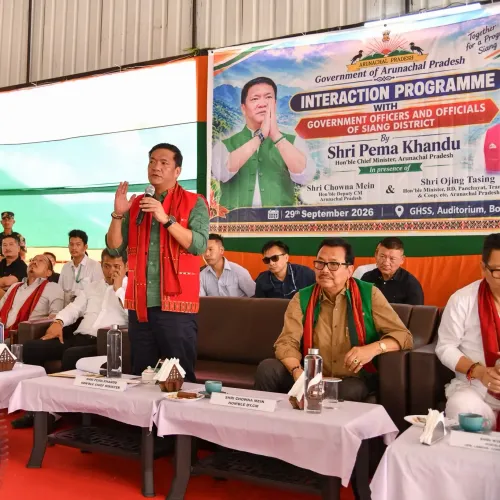
The Deputy CM's intervention follows remarks by Arunachal Pradesh Chief Minister Pema Khandu, who has described the project as a matter of national security rather than a conventional infrastructure scheme. Chief Minister Khandu put the project's estimated cost at ₹1.5 lakh crore, with the figure potentially rising to ₹2 lakh crore, calling it one of India's largest potential investments.
'The issue is neither about my personal interest nor that of Prime Minister Narendra Modi, but about India's national security and defence preparedness,' Khandu was quoted as saying. This framing elevates the SUMP well beyond a state hydropower asset into a geopolitical response to Chinese infrastructure activity across the Line of Actual Control (LAC).
Feasibility Study Before Any Final Decision
Chief Minister Khandu has clarified that neither the state nor the Centre is seeking to fast-track the SUMP beyond its current feasibility stage. The immediate goal is the completion of the Preliminary Feasibility Report (PFR), which is expected to cover a three-month window spanning November, December, and January. 'If the experts determine after the PFR that the project cannot be built, there will be no further process,' Khandu said.
The PFR will assess technical parameters including location, structural viability, and hydrology — providing the factual base on which any subsequent decision will rest. Industry and engineering assessments will also factor in the seismic sensitivity of the Siang valley, which sits in one of South Asia's most active earthquake zones.
The River, the Region, and China's Upstream Activity
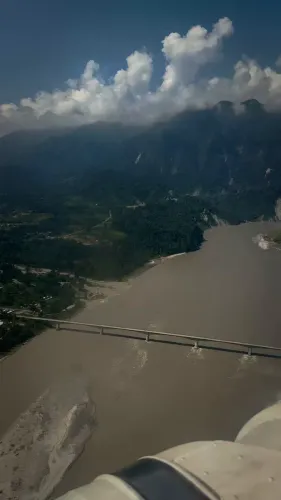
The Siang River enters Arunachal Pradesh from Tibet, where it is known as the Yarlung Tsangpo. Flowing down through the eastern Himalayas, it eventually joins other rivers in Assam to form the Brahmaputra — one of Asia's largest river systems and a lifeline for millions in the Northeast and Bangladesh.
China announced its plans for a mega dam on the Yarlung Tsangpo in 2021. According to Khandu, both India and Bangladesh have sought details and discussions from Beijing regarding water-sharing concerns, but those requests have not been accepted. The absence of a bilateral water-sharing agreement with China makes the SUMP's buffering function — if technically validated — all the more significant for downstream states.
Notably, this is the third consecutive week that senior Arunachal leaders have publicly made the case for the SUMP, signalling a coordinated effort to build political and public consensus ahead of the PFR process. How the Centre responds to the PFR's findings will ultimately determine whether the SUMP advances from proposal to project.
Point of View
Deputy CM Mein is reframing the debate around storage physics — a more defensible position that could withstand technical scrutiny. Yet the key question mainstream coverage is glossing over is governance: a ₹1.5–2 lakh crore project in a seismically active, ecologically sensitive valley requires not just a PFR but an independent environmental and social impact review. China's refusal to engage on water-sharing makes India's need for a downstream buffer real — but the SUMP must be proven safe before it can be strategic.
NationPress
5 Oct 2026
Frequently Asked Questions
What is the Siang Upper Multipurpose Project (SUMP)?
The SUMP is a proposed mega infrastructure project on the Siang River in Arunachal Pradesh, combining hydropower generation of 11,200 MW with water storage of approximately 9.2 billion cubic metres . It is being positioned as a national strategic asset, with a projected cost of ₹1.5–2 lakh crore .
How can India's smaller SUMP counter China's larger 60,000 MW Medog Dam?
Deputy CM Chowna Mein explained that megawatts measure power generation, not water control. China's Medog Dam has an estimated storage of 5.5 billion cubic metres; SUMP's proposed live storage of 9.2 billion cubic metres gives it a greater capacity to buffer sudden or extreme water releases from upstream, reducing flood risk in Arunachal Pradesh and Assam.
What is the current status of the SUMP?
The project is at the pre-feasibility stage. A Preliminary Feasibility Report (PFR) is expected to be completed over a three-month period covering November, December, and January. Chief Minister Pema Khandu has said that if experts conclude the project cannot be built after the PFR, no further steps will be taken.
Why is the SUMP considered a national security project?
China announced plans for a mega dam on the Yarlung Tsangpo — which flows into India as the Siang and eventually forms the Brahmaputra — in 2021. India and Bangladesh have sought water-sharing discussions with Beijing, which have not been accepted. Without a bilateral agreement, a large-storage Indian dam downstream is seen as the primary mechanism to regulate any sudden or artificial flood risk for Northeast India.
Which states would benefit from the SUMP's flood-regulation function?
The primary beneficiaries would be Arunachal Pradesh and Assam. The Siang River, after entering India from Tibet, flows through Arunachal Pradesh and merges with other rivers in Assam to form the Brahmaputra. Communities along this corridor are historically vulnerable to extreme flooding.