Regime change through protests impossible in India: Ramdas Athawale backs Bhagwat
Synopsis
Union Minister Ramdas Athawale has publicly backed RSS chief Mohan Bhagwat's warning against protest-driven regime change, invoking Dr B.R. Ambedkar's Constitution to argue that India's democratic framework makes Bangladesh-style upheaval structurally impossible — a statement that sharpens the national debate over the limits of dissent versus destabilisation.
Key Takeaways
Union Minister Ramdas Athawale backed RSS chief Mohan Bhagwat's remarks on 20 October 2026 , saying protest-led regime change is impossible in India.
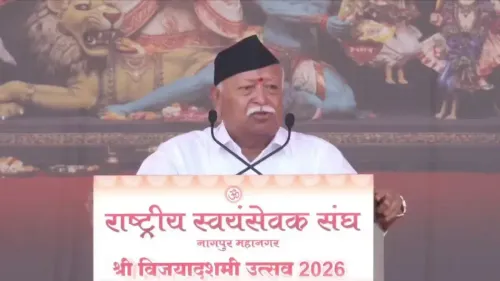
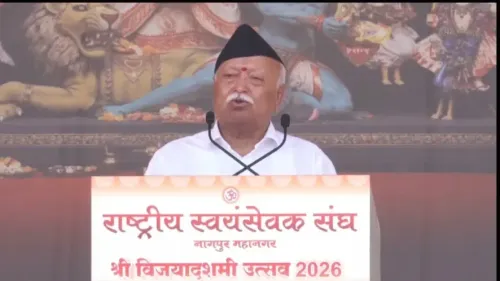
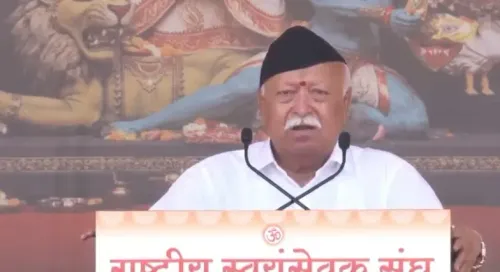
Bhagwat had warned from Nagpur that attempts to 'dismantle' India would not succeed and that changing a regime would not resolve the country's problems.
Athawale cited Dr B.R.
Ambedkar's Constitution , arguing political power in India changes only through democratic elections and a public mandate.
The minister drew a direct contrast with political upheaval in Bangladesh , Nepal , and Sri Lanka .
Athawale also welcomed the India-New Zealand Free Trade Agreement , calling it a boost for both economies and employment.
He highlighted Dussehra's significance for the Buddhist community, marking Dr Ambedkar's conversion to Buddhism on 14 October 1956 .
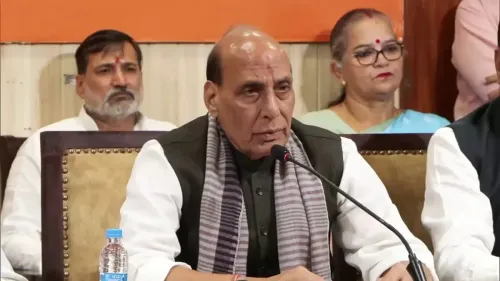
Union Minister Ramdas Athawale on Tuesday, 20 October threw his weight behind Rashtriya Swayamsevak Sangh (RSS) chief Mohan Bhagwat's remarks on regime change, asserting that a sudden overthrow of government — akin to developments in Bangladesh, Nepal, or Sri Lanka — was constitutionally and democratically impossible in India. Athawale's remarks come a day after Bhagwat, speaking from Nagpur, warned that efforts to 'dismantle' India would not succeed and that changing a regime would not automatically resolve the nation's problems.
What Athawale Said
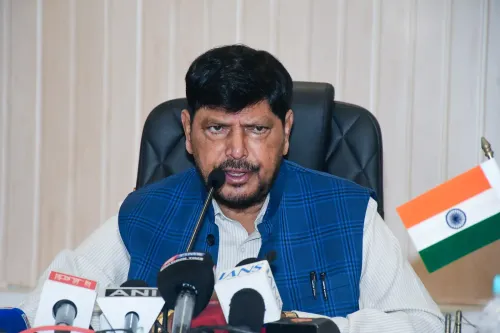
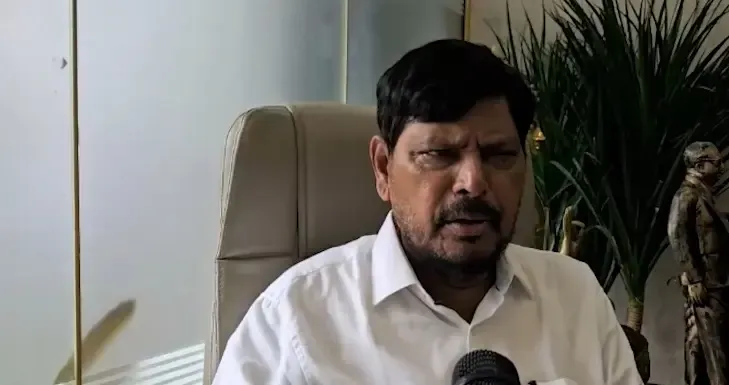
Addressing reporters in Mumbai, Athawale said, 'I feel that Mohan Bhagwat, as the RSS chief, addressed the nation from Nagpur and shared important thoughts. He pointed out that while people in a democracy have the right to protest, trying to bring about a regime change through agitational politics, similar to what happened in Bangladesh, is simply not possible in our country.'
The minister further emphasised the constitutional safeguards that distinguish India's democratic framework. 'Here, we have Dr B.R. Ambedkar's Constitution. A sudden shift of power like what occurred in Bangladesh, Nepal or Sri Lanka cannot happen in India. In our country, political change takes place only when a party secures a mandate and a majority from voters to form the government. Protests alone cannot overturn a government,' he said.
The Bhagwat Backdrop
Bhagwat's original remarks were widely seen as a veiled reference to protest-driven political upheaval in Bangladesh, where Prime Minister Sheikh Hasina's government was ousted in August 2024 following weeks of student-led demonstrations. The RSS chief's Nagpur address drew considerable national attention, with both ruling alliance members and opposition figures weighing in on the nature of democratic dissent versus destabilisation.
Notably, this is not the first time senior leaders aligned with the ruling Bharatiya Janata Party (BJP)-led National Democratic Alliance (NDA) have drawn a contrast between India's constitutional democracy and the political instability witnessed in neighbouring countries. Critics, however, argue that contextualising protests as potential 'regime-change' attempts risks delegitimising lawful democratic dissent.
Athawale on India-New Zealand Free Trade Agreement
Separately, the Union Minister welcomed the India-New Zealand Free Trade Agreement, describing it as a significant step towards economic cooperation. 'This agreement will help boost the economies of both nations and create employment opportunities for many unemployed individuals. Many Indians reside in New Zealand. This trade agreement holds considerable importance, and both countries stand to benefit from it,' Athawale said.
Dussehra Remarks and Dr Ambedkar's Legacy
Athawale also spoke at length about the significance of Dussehra, connecting the festival to both its Hindu cultural roots and its special importance for the Buddhist community. He noted that Dr B.R. Ambedkar converted to Buddhism on 14 October 1956 — a date that coincided with Dussehra — making the festival a day of profound pride for Buddhist communities across India. 'Dussehra is a landmark and revolutionary day,' he said, also referencing Durga Puja celebrations in West Bengal and the Navratri-Garba tradition in Mumbai, Gujarat, Rajasthan, and Delhi.
Athawale's remarks underscore the NDA government's broader narrative of constitutional resilience at a time when regional political instability continues to generate debate about the durability of democratic institutions in South Asia.
Point of View
Both Bhagwat and Athawale implicitly cast sustained protest movements as existential threats rather than legitimate democratic tools. Critics will rightly note the contradiction — a constitution that protects the right to protest cannot simultaneously treat mass protests as regime-change conspiracies. The more consequential question, largely missed in the coverage, is whether this framing is designed to pre-empt specific domestic movements or is simply strategic positioning for a turbulent electoral season.
NationPress
20 Oct 2026
Frequently Asked Questions
What did Ramdas Athawale say about regime change in India?
Union Minister Ramdas Athawale said on 20 October 2026 that a protest-driven regime change, like the one seen in Bangladesh, is impossible in India because of Dr B.R. Ambedkar's Constitution. He argued that political power in India changes only when a party wins a democratic mandate and majority to form the government.
What did RSS chief Mohan Bhagwat say that prompted Athawale's remarks?
Mohan Bhagwat, speaking from Nagpur, stated that attempts to 'dismantle' India would not succeed and that a change in regime would not necessarily resolve the country's problems. His remarks were widely interpreted as a warning against protest-driven political upheaval similar to what occurred in Bangladesh in August 2024.
Why is Bangladesh being referenced in the context of Indian politics?
Bangladesh witnessed the ouster of Prime Minister Sheikh Hasina's government in August 2024 following sustained student-led protests. Senior leaders aligned with India's ruling NDA have invoked this example to argue that India's constitutional framework prevents similar protest-driven regime change.
What did Athawale say about the India-New Zealand Free Trade Agreement?
Athawale welcomed the India-New Zealand Free Trade Agreement, saying it would boost the economies of both nations and generate employment. He noted that a large number of Indians reside in New Zealand and that both countries stand to benefit significantly from the deal.
What is the significance of Dussehra for the Buddhist community according to Athawale?
Athawale said Dussehra holds special significance for India's Buddhist community because Dr B.R. Ambedkar chose 14 October 1956 — which coincided with Dussehra — to convert to Buddhism. He described the day as 'landmark and revolutionary' for both Hindu and Buddhist traditions in India.