Aurat March suppression exposes Pakistan's patriarchy and shrinking dissent space
Synopsis
A European Times report lays bare how Pakistan's state apparatus — backed by patriarchal institutions and religious framing — is systematically dismantling space for women's activism. The detention of 75-year-old Sheema Kermani for seeking a march permit is not an aberration; it is the pattern. The Aurat March, despite relentless suppression, keeps growing — and in doing so, keeps exposing Pakistan's constitutional contradictions.
Key Takeaways
The Aurat March and women's rights movements in Pakistan face systematic suppression driven by patriarchy, religious conservatism, and state institutions, according to a European Times report.
Sheema Kermani , a 75-year-old activist, was detained by Pakistani police earlier this year for seeking permission to hold the Aurat March .
In May , the Human Rights Commission of Pakistan (HRCP) condemned the detention of Aurat March organisers outside the Karachi Press Club .
The HRCP described the crackdowns as 'an increasingly repressive approach to governance' and called the pattern 'systematic denial of public space.' Women activists report facing online harassment, disinformation, legal complaints, permit obstruction, and physical attacks.
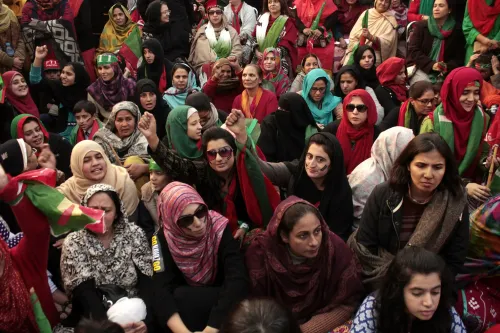
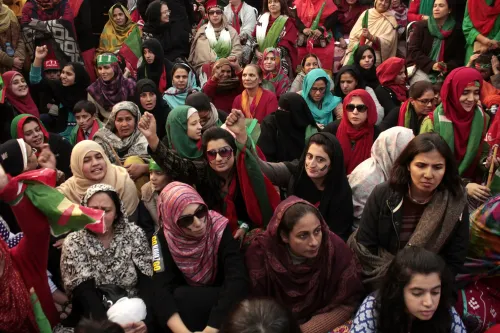
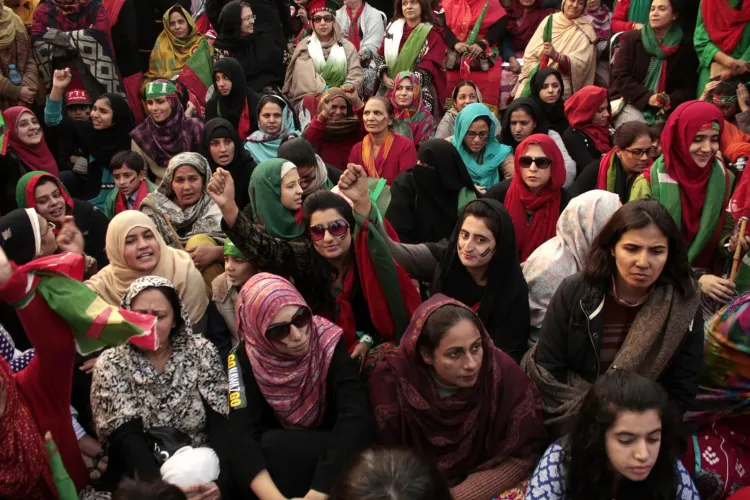
Despite suppression, the Aurat March continues to gain traction as one of Pakistan's most prominent civil society movements.
The suppression of the Aurat March and other women's rights movements in Pakistan is rooted in deeply entrenched patriarchal, religious, and institutional forces that together expose the widening gap between constitutional guarantees and ground reality, according to a report by the European Times. The findings underscore a systematic erosion of civil space, particularly for women-led activism, in the country.
The Sheema Kermani Incident
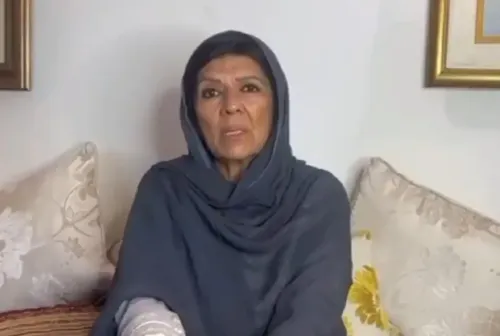
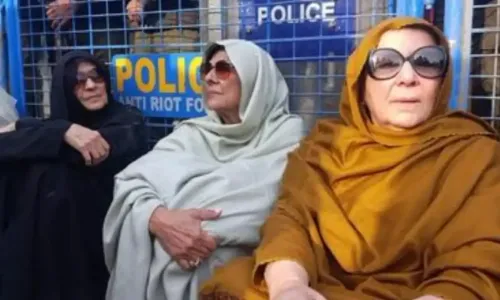
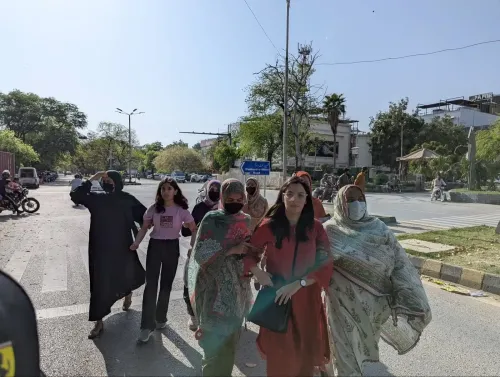
Earlier this year, Pakistani police used force against Sheema Kermani, a 75-year-old activist and one of Pakistan's most respected artists and women's rights campaigners, detaining her for seeking government permission to hold the Aurat March — an annual peaceful gathering focused on feminist rights. The incident drew sharp criticism from across the political spectrum.
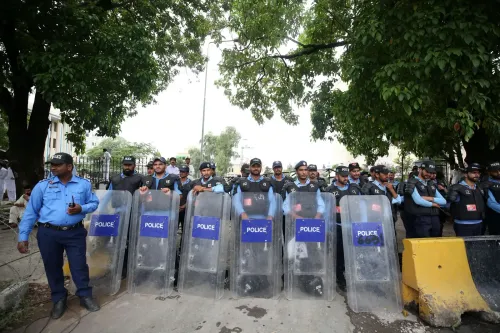
Authorities justified the action by stating she was held for only a few hours. The European Times report, however, characterised the episode as emblematic of a far broader pattern. 'If Pakistan's one of the most respected artists and women's rights campaigners was subjected to such ill-treatment, one can just imagine the plight of women activists and protesters in the country. In the name of maintaining law and order, the Pakistani agencies stooped to the level of preventing Kermani from holding a press conference,' the report noted.
Systematic Harassment of Women Activists
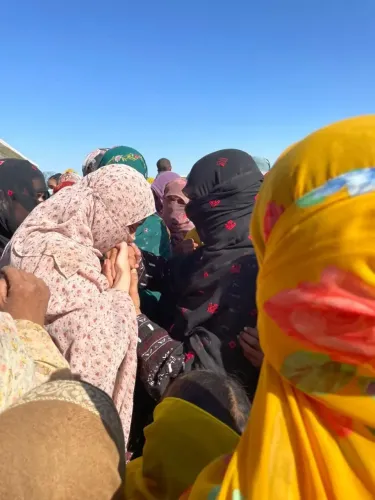
The report details multiple tools used by state and non-state actors to suppress women's movements: online threats and harassment, disinformation campaigns, legal complaints, bureaucratic obstruction in obtaining rally permits, and physical attacks by pro-patriarchal groups. Women activists say these mechanisms operate in concert to exhaust and demoralise organisers.
This is not an isolated pattern. In May, the Human Rights Commission of Pakistan (HRCP) condemned the detention of Aurat March organisers and volunteers outside the Karachi Press Club, where they had gathered to address a press conference. The HRCP described the incident as part of 'a broader and deeply troubling pattern: the systematic denial of public space to citizens seeking to articulate their rights.'
What the HRCP Said
In a post on X, the HRCP stated: 'The rights to peaceful assembly and freedom of expression are constitutionally guaranteed. Preventing citizens, particularly women and marginalised groups, from even convening a press conference reflects an increasingly repressive approach to governance, where dissent is treated as a threat rather than a democratic necessity.'
The rights body further characterised the Karachi episode not as 'isolated overreach' but as evidence of the government's systematic approach to suppressing civil society voices.
The Role of Patriarchy and Religion
According to the European Times report, patriarchy — deeply embedded in Pakistan's socio-religious fabric — is the primary driver of restrictions on women's movements. Women's demands for equal inheritance rights, freedom from domestic violence, reproductive autonomy, and the right to occupy public spaces without restriction directly challenge the prevailing social order, particularly within the bureaucracy, political class, and security establishment, all of which are predominantly male-dominated.
Critics argue that religious framing is frequently deployed to delegitimise feminist demands, casting them as culturally alien or morally subversive — a tactic that makes it easier for authorities to justify suppression without overtly violating constitutional provisions.
Aurat March's Resilience and What It Reveals
Despite sustained pressure, the Aurat March has continued to grow as one of Pakistan's most contested civil society movements. The European Times report concluded that the movement 'has exposed the limits of public dissent, the role of patriarchy and religion in controlling women, and the real face of constitutional freedoms in contemporary Pakistan.'
As international scrutiny of Pakistan's human rights record intensifies, the fate of movements like the Aurat March will remain a key indicator of whether the country's democratic institutions can withstand pressure from entrenched conservative forces.
Point of View
Religious legitimacy, and patriarchal social norms that makes accountability nearly impossible. The HRCP's condemnation is consistent and credible, but it has not moved the needle on state behaviour — which raises the harder question of whether domestic rights bodies alone can create the political cost needed to change practice. International pressure has historically been the only lever that works, and even that is inconsistent.
NationPress
15 Oct 2026
Frequently Asked Questions
What is the Aurat March in Pakistan?
The Aurat March is an annual peaceful gathering in Pakistan focused on feminist rights and women's issues. It has grown into one of the country's most prominent — and most contested — civil society movements, drawing both widespread public support and sustained opposition from state and religious conservative quarters.
Why was Sheema Kermani detained by Pakistani police?
Sheema Kermani, a 75-year-old activist and artist, was detained by Pakistani police for seeking government permission to hold the Aurat March. Authorities stated she was held for only a few hours, but critics argued the action exemplified the shrinking space for women-led dissent in Pakistan.
What did the Human Rights Commission of Pakistan say about the crackdowns?
The HRCP condemned the detention of Aurat March organisers outside the Karachi Press Club in May, calling it part of 'a broader and deeply troubling pattern' of systematic denial of public space. It described the government's approach as 'increasingly repressive' and said dissent was being treated as a threat rather than a democratic necessity.
What tactics are used to suppress women's rights movements in Pakistan?
According to the European Times report, women activists in Pakistan face online threats and harassment, disinformation campaigns, legal complaints, bureaucratic obstruction in obtaining rally permits, and physical attacks by pro-patriarchal groups. The report identifies deeply entrenched patriarchy within the bureaucracy, political class, and security establishment as the primary structural driver.
Is the suppression of the Aurat March a new development?
No. The European Times report characterises the suppression as part of a long-standing pattern rooted in Pakistan's socio-political structure. The HRCP has repeatedly condemned similar incidents, and women activists say the methods used against them have become more varied and systematic over time, even as the Aurat March continues to grow in visibility.