Aurat March Leaders Criticize Police for Alleged Violence and Demand Investigation
Synopsis
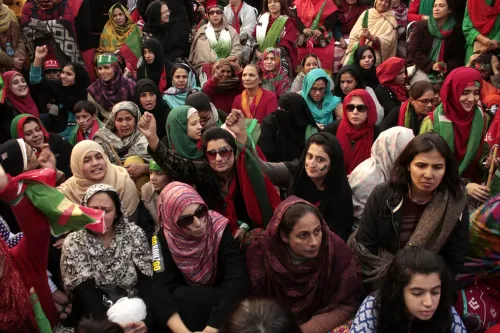
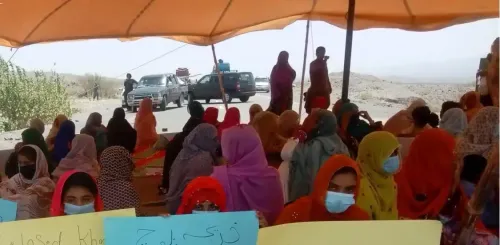
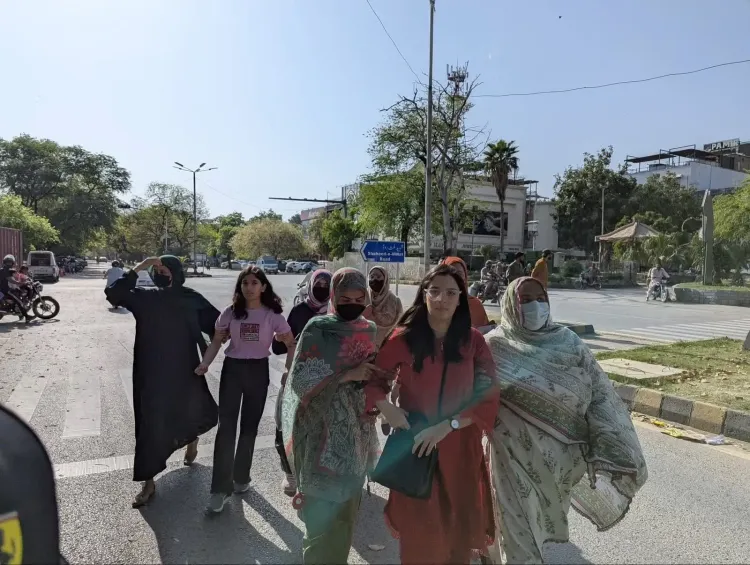
Aurat March leaders and activists have called out the Pakistani police for their alleged mistreatment of protesters, demanding a thorough investigation into the events leading up to their arrests during the International Women's Day rally.
Key Takeaways
Protesters at the Aurat March faced alleged police violence.
Leaders are demanding an investigation into the police actions.
Many activists were arrested prior to the International Women's Day rally.
Concerns have been raised about civil liberties and the right to protest.
Farzana Bari highlighted the importance of this annual event for women's rights.
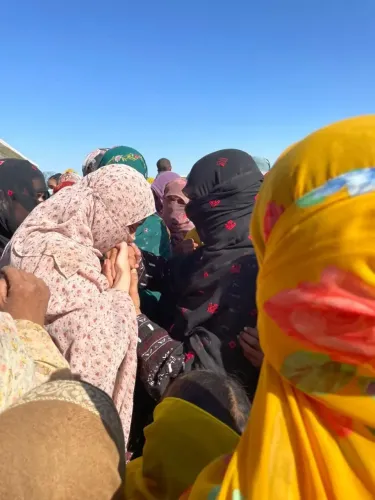
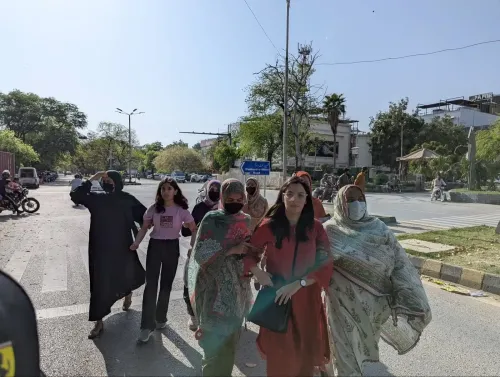
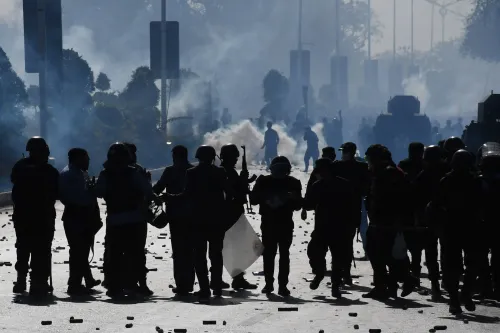
Islamabad, March 10 (NationPress) The leaders of the Aurat March, alongside civil society representatives and human rights advocates, have condemned the actions of Pakistani authorities for their alleged manhandling and intimidation of participants, as well as coercing them into signing unjust affidavits, as reported by local media on Tuesday.
During a press conference at the National Press Club, they called for an investigation into these events and accountability for the responsible parties. This outcry followed the arrest of numerous women's rights advocates, including members of the Aurat March, by police in Islamabad ahead of a rally commemorating International Women's Day on Sunday.
Farzana Bari, a well-known activist who was also detained with her daughters, emphasized the long-standing tradition of the march in Pakistan, as highlighted by the leading daily Dawn. "We were aware that Section 144 was enforced in the federal capital, but civil society does not recognize any laws that infringe upon fundamental rights. Our right to protest cannot be stripped away. Protests occurred globally, yet we were met with warnings of a potential suicide bombing that could lead to chaos," she remarked.
On Monday, more than 40 participants of the Aurat March were released from police custody. Haris Khaliq, Secretary General of the Human Rights Commission of Pakistan (HRCP), stated that while they do not support law violations, society cannot function under laws such as the Prevention of Electronic Crimes Act (Peca) and others that restrict freedoms.
"Yesterday, girls faced manhandling and were physically assaulted. They were taken into custody and moved to a women's police station. When their friends and family arrived, they too were detained. Baton charges were used on the girls, their hair was pulled, and they were coerced into signing fraudulent affidavits," Khaliq was quoted by Dawn.
He further asserted that the HRCP has demanded a thorough investigation and appropriate actions against those involved. A lawyer named Kashmala recounted her experience when she sought to visit the protesters. "Three policewomen seized me and declared, 'I am terminating your representation.' They locked me in a cramped cell with around 80 individuals. The conditions were deplorable, and there was no soap available," she described.
One detained leader raised concerns about the lack of prior warning regarding the alleged threat and questioned why they were not informed that the march should not proceed.
"We were confined in a lockup and prevented from contacting our relatives. Among us were girls aged 14 to 73, all of whom were subjected to manhandling. We were transported in vehicles to the police station. Some girls faced health issues and struggled to breathe due to the overcrowded conditions in the lockup," she added.
Point of View
This incident raises critical concerns about the treatment of protesters in Pakistan and the implications for civil liberties. The demands for accountability reflect a broader struggle for women's rights and the protection of peaceful assembly. It is essential to uphold the principles of justice and uphold citizens' rights.
NationPress
20 Sept 2026
Frequently Asked Questions
What is the Aurat March?
The Aurat March is an annual rally in Pakistan advocating for women's rights and gender equality, held on International Women's Day.
Why were the protesters arrested?
Protesters were arrested allegedly for violating Section 144, which prohibits gatherings, but many believe this infringes on their right to protest.
What actions are being demanded by activists?
Activists are calling for an investigation into the police's handling of the situation and accountability for any misconduct.
Who is Farzana Bari?
Farzana Bari is a prominent women's rights activist in Pakistan who was detained during the Aurat March.
What is the Prevention of Electronic Crimes Act (Peca)?
The Peca is a law in Pakistan aimed at regulating cyber-related offenses, but it has faced criticism for potentially infringing on civil rights.