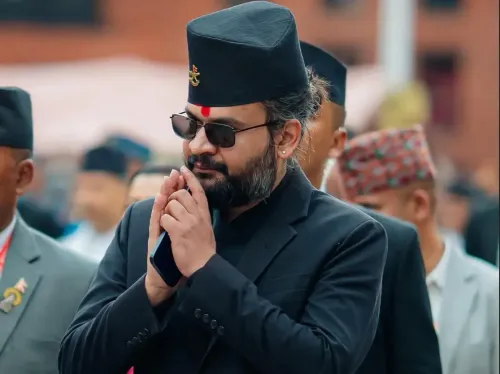
Balen Shah's Inauguration as Nepal's PM: A Ceremony Rich in Tradition
Synopsis
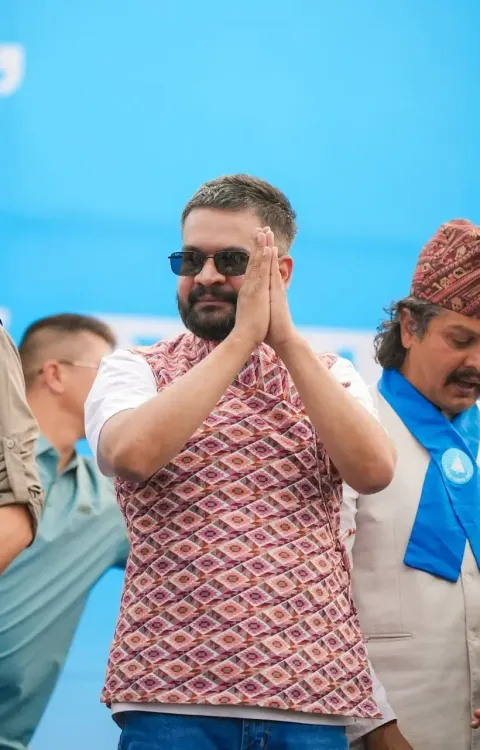
On March 26, Balendra Shah was elected as the parliamentary leader of the Rastriya Swatantra Party, paving his way to become Nepal's Prime Minister. His swearing-in ceremony will blend traditional Hindu rituals with modern governance.
Key Takeaways
Balendra Shah elected as Prime Minister of Nepal.
Rastriya Swatantra Party secured 182 seats in elections.
Unique rituals planned for swearing-in ceremony.
Shah's political rise represents a new generation.
Significant victory margin over former PM K P Sharma Oli.
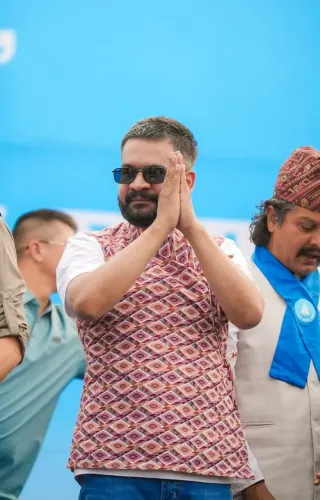
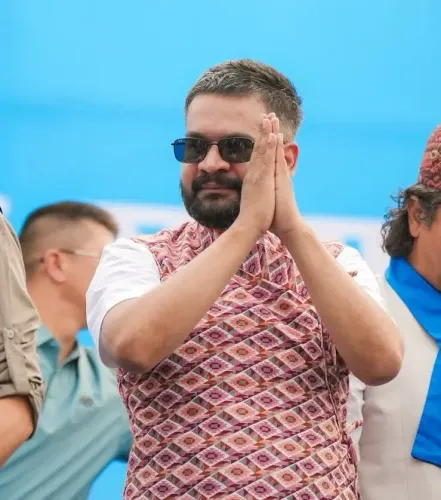
Kathmandu, March 26 (NationPress) The Rastriya Swatantra Party (RSP) in Nepal has officially elected senior member Balendra Shah as its parliamentary party leader, setting the stage for him to become the nation's new Prime Minister.
The RSP, which ran in the elections with Shah as its candidate for Prime Minister, achieved a remarkable victory in the parliamentary elections held on March 5, capturing 182 out of 275 seats in the House of Representatives.
Shah is poised to take the Prime Ministerial oath on Friday, administered by President Ramchandra Paudel during a special ceremony that will incorporate Hindu rituals.
Following the swearing-in of lawmakers on Thursday, a central committee meeting of the RSP confirmed Shah, the former Mayor of Kathmandu Metropolitan City, as its parliamentary party leader.
The RSP issued a statement noting, “The nomination proposal by President Rabi Lamichhane for Balendra Shah as the parliamentary party leader and candidate for Prime Minister has been unanimously endorsed by both the central committee and the parliamentary party.” According to the party's rules, only the parliamentary party leader can ascend to the role of Prime Minister.
In accordance with an agreement made on December 28 of the previous year, RSP President Rabi Lamichhane formally supported Shah for the Prime Ministerial position with the backing of all 182 lawmakers.
In the elections, Shah triumphed over former Prime Minister K P Sharma Oli by an impressive margin of 49,614 votes, securing 68,348 votes against Oli’s 18,734. This represents the highest vote tally achieved by any candidate in Nepal's parliamentary elections since 1991.
Shah's Prime Ministerial oath will be administered in a unique manner. The ceremony is set for 12:34 pm, symbolically represented as 1-2-3-4, during which seven conch shell players will perform shankhnaad, a ritual believed to signify successful beginnings.
Concurrent with the oath-taking, various rituals will occur, including a group of 108 Batuks (Vedic priests) reciting Swasti Shanti, while 16 Buddhist monks will chant the Ashtamangala, both of which are considered auspicious in Hindu and Buddhist traditions.
Shah entered the political arena in 2022 when he successfully ran for Mayor of Kathmandu as an independent candidate.
Born on April 27, 1990, in Kathmandu to a Madhesi family that prioritized education and culture, Shah earned his bachelor’s degree in Kathmandu before completing a master’s degree in Structural Engineering at Visvesvaraya Technological University in India.
His engineering background has equipped him with a practical understanding of infrastructure, urban development, and public works, significantly influencing his governance during his tenure as Mayor of Kathmandu Metropolitan City.
Shah’s political journey illustrates the emergence of a new generation of politicians who are swiftly making their mark on Nepal’s national political landscape.
Point of View
Showcasing the rise of a new generation of leaders. His commitment to incorporating traditional values into governance may resonate with a diverse electorate seeking both progress and cultural integrity.
NationPress
23 Sept 2026
Frequently Asked Questions
Who is Balendra Shah?
Balendra Shah is the newly elected Prime Minister of Nepal, previously serving as the Mayor of Kathmandu Metropolitan City.
What are the key rituals in Shah's swearing-in ceremony?
The ceremony will include shankhnaad performed by conch players and recitations by Vedic priests and Buddhist monks, symbolizing auspicious beginnings.
How did Shah win the election?
Shah won the election by defeating former Prime Minister K P Sharma Oli by a margin of 49,614 votes, securing a record number of votes.
What is the significance of the timing of Shah's oath?
The oath is scheduled for 12:34 pm, symbolically represented as 1-2-3-4, which is believed to enhance the auspiciousness of the event.
What is Shah's educational background?
Shah holds a bachelor’s degree from Kathmandu and a master’s degree in Structural Engineering from Visvesvaraya Technological University in India.